

Who Appoints the Chief Justice of India
F
Discover verified facts, data, and insights about India’s states, culture, economy, education, and more — all in one place at FactBharat.
Search for a command to run...
Discover verified facts, data, and insights about India’s states, culture, economy, education, and more — all in one place at FactBharat.
No comments yet. Be the first to comment.
Moving to the USA from India is a dream for many. Whether you want to study, work, or live with family, the process can seem complex. But with the right information, you can plan your move confidently. I’ll guide you through the key steps and options...
Opening a college in India is a dream for many educators and entrepreneurs who want to contribute to the country’s education sector. If you are one of those who want to start a college, you need to understand the process clearly. It involves several ...
Opening a hospital in India is a significant and rewarding venture. If you’ve ever wondered how to start one, you’re in the right place. Whether you’re a healthcare professional, entrepreneur, or investor, understanding the process is crucial. You’ll...
Opening a medical store in India can be a rewarding business opportunity. You get to serve your community by providing essential medicines and healthcare products. If you are thinking about starting a medical store, you might wonder where to begin an...
Opening a restaurant in India can be an exciting and rewarding venture. Whether you dream of serving traditional Indian dishes or international cuisine, the process involves careful planning and understanding of local regulations. If you’re ready to ...
FactBharat | Insights About India
2558 posts
Discover verified facts, data, and insights about India’s states, culture, economy, education, and more — all in one place at FactBharat.
The Chief Justice of India (CJI) is the highest-ranking judge in the country and the head of the Supreme Court of India. The CJI plays a crucial role in upholding justice, protecting the Constitution, and ensuring the independence of the judiciary.
But many people are unsure about who appoints the Chief Justice of India, what the selection process looks like, and how this important decision is made. Let’s understand it step by step.
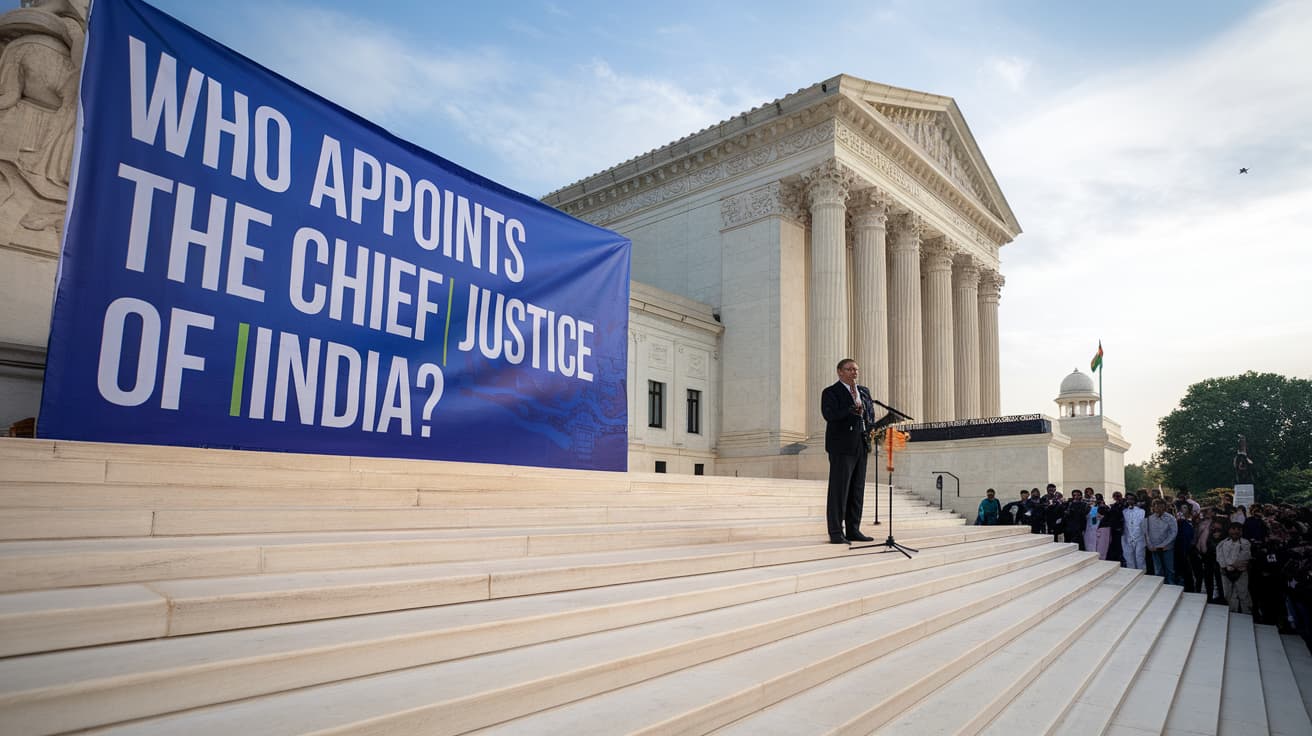
The President of India appoints the Chief Justice of India.
This appointment is made under Article 124(2) of the Constitution of India, which states:
“Every Judge of the Supreme Court shall be appointed by the President by warrant under his hand and seal after consultation with such of the Judges of the Supreme Court and of the High Courts in the States as the President may deem necessary.”
In practice, this means that the President appoints the CJI based on recommendations made by the outgoing Chief Justice and the Supreme Court judges, following the Collegium system.
Although the appointment is made by the President, it is not a political decision. The President acts on the advice of the judiciary, ensuring that the process remains fair and independent.
The President formally appoints the Chief Justice of India.
The decision is based on the recommendation of the outgoing CJI.
The appointment is made through a presidential warrant and official notification.
Thus, the President’s role is more formal and constitutional rather than discretionary.
The Collegium system plays a central role in judicial appointments in India, including the appointment of the CJI.
The Collegium is a group of the senior-most judges of the Supreme Court, headed by the current Chief Justice of India.
It includes:
The Chief Justice of India, and
The four senior-most judges of the Supreme Court.
This system evolved through judicial rulings, especially the Three Judges Cases (1981, 1993, and 1998), which established that judicial appointments should primarily be controlled by the judiciary, not the executive.
When the current Chief Justice is about to retire, he recommends the next senior-most judge of the Supreme Court as his successor.
This recommendation is sent to the Law Ministry, which forwards it to the Prime Minister.
The Prime Minister advises the President of India, who then officially appoints the new CJI.
This ensures that the process remains transparent, merit-based, and free from political influence.
Traditionally, the Chief Justice of India is appointed based on seniority, meaning the senior-most judge of the Supreme Court (after the current CJI) is chosen for the position.
This convention ensures:
Stability within the judiciary.
Respect for experience and seniority.
Smooth transition of leadership without controversy.
However, this seniority rule is not written in the Constitution — it has simply become a long-standing practice respected by all governments.
To become the Chief Justice of India, one must first qualify to be a judge of the Supreme Court.
Must be a citizen of India.
Must have served as a judge of a High Court for at least 5 years, or
Must have practiced as an advocate in a High Court for at least 10 years, or
Must, in the opinion of the President, be a distinguished jurist.
Once appointed as a Supreme Court judge, the person’s seniority and service record determine future eligibility to become CJI.
After appointment, the new Chief Justice takes an oath of office before the President of India.
The CJI swears to uphold the Constitution of India, perform duties without fear or favor, and protect the independence of the judiciary.
There is no fixed term for the Chief Justice of India.
The CJI serves until reaching the retirement age of 65 years (as per Article 124(2)).
The duration of tenure depends on the judge’s age at the time of appointment.
The Chief Justice is not just the head of the Supreme Court but also a key constitutional authority.
Presides over constitutional benches and important cases.
Allocates cases among Supreme Court judges.
Maintains discipline and efficiency within the court.
Controls appointments and transfers of judges through the Collegium system.
Advises the President on judicial matters.
Plays a vital role in maintaining the independence of the judiciary.
Acts as the Chancellor of some universities by virtue of position.
Administers the oath of office to the President of India in some cases.
First Chief Justice of India: Justice Harilal Jekisundas Kania (served from 1950–1951).
Current Chief Justice of India (2025): Justice Dhananjaya Y. Chandrachud (appointed on 9 November 2022).
Justice Chandrachud is the 50th Chief Justice of India and is known for his progressive judgments and administrative reforms in the judiciary.
The process of appointing the Chief Justice of India is designed to maintain judicial independence — a cornerstone of democracy.
It prevents political interference in judicial matters.
It ensures that the most senior and capable judge leads the judiciary.
It upholds the separation of powers between the executive, legislature, and judiciary.
By following this well-established procedure, India ensures that the judiciary remains impartial, fair, and independent of external influence.
The President of India appoints the Chief Justice of India based on the recommendation of the Collegium system, usually following the principle of seniority. This process, though simple on paper, is a cornerstone of India’s democratic structure — ensuring that justice remains free from politics and bias.
Every CJI carries the responsibility of upholding constitutional values, protecting citizens’ rights, and preserving the rule of law. The appointment process reflects not just legal procedure but the trust India places in its judiciary.
The President of India appoints the Chief Justice of India, based on the recommendation of the outgoing Chief Justice and the Collegium system.
The Collegium, headed by the current CJI and four senior-most judges, recommends the name of the next Chief Justice to the government.
The Chief Justice of India is chosen primarily based on seniority — the most senior Supreme Court judge is appointed next in line.
The retirement age of the Chief Justice of India is 65 years, as per the Constitution.
Justice Harilal Jekisundas Kania was the first Chief Justice of India. He took office on 26 January 1950, the day India’s Constitution came into effect.