

Which Island Group of India Lies to Its South-East?
F
Discover verified facts, data, and insights about India’s states, culture, economy, education, and more — all in one place at FactBharat.
Search for a command to run...
Discover verified facts, data, and insights about India’s states, culture, economy, education, and more — all in one place at FactBharat.
No comments yet. Be the first to comment.
Moving to the USA from India is a dream for many. Whether you want to study, work, or live with family, the process can seem complex. But with the right information, you can plan your move confidently. I’ll guide you through the key steps and options...
Opening a college in India is a dream for many educators and entrepreneurs who want to contribute to the country’s education sector. If you are one of those who want to start a college, you need to understand the process clearly. It involves several ...
Opening a hospital in India is a significant and rewarding venture. If you’ve ever wondered how to start one, you’re in the right place. Whether you’re a healthcare professional, entrepreneur, or investor, understanding the process is crucial. You’ll...
Opening a medical store in India can be a rewarding business opportunity. You get to serve your community by providing essential medicines and healthcare products. If you are thinking about starting a medical store, you might wonder where to begin an...
Opening a restaurant in India can be an exciting and rewarding venture. Whether you dream of serving traditional Indian dishes or international cuisine, the process involves careful planning and understanding of local regulations. If you’re ready to ...
FactBharat | Insights About India
2558 posts
Discover verified facts, data, and insights about India’s states, culture, economy, education, and more — all in one place at FactBharat.
On this page
India is not just a land of mountains, plains, and rivers — it also has two beautiful island groups that add to its natural diversity: the Andaman and Nicobar Islands in the Bay of Bengal and the Lakshadweep Islands in the Arabian Sea.
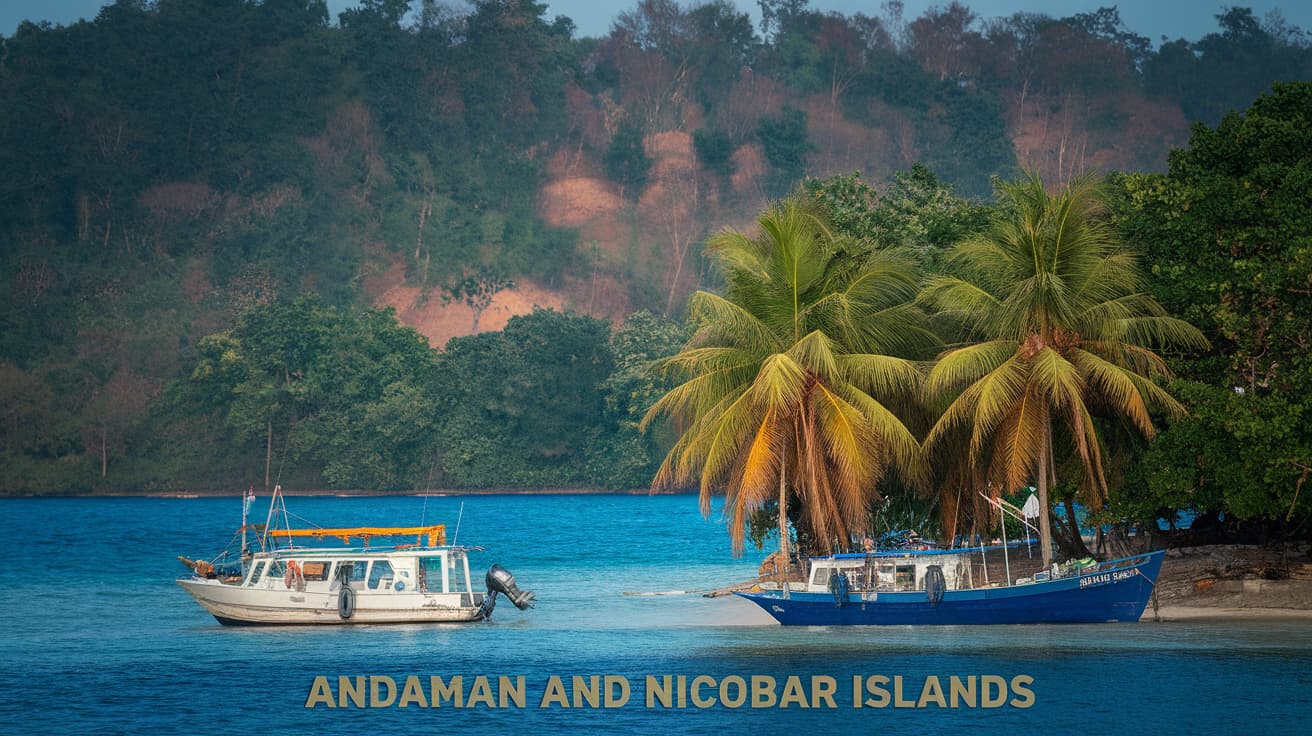
When we ask, “Which island group of India lies to its south-east?” — the answer is the Andaman and Nicobar Islands. These islands form the south-eastern extension of India and are known for their strategic importance, tropical beauty, and rich biodiversity.
Let’s explore their location, features, and significance in detail.
The Andaman and Nicobar Islands lie to the south-east of the Indian mainland, in the Bay of Bengal. They form an archipelago that stretches close to Southeast Asia and mark India’s maritime boundary in that direction.
Location: Bay of Bengal, south-east of India
Latitude Range: Between 6°N and 14°N
Longitude Range: Between 92°E and 94°E
Distance from Mainland: About 1,200 km from the east coast of India (Chennai)
Total Number of Islands: Around 572 islands (about 38 inhabited)
Capital: Port Blair
Union Territory Since: 1956
These islands are a chain of small and large landmasses, separated by narrow sea channels and surrounded by clear, turquoise waters.
The Andaman and Nicobar Islands are divided into two main groups:
Andaman Islands (North)
Consist of about 325 islands.
Major islands: North Andaman, Middle Andaman, and South Andaman.
The Ten Degree Channel separates them from the Nicobar group.
Nicobar Islands (South)
Comprise about 247 islands.
Major islands: Car Nicobar, Great Nicobar, and Little Nicobar.
The Indira Point on Great Nicobar is the southernmost point of India.
These islands stretch in a north-south direction, resembling an arc between Myanmar and Indonesia.
The Andaman and Nicobar Islands hold immense strategic and geographic importance for India.
They lie close to the Malacca Strait, one of the busiest shipping routes in the world, connecting the Indian Ocean with the Pacific Ocean.
Their location gives India a key position in monitoring sea trade and naval movements in the region.
The Andaman and Nicobar Command (ANC), headquartered at Port Blair, is India’s only tri-service defense command (Army, Navy, and Air Force working together).
Thus, apart from being a tourist paradise, these islands are also crucial for India’s maritime security.
The islands have a tropical monsoon climate, with warm temperatures and high humidity throughout the year.
Rainfall: Heavy rainfall from both southwest and northeast monsoons.
Temperature: Average between 23°C to 30°C.
Vegetation: Dense tropical rainforests and mangroves.
Beaches: White sandy beaches and coral reefs make them a popular tourist destination.
The Andaman and Nicobar Islands are often called “India’s tropical paradise” for their scenic beauty and rich marine life.
The islands are known for their extraordinary biodiversity — both on land and underwater.
Home to 2,200+ plant species and 270+ bird species, many of which are endemic.
The surrounding waters have vibrant coral reefs, sea turtles, and marine mammals.
The Mahatma Gandhi Marine National Park and Rani Jhansi Marine National Park protect the coral ecosystems.
Great Nicobar Biosphere Reserve is recognized by UNESCO for its ecological importance.
The population of the Andaman and Nicobar Islands includes a mix of indigenous tribes and settlers from the Indian mainland.
Jarawas, Sentinelese, Onge, and Great Andamanese (in the Andamans)
Nicobarese and Shompens (in the Nicobars)
Many of these tribes live in isolation and are protected under Indian law. The Sentinelese, in particular, are among the world’s last uncontacted tribes living on North Sentinel Island.
Most of the present-day population comprises settlers from Bengal, Tamil Nadu, Andhra Pradesh, and Kerala, who moved here after independence.
Tourism is one of the most important sectors for the islands’ economy.
Havelock Island (Swaraj Dweep): Famous for Radhanagar Beach and scuba diving.
Neil Island (Shaheed Dweep): Known for coral reefs and clear waters.
Ross Island (Netaji Subhas Chandra Bose Island): Showcases colonial ruins from British times.
Cellular Jail: A national memorial that reminds India of the freedom struggle.
Mount Harriet National Park: Rich in flora and fauna with scenic trekking routes.
Great Nicobar Island: Home to Indira Point and Campbell Bay National Park.
These destinations attract nature lovers, divers, and history enthusiasts from around the world.
India’s other island group, the Lakshadweep Islands, lies to the south-west of the mainland, in the Arabian Sea. To avoid confusion, here’s a quick comparison:
| Feature | Andaman & Nicobar Islands | Lakshadweep Islands |
| Location | South-East of India (Bay of Bengal) | South-West of India (Arabian Sea) |
| Number of Islands | About 572 | 36 |
| Area | 8,249 sq km | 32 sq km |
| Type | Volcanic & sedimentary islands | Coral atolls |
| Capital | Port Blair | Kavaratti |
| Climate | Tropical monsoon | Tropical humid |
| Major Use | Tourism, defense, trade | Fishing, tourism, coconut cultivation |
So, while Lakshadweep lies to the southwest, the Andaman and Nicobar Islands lie to the southeast of India.
Strategic Importance: Safeguards India’s maritime borders and shipping routes.
Economic Role: Supports trade, fisheries, and eco-tourism.
Biodiversity Hotspot: Protects rare species and ecosystems.
Cultural Value: Home to ancient tribes and colonial heritage sites.
Tourism: Promotes sustainable travel and boosts local income.
To sum up, the Andaman and Nicobar Islands are the island group of India that lies to its south-east, in the Bay of Bengal. This archipelago not only enhances India’s geographical beauty but also strengthens its strategic and ecological presence in the Indian Ocean region.
From dense rainforests to coral reefs and from indigenous tribes to world-class beaches, the Andaman and Nicobar Islands represent a perfect blend of natural wonder, cultural depth, and national significance.
The Andaman and Nicobar Islands lie to the south-east of India, in the Bay of Bengal.
The Ten Degree Channel separates the Andaman group of islands from the Nicobar group.
Indira Point on Great Nicobar Island is the southernmost point of India’s territory.
The Lakshadweep Islands, located in the Arabian Sea, lie to the south-west of the Indian mainland.
The capital of the Andaman and Nicobar Islands is Port Blair, situated on South Andaman Island.