

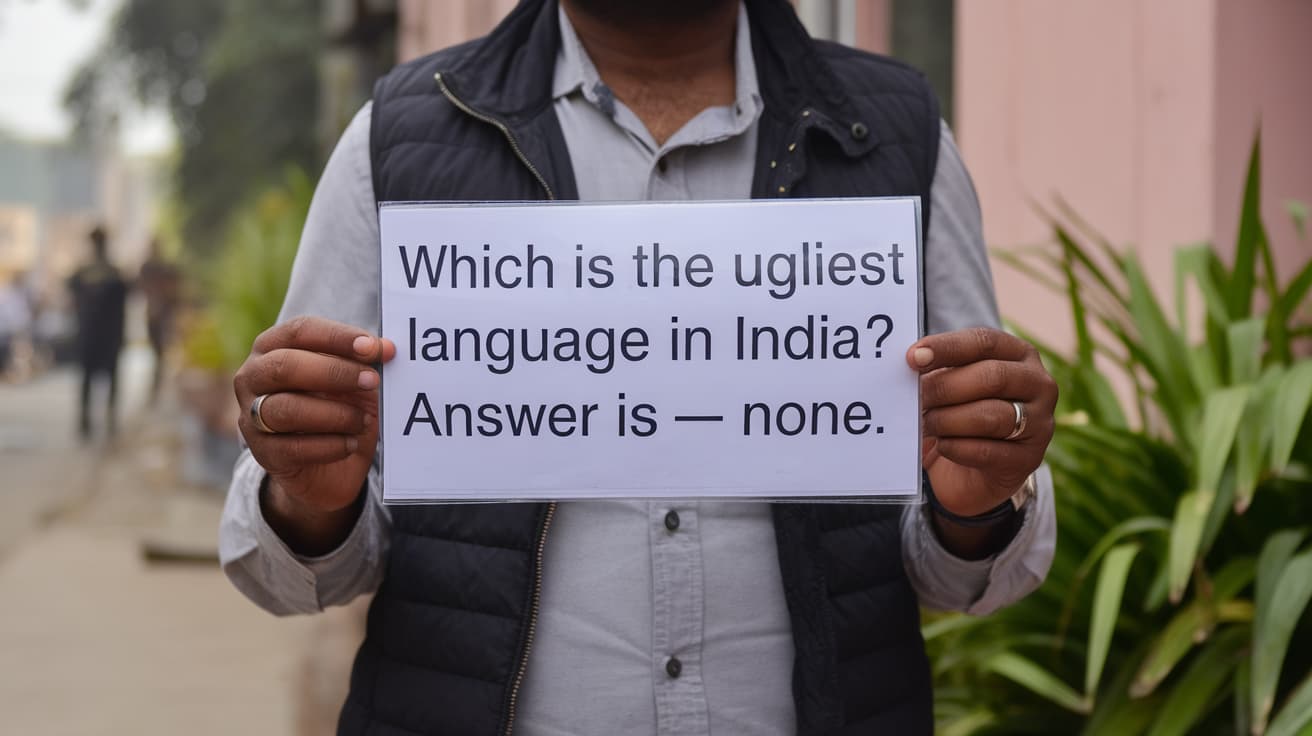
Which Is the Ugliest Language in India? answer is — none.
F
Discover verified facts, data, and insights about India’s states, culture, economy, education, and more — all in one place at FactBharat.
Search for a command to run...
Discover verified facts, data, and insights about India’s states, culture, economy, education, and more — all in one place at FactBharat.
No comments yet. Be the first to comment.
Moving to the USA from India is a dream for many. Whether you want to study, work, or live with family, the process can seem complex. But with the right information, you can plan your move confidently. I’ll guide you through the key steps and options...
Opening a college in India is a dream for many educators and entrepreneurs who want to contribute to the country’s education sector. If you are one of those who want to start a college, you need to understand the process clearly. It involves several ...
Opening a hospital in India is a significant and rewarding venture. If you’ve ever wondered how to start one, you’re in the right place. Whether you’re a healthcare professional, entrepreneur, or investor, understanding the process is crucial. You’ll...
Opening a medical store in India can be a rewarding business opportunity. You get to serve your community by providing essential medicines and healthcare products. If you are thinking about starting a medical store, you might wonder where to begin an...
Opening a restaurant in India can be an exciting and rewarding venture. Whether you dream of serving traditional Indian dishes or international cuisine, the process involves careful planning and understanding of local regulations. If you’re ready to ...
FactBharat | Insights About India
2558 posts
Discover verified facts, data, and insights about India’s states, culture, economy, education, and more — all in one place at FactBharat.
On this page
India is a land of incredible linguistic diversity. With more than 1,600 spoken languages and hundreds of dialects, every state, city, and community has its unique way of communicating. Yet, on social media or in casual debates, you may sometimes hear people argue over which language sounds “best” or even “ugliest.”
But can any language truly be called ugly? Or is it simply a matter of perception, familiarity, and personal bias? Let’s explore this question with facts, respect, and an open mind.
The question “Which is the ugliest language in India?” often arises not out of malice, but out of curiosity or regional pride. India is a multilingual nation, and each language has a distinct sound, tone, and rhythm. What sounds musical to one person might sound harsh to another.
However, labeling any language as “ugly” reflects a subjective opinion, not an objective truth. No language is superior or inferior by nature — all are systems created by humans to communicate, express feelings, and share culture.
The concept of beauty in language is deeply cultural and emotional. It depends on what you grew up hearing, what emotions you associate with certain sounds, and what languages dominate media and education around you.
For example:
A Hindi speaker might find Tamil or Malayalam difficult to understand, and therefore unfamiliar.
A Tamil speaker might think Marathi sounds strong and fast, simply because of its rhythm.
A person from Karnataka might find Bengali melodious but struggle with its pronunciation.
None of these views make one language better or worse — they simply reflect personal experience.
Every major Indian language has its own charm, shaped by history, geography, and culture. Let’s look at what makes a few of them special.
Spoken across northern and central India, Hindi is one of the most widely understood languages.
It draws from Sanskrit, Persian, and Urdu, giving it a blend of softness and structure.
Bollywood and media have made Hindi a language of emotion and storytelling.
Tamil is one of the world’s oldest living languages, with a recorded history of over 2,000 years.
It has a poetic, rhythmic tone and a rich literary tradition, from ancient Sangam poetry to modern cinema.
Often called the “Italian of the East,” Telugu is known for its smooth, vowel-rich pronunciation.
Its flowing sounds make it one of the most melodious languages in India.
Malayalam is a language full of rhythm and complexity.
Its long words and musical tone reflect Kerala’s cultural depth and emphasis on expression.
Kannada has an elegant script and a balanced rhythm, with literature that dates back more than a thousand years.
Its classic works by poets like Pampa and Kuvempu are celebrated nationwide.
Bengali is often associated with sweetness and art.
It’s the language of Rabindranath Tagore and Kazi Nazrul Islam, filled with emotional and poetic expression.
Marathi is versatile — it can sound strong in everyday conversation but deeply emotional in poetry and music.
Its literature and theater traditions give it a vibrant artistic identity.
Gujarati has a cheerful tone and rhythmic simplicity.
It’s widely spoken by communities known for trade, travel, and creativity.
Each language, when you listen closely, tells a story of its people — their struggles, their humor, their identity.
Many times, what people label as “ugly” isn’t about the language at all — it’s about how it’s spoken or how unfamiliar it sounds.
A few common reasons for misunderstanding include:
Accent differences: A regional accent might sound rough to non-native speakers.
Media stereotypes: Some movies or memes exaggerate certain speech styles for humor.
Lack of exposure: People often judge languages they don’t understand.
Prejudice or rivalry: Friendly competition between states sometimes leads to unfair generalizations.
When you understand the meaning behind words and the culture behind tone, every language becomes beautiful in its own way.
In 2020, a controversial question appeared on a Google form where users were asked, “Which is the ugliest language in India?” Many respondents selected Kannada, causing widespread outrage in Karnataka.
Google later apologized officially, clarifying that it was an auto-generated search result, not a company opinion. The incident sparked an important discussion — how dangerous it can be to label or rank languages unfairly.
This controversy reminded everyone that language is tied to identity and pride. Words are more than just sounds; they carry emotions, history, and belonging. Insulting a language means disrespecting millions who speak it.
India’s Constitution recognizes 22 official languages under the Eighth Schedule, but in practice, over 1,600 languages are spoken across the country. Many are endangered, spoken by only a few thousand people.
Every language:
Preserves local wisdom and tradition
Connects generations through stories and songs
Reflects a community’s unique way of seeing the world
Adds to India’s collective identity
Calling one language ugly ignores the beauty of linguistic diversity that makes India so unique.
For most people, language is not just a way to communicate — it’s part of who they are. The words you speak are tied to your memories, your hometown, your family, and your way of thinking.
For example:
A Bengali lullaby brings warmth to someone from Kolkata.
A Tamil proverb feels wise to someone from Madurai.
A Punjabi song can make anyone dance, no matter their background.
When you hear someone’s mother tongue, you hear their world. That’s why no language deserves to be mocked or called “ugly.”
Many linguists agree that all human languages are equally complex and expressive. What makes a language beautiful isn’t its sound — it’s how it makes people feel.
Some love the melody of Telugu, others the strength of Punjabi, and others the calm rhythm of Malayalam. But none are ugly. Each has a purpose, a poetry, and a personality.
Even English, which has borrowed words from over 350 other languages, becomes beautiful when used with care and emotion. The same applies to every Indian language — it’s the speaker’s love that gives it meaning.
Instead of asking “Which is the ugliest language in India?”, maybe we should ask:
What makes each Indian language unique?
How can we protect endangered regional languages?
How can we encourage children to learn and respect multiple languages?
India’s strength lies in its multilingual harmony. People often switch between languages daily — speaking Tamil at home, Hindi at work, and English online. This flexibility is a rare and powerful gift.
Here are a few ways we can celebrate India’s languages respectfully:
Learn basic words in another Indian language — greetings, thank you, or proverbs.
Watch regional films with subtitles to appreciate their rhythm and storytelling.
Listen to folk music — from Assamese Bihu songs to Rajasthani ballads, each carries a piece of history.
Support local literature — reading regional authors helps preserve native voices.
Avoid stereotypes — never laugh at how a language sounds; instead, ask what it means.
The more you explore, the more you’ll realize that every language carries beauty — in its tone, script, and emotion.
So, which is the ugliest language in India?
The honest answer is — none.
No Indian language is ugly. Every language, from Hindi to Tamil to Khasi or Manipuri, carries centuries of culture, emotion, and wisdom. What some may find unfamiliar, others find comforting and beautiful.
Languages are like colors — each one adds depth to India’s identity. Together, they paint a picture of unity in diversity that makes our nation truly extraordinary.
No. Kannada is a beautiful and ancient language spoken by millions. The “ugliest language” controversy was based on a false search result, not fact. Kannada has a rich history and literary tradition that continues to thrive.
No. Languages evolve naturally and reflect human creativity. Calling a language ugly is subjective and disrespectful. Every language has its own beauty, rhythm, and emotional depth.
Beauty in language is personal. Many find Telugu, Bengali, or Tamil melodious, while others love the rhythm of Marathi or Hindi. Each language sounds beautiful to the people who speak and love it.
India recognizes 22 official languages under the Eighth Schedule of the Constitution, including Hindi, Bengali, Tamil, Telugu, Kannada, Marathi, Malayalam, and others.
Respecting all languages helps preserve India’s unity and cultural richness. Each language represents a community’s heritage and way of life, making every one of them valuable.