

Which Is the Biggest Dam in India?
F
Discover verified facts, data, and insights about India’s states, culture, economy, education, and more — all in one place at FactBharat.
Search for a command to run...
Discover verified facts, data, and insights about India’s states, culture, economy, education, and more — all in one place at FactBharat.
No comments yet. Be the first to comment.
Moving to the USA from India is a dream for many. Whether you want to study, work, or live with family, the process can seem complex. But with the right information, you can plan your move confidently. I’ll guide you through the key steps and options...
Opening a college in India is a dream for many educators and entrepreneurs who want to contribute to the country’s education sector. If you are one of those who want to start a college, you need to understand the process clearly. It involves several ...
Opening a hospital in India is a significant and rewarding venture. If you’ve ever wondered how to start one, you’re in the right place. Whether you’re a healthcare professional, entrepreneur, or investor, understanding the process is crucial. You’ll...
Opening a medical store in India can be a rewarding business opportunity. You get to serve your community by providing essential medicines and healthcare products. If you are thinking about starting a medical store, you might wonder where to begin an...
Opening a restaurant in India can be an exciting and rewarding venture. Whether you dream of serving traditional Indian dishes or international cuisine, the process involves careful planning and understanding of local regulations. If you’re ready to ...
FactBharat | Insights About India
2558 posts
Discover verified facts, data, and insights about India’s states, culture, economy, education, and more — all in one place at FactBharat.
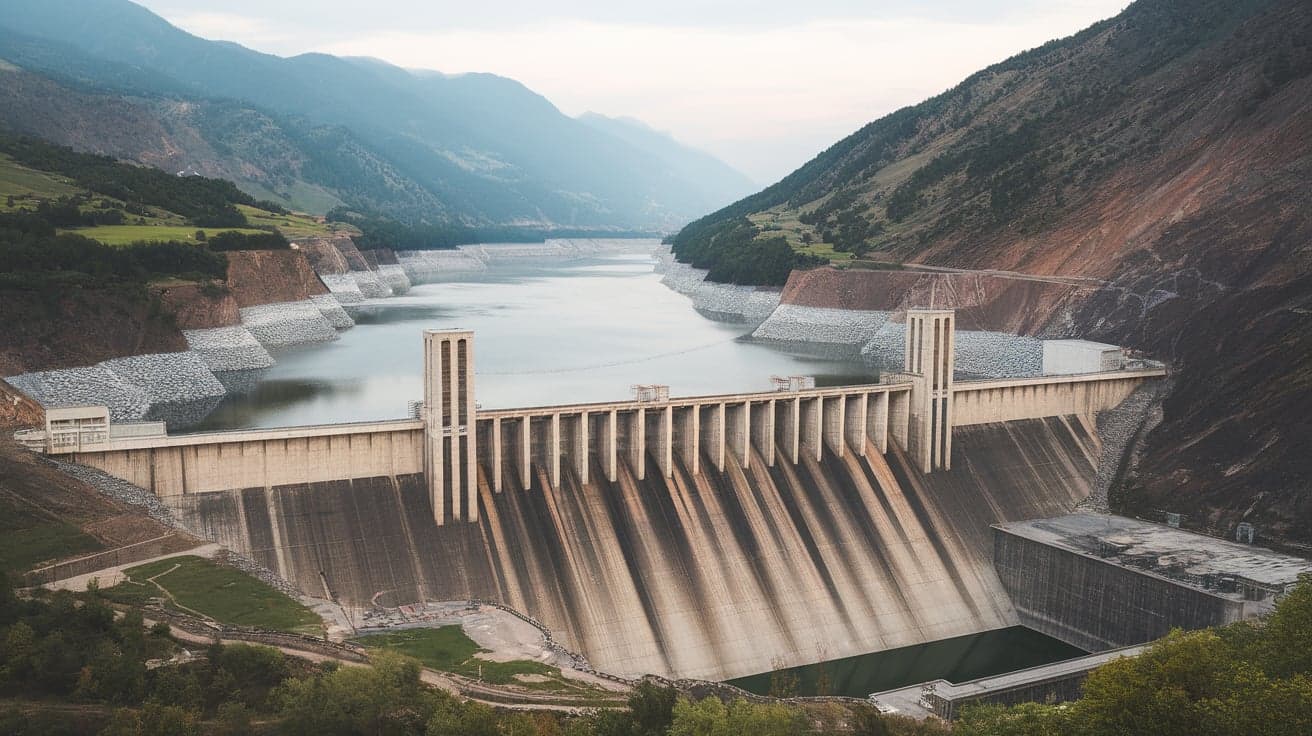
India is known for its vast network of rivers and water reservoirs, which play a crucial role in irrigation, power generation, and flood control. Among these, dams stand as monumental structures that support the country’s agricultural and industrial growth. When people ask, “Which is the biggest dam in India?” — the answer is clear: the Tehri Dam in Uttarakhand holds that title.
Let’s dive deeper into what makes the Tehri Dam the biggest in India, its key features, importance, and a look at other major dams that power the nation’s water and energy needs.
The Tehri Dam, located on the Bhagirathi River in the state of Uttarakhand, is the largest dam in India in terms of height and capacity. It’s one of the tallest dams in the world and a vital component of India’s hydroelectric and irrigation system.
Location: New Tehri, Uttarakhand
River: Bhagirathi River
Type: Rock and earth-fill embankment dam
Height: 260.5 meters (855 feet) — highest in India
Length: 575 meters
Reservoir Capacity: 4.0 cubic kilometers (around 4 billion cubic meters)
Installed Power Capacity: 1,000 MW (expandable to 2,400 MW with pumped storage)
Construction Started: 1978
Completion and Operation: 2006
Managed By: Tehri Hydro Development Corporation (THDC India Ltd.)
The Tehri Dam stands as a marvel of modern engineering and a lifeline for millions of people across northern India.
The Tehri Dam earns its title as the biggest dam in India because of its massive height, reservoir capacity, and power generation capability.
At 260.5 meters, it’s not just the tallest in India but also ranks among the top 10 highest dams globally.
It stores nearly 4,000 million cubic meters of water, making it India’s largest water reservoir.
The dam’s hydropower plant generates about 1,000 megawatts (MW) of electricity, meeting the needs of Uttarakhand, Delhi, Punjab, Haryana, and Uttar Pradesh.
Beyond power generation, the Tehri Dam:
Supplies drinking water to major cities including Delhi.
Provides irrigation water to over 2.7 lakh hectares of agricultural land.
Helps control floods in the Ganga basin during heavy monsoon seasons.
The Tehri Dam was constructed using rock-fill and earth-core techniques, designed to withstand earthquakes and extreme weather.
The project faced many delays and controversies due to environmental and displacement concerns.
Engineers had to ensure that the dam could handle seismic activity since Uttarakhand lies in an earthquake-prone zone.
Today, it stands as one of India’s safest and most efficient large dams, operated under strict monitoring.
The Tehri Dam contributes significantly to India’s energy and water security.
Electricity Generation: Supports multiple states with renewable hydropower.
Irrigation: Provides reliable water for agriculture, boosting crop production.
Flood Control: Reduces flood risks in downstream areas during monsoon.
Water Supply: Delivers clean drinking water to millions, including residents of Delhi and surrounding regions.
Tourism: The Tehri Lake formed by the dam is now a popular adventure and eco-tourism destination.
While Tehri is the biggest dam in India, several other dams hold great importance for their size, design, and contribution. Here’s a look at some of them:
| Dam Name | State | River | Height (m) | Type | Key Use |
| Bhakra Nangal Dam | Himachal Pradesh & Punjab | Sutlej | 226 m | Concrete Gravity | Power & Irrigation |
| Sardar Sarovar Dam | Gujarat | Narmada | 163 m | Gravity | Water Supply & Power |
| Hirakud Dam | Odisha | Mahanadi | 60.9 m | Earthfill | Flood Control & Irrigation |
| Nagarjuna Sagar Dam | Telangana | Krishna | 124 m | Masonry | Irrigation & Power |
| Indira Sagar Dam | Madhya Pradesh | Narmada | 92 m | Concrete Gravity | Power Generation |
| Idukki Dam | Kerala | Periyar | 168.9 m | Arch Dam | Hydroelectric |
| Rihand Dam | Uttar Pradesh | Rihand | 91 m | Concrete Gravity | Irrigation & Power |
| Koyna Dam | Maharashtra | Koyna | 103 m | Rubble Concrete | Power Generation |
Each of these dams plays a major role in India’s regional water management and energy supply network.
While large dams like Tehri are crucial for development, they also bring challenges.
Boost in renewable energy capacity.
Increased irrigation and agricultural productivity.
Improved flood management and water storage.
Submergence of villages and forests.
Displacement of local communities.
Ecological imbalance and risk to aquatic life.
Efforts have been made to minimize these effects through resettlement programs, environmental monitoring, and sustainable tourism initiatives.
People often compare Tehri Dam and Bhakra Nangal Dam since both are monumental structures.
| Feature | Tehri Dam | Bhakra Nangal Dam |
| Location | Uttarakhand | Himachal Pradesh–Punjab Border |
| River | Bhagirathi | Sutlej |
| Height | 260.5 m | 226 m |
| Type | Rock & Earth-fill | Concrete Gravity |
| Power Capacity | 1,000 MW | 1,325 MW |
| Completion | 2006 | 1963 |
While Bhakra Nangal is older and more iconic, Tehri surpasses it in height and storage capacity, making it the biggest dam in India overall.
It can withstand an earthquake measuring up to 8.5 magnitude on the Richter scale.
The Tehri reservoir, known as Tehri Lake, has become a popular site for boating, jet skiing, and paragliding.
The project displaced around 100,000 people, leading to the creation of the new town New Tehri.
It contributes significantly to the National Hydroelectric Grid.
To sum up, the Tehri Dam in Uttarakhand is the biggest dam in India, both in terms of height and reservoir capacity. Built on the Bhagirathi River, it stands as a symbol of India’s engineering excellence and commitment to renewable energy and water management.
However, India’s dam network extends far beyond Tehri — with structures like Bhakra Nangal, Sardar Sarovar, and Hirakud ensuring that water reaches every corner of the country. Together, they make India one of the global leaders in hydro-infrastructure and sustainable development.
The Tehri Dam in Uttarakhand is the biggest dam in India, with a height of 260.5 meters and a capacity of 4 billion cubic meters of water.
The Hirakud Dam in Odisha is the longest dam in India, stretching over 25.8 kilometers across the Mahanadi River.
The Kallanai Dam (Grand Anicut) in Tamil Nadu, built around the 2nd century AD by King Karikalan of the Chola dynasty, is the oldest functional dam in India.
The Koyna Dam in Maharashtra is among India’s top hydroelectric dams, generating around 1,960 MW of power.
The Tehri Dam serves multiple purposes — hydroelectric power generation, irrigation, drinking water supply, and flood control — benefiting several northern states of India.