

What is the Standard Meridian of India
F
Discover verified facts, data, and insights about India’s states, culture, economy, education, and more — all in one place at FactBharat.
Search for a command to run...
Discover verified facts, data, and insights about India’s states, culture, economy, education, and more — all in one place at FactBharat.
No comments yet. Be the first to comment.
Moving to the USA from India is a dream for many. Whether you want to study, work, or live with family, the process can seem complex. But with the right information, you can plan your move confidently. I’ll guide you through the key steps and options...
Opening a college in India is a dream for many educators and entrepreneurs who want to contribute to the country’s education sector. If you are one of those who want to start a college, you need to understand the process clearly. It involves several ...
Opening a hospital in India is a significant and rewarding venture. If you’ve ever wondered how to start one, you’re in the right place. Whether you’re a healthcare professional, entrepreneur, or investor, understanding the process is crucial. You’ll...
Opening a medical store in India can be a rewarding business opportunity. You get to serve your community by providing essential medicines and healthcare products. If you are thinking about starting a medical store, you might wonder where to begin an...
Opening a restaurant in India can be an exciting and rewarding venture. Whether you dream of serving traditional Indian dishes or international cuisine, the process involves careful planning and understanding of local regulations. If you’re ready to ...
FactBharat | Insights About India
2558 posts
Discover verified facts, data, and insights about India’s states, culture, economy, education, and more — all in one place at FactBharat.
India is a vast country that spans several degrees of longitude, which means different parts of the nation experience sunrise and sunset at different times. To maintain uniformity in time across all regions, the government established a standard meridian — a single longitude whose local time is used as the official time for the entire country. This is what we call the Standard Meridian of India.
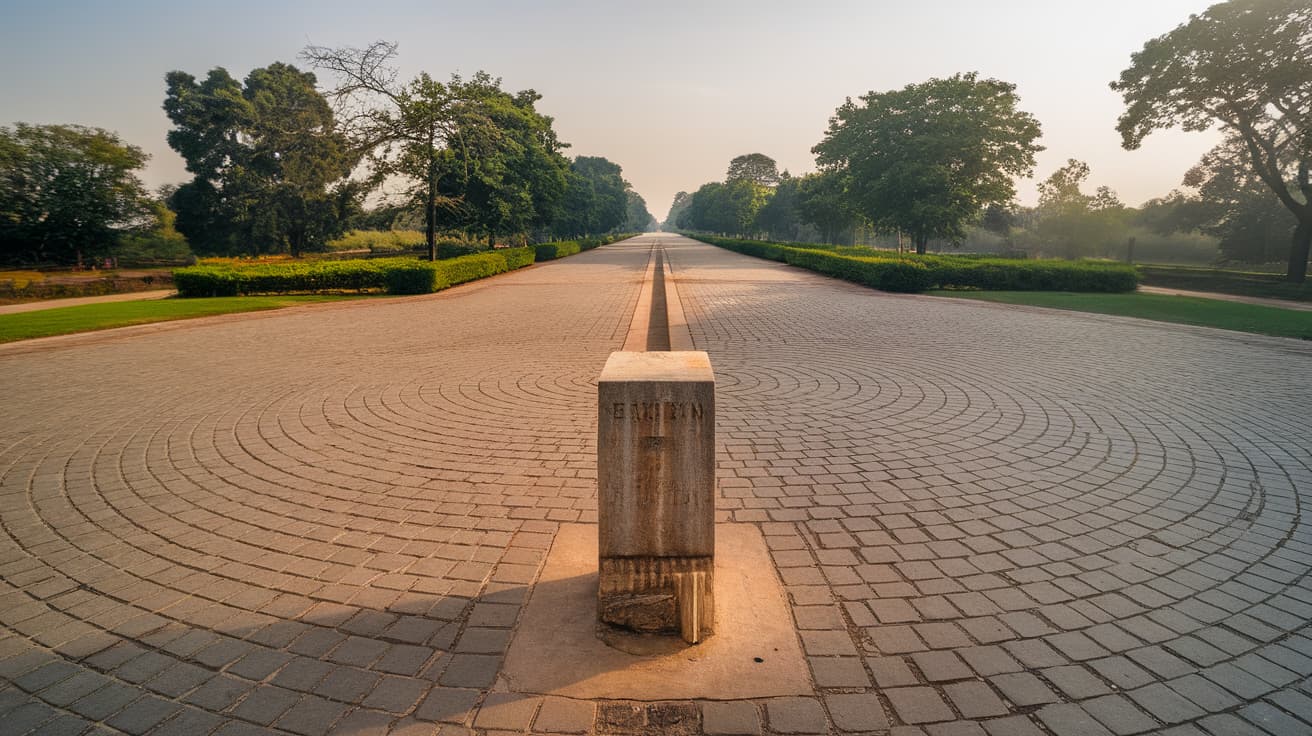
The Standard Meridian of India is 82°30′ East longitude. It passes through Mirzapur near Allahabad (Prayagraj) in the state of Uttar Pradesh. The local time along this meridian is considered the Indian Standard Time (IST), which is 5 hours and 30 minutes ahead of Greenwich Mean Time (GMT+5:30).
Choosing this meridian helped balance the time difference between India’s westernmost and easternmost regions, creating a unified time zone for the entire country.
India stretches roughly between 68°7′E and 97°25′E longitudes, which creates a time difference of about two hours between its eastern and western borders. Selecting 82°30′E was a middle ground to minimize this variation.
Here’s why it was chosen:
It lies almost at the center of India’s east–west extent.
It provides a fair balance of time difference across states.
It was considered practical and convenient for maintaining a single national time.
The location at Mirzapur had the facilities for astronomical observations and time measurement.
Thus, the 82°30′E meridian became the ideal reference point for Indian Standard Time.
The time measured along the standard meridian is known as Indian Standard Time (IST).
IST = GMT + 5:30 hours
This means when it is 12:00 noon in London, it is 5:30 PM in India.
IST is followed across all states and union territories, ensuring that train schedules, television broadcasts, and official timings remain uniform nationwide.
Before independence, different regions of India followed their own local times, such as Bombay Time, Calcutta Time, and Madras Time. This created confusion in communication and transportation.
A standard meridian was necessary because:
India’s wide longitudinal spread caused time differences of nearly 2 hours between east and west.
Having a common national time simplified administrative and commercial coordination.
It became easier for railways, postal services, and government offices to work on the same schedule.
Hence, in 1905, Indian Standard Time was officially adopted based on the 82°30′E longitude.
There have been debates about whether India should have two time zones — one for the eastern states (like Assam, Arunachal Pradesh, and Nagaland) and one for the rest of the country. These regions experience sunrise much earlier, often by over an hour and a half.
However, maintaining multiple time zones can:
Create confusion in schedules and communication.
Affect railway and airline operations.
Lead to administrative complications.
For simplicity and unity, India continues with one standard time zone — IST, based on 82°30′E.
The exact location of the standard meridian is near Mirzapur, around 25.15°N latitude.
The difference in time between India’s easternmost (Arunachal Pradesh) and westernmost (Gujarat) points is about 1 hour and 45 minutes.
Nepal uses a time zone of GMT+5:45, which is 15 minutes ahead of IST.
The Greenwich Meridian (0° longitude) is located in London, and all world time zones are measured east or west of it.
The Standard Meridian of India (82°30′E) plays a crucial role in keeping the entire country synchronized. It ensures that every office, school, train, and institution operates under the same time. While India’s size and geography might suggest multiple time zones, having one national time helps maintain unity and coordination across the country.
What is the longitude of the Standard Meridian of India?
The Standard Meridian of India is at 82°30′ East longitude, passing near Mirzapur in Uttar Pradesh.
Why was 82°30′E chosen as the Standard Meridian?
It was chosen because it runs almost through the center of India, minimizing the time difference between the country’s eastern and western parts.
What is the time difference between IST and GMT?
Indian Standard Time (IST) is 5 hours and 30 minutes ahead of Greenwich Mean Time (GMT+5:30).
Which city is closest to the Standard Meridian of India?
The city of Mirzapur in Uttar Pradesh is closest to the standard meridian.
How many time zones does India have?
India follows one time zone across the entire country, known as Indian Standard Time (IST), based on the 82°30′E longitude.