

How to Get Commercial Pilot License in India
F
Discover verified facts, data, and insights about India’s states, culture, economy, education, and more — all in one place at FactBharat.
Search for a command to run...
Discover verified facts, data, and insights about India’s states, culture, economy, education, and more — all in one place at FactBharat.
No comments yet. Be the first to comment.
Moving to the USA from India is a dream for many. Whether you want to study, work, or live with family, the process can seem complex. But with the right information, you can plan your move confidently. I’ll guide you through the key steps and options...
Opening a college in India is a dream for many educators and entrepreneurs who want to contribute to the country’s education sector. If you are one of those who want to start a college, you need to understand the process clearly. It involves several ...
Opening a hospital in India is a significant and rewarding venture. If you’ve ever wondered how to start one, you’re in the right place. Whether you’re a healthcare professional, entrepreneur, or investor, understanding the process is crucial. You’ll...
Opening a medical store in India can be a rewarding business opportunity. You get to serve your community by providing essential medicines and healthcare products. If you are thinking about starting a medical store, you might wonder where to begin an...
Opening a restaurant in India can be an exciting and rewarding venture. Whether you dream of serving traditional Indian dishes or international cuisine, the process involves careful planning and understanding of local regulations. If you’re ready to ...
FactBharat | Insights About India
2558 posts
Discover verified facts, data, and insights about India’s states, culture, economy, education, and more — all in one place at FactBharat.
Getting your Commercial Pilot License (CPL) in India is an exciting journey if you dream of flying professionally. Whether you want to join an airline or work as a charter pilot, the CPL is your key to the cockpit. But the process can seem complex if you don’t know where to start.
In this article, I’ll walk you through the entire process of obtaining a CPL in India. You’ll learn about eligibility criteria, training requirements, exams, and tips to succeed. By the end, you’ll have a clear roadmap to follow and be one step closer to your dream career in aviation.
A Commercial Pilot License allows you to fly aircraft for commercial purposes. Unlike a private pilot license, a CPL lets you get paid for flying. In India, the Directorate General of Civil Aviation (DGCA) regulates the issuance of CPLs.
Here’s what a CPL means for you:
To get a CPL in India, you must meet certain eligibility requirements and complete both ground and flight training. The process ensures you have the skills and knowledge to operate aircraft safely.
Before you apply for CPL training, you need to check if you meet the basic eligibility criteria set by DGCA. These include:
Meeting these criteria is essential to enroll in a DGCA-approved flying school. If you don’t have the required educational background, you may need to complete additional courses.
The first step towards your CPL is getting a Student Pilot License. The SPL allows you to start flying training under supervision. To get an SPL:
Once you have your SPL, you can begin your flying lessons. This license is valid for a limited period and is a prerequisite for CPL training.
Choosing the right flying school is crucial. India has several DGCA-approved flying academies offering CPL courses. When selecting a school, consider:
The CPL course typically lasts 18 to 24 months. It combines ground school classes and practical flying hours. You will learn about aircraft systems, navigation, meteorology, air regulations, and more.
Ground training prepares you for the theoretical exams and practical flying. It covers subjects like:
You will attend classroom sessions and use simulators to practice. This training builds your understanding of aviation principles and safety procedures.
DGCA mandates a minimum of 200 hours of flying time for CPL candidates. This includes:
Flying training helps you develop skills in aircraft handling, take-offs, landings, emergency procedures, and navigation. You will log your hours and progress under instructor supervision.
After completing your training, you must pass the DGCA CPL exams. These tests assess your theoretical knowledge and practical skills. The exams include:
Passing these exams is mandatory to receive your CPL. You can attempt the exams multiple times if needed, but it’s best to prepare thoroughly.
To hold a CPL, you must have a valid Class I medical certificate. This certificate confirms you meet the health standards required for commercial flying. The medical exam covers:
You must renew this certificate annually or as required by DGCA.
Once you clear all exams and medical checks, you can apply to DGCA for your CPL. Submit:
DGCA will verify your documents and issue your CPL if everything is in order. You are now officially a commercial pilot!
Getting a CPL is challenging but rewarding. Here are some tips to help you succeed:
With a CPL, you can explore various career paths in aviation:
Many Indian airlines now prefer candidates with a CPL and an Airline Transport Pilot License (ATPL) frozen at CPL level. You can upgrade your license with more flying hours and exams.
The cost of obtaining a CPL varies depending on the flying school and aircraft used. On average, you can expect:
| Expense | Approximate Cost (INR) |
| Flying Training | 25,00,000 - 35,00,000 |
| Ground School Fees | 1,50,000 - 3,00,000 |
| Medical Examination | 20,000 - 50,000 |
| DGCA Examination Fees | 50,000 - 1,00,000 |
| Miscellaneous Expenses | 1,00,000 - 2,00,000 |
Planning your finances ahead is important to avoid interruptions during training.
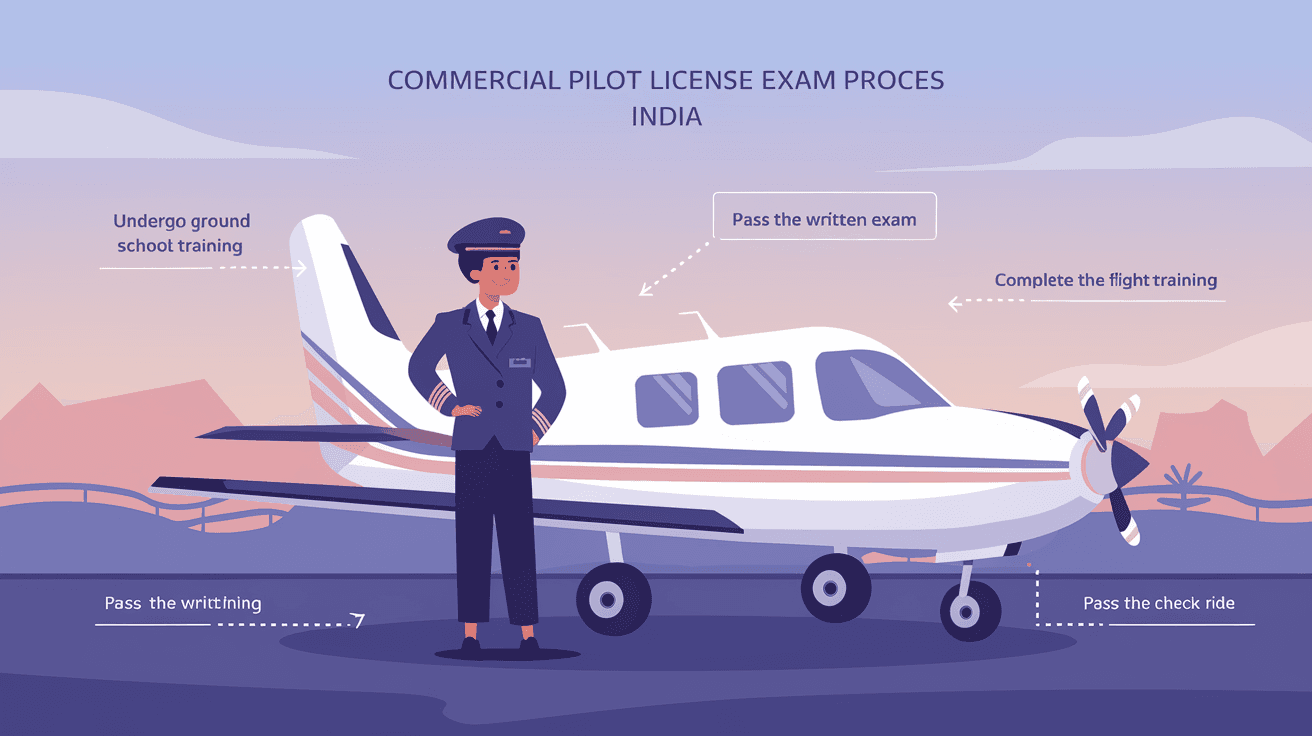
Getting a Commercial Pilot License in India is a structured process that requires dedication, training, and passing exams. You start with eligibility checks, obtain a Student Pilot License, and enroll in a DGCA-approved flying school. After completing ground and flying training, passing DGCA exams, and securing a Class I medical certificate, you can apply for your CPL.
This license opens many doors in the aviation industry, from airlines to corporate flying. With the right preparation and commitment, you can turn your dream of flying professionally into reality. Remember, the journey is demanding but the rewards of a pilot’s career are truly worth it.
You must be at least 18 years old to apply for a CPL in India.
DGCA requires a minimum of 200 flying hours to qualify for a CPL.
No, holding an SPL is mandatory before starting CPL training.
Typically, CPL training takes 18 to 24 months depending on the flying school and your progress.
Yes, a valid Class I medical certificate is required to hold a CPL and must be renewed regularly.