

How to Convert to Buddhism Legally in India
F
Discover verified facts, data, and insights about India’s states, culture, economy, education, and more — all in one place at FactBharat.
Search for a command to run...
Discover verified facts, data, and insights about India’s states, culture, economy, education, and more — all in one place at FactBharat.
No comments yet. Be the first to comment.
Moving to the USA from India is a dream for many. Whether you want to study, work, or live with family, the process can seem complex. But with the right information, you can plan your move confidently. I’ll guide you through the key steps and options...
Opening a college in India is a dream for many educators and entrepreneurs who want to contribute to the country’s education sector. If you are one of those who want to start a college, you need to understand the process clearly. It involves several ...
Opening a hospital in India is a significant and rewarding venture. If you’ve ever wondered how to start one, you’re in the right place. Whether you’re a healthcare professional, entrepreneur, or investor, understanding the process is crucial. You’ll...
Opening a medical store in India can be a rewarding business opportunity. You get to serve your community by providing essential medicines and healthcare products. If you are thinking about starting a medical store, you might wonder where to begin an...
Opening a restaurant in India can be an exciting and rewarding venture. Whether you dream of serving traditional Indian dishes or international cuisine, the process involves careful planning and understanding of local regulations. If you’re ready to ...
FactBharat | Insights About India
2558 posts
Discover verified facts, data, and insights about India’s states, culture, economy, education, and more — all in one place at FactBharat.
Converting to Buddhism in India is a meaningful journey that many people choose for spiritual growth and peace. If you’re considering this path, you might wonder how to convert to Buddhism legally in India. It’s important to understand the process, the legal aspects, and the cultural significance behind this decision. I’ll guide you through everything you need to know.
You don’t have to worry about complicated paperwork or legal hurdles. India respects religious freedom, and converting to Buddhism is straightforward if you follow the right steps. Let’s explore how you can make this transition smoothly and respectfully.
Buddhism is one of the major religions in India, with deep historical roots dating back to the time of Gautama Buddha. It is recognized as a distinct religion under the Indian Constitution, which guarantees freedom of religion to all citizens.
Because of this legal protection, converting to Buddhism in India is a right you can exercise freely. You don’t need to worry about legal restrictions or penalties. However, understanding the cultural and social context is essential to make your conversion meaningful.
Converting to Buddhism in India involves a few clear steps. These steps ensure that your conversion is both legally valid and spiritually authentic.
Before converting, spend time learning about Buddhism. Read Buddhist texts, attend teachings, and understand the core principles like the Four Noble Truths and the Eightfold Path.
This helps you make an informed decision and prepares you for the commitment.
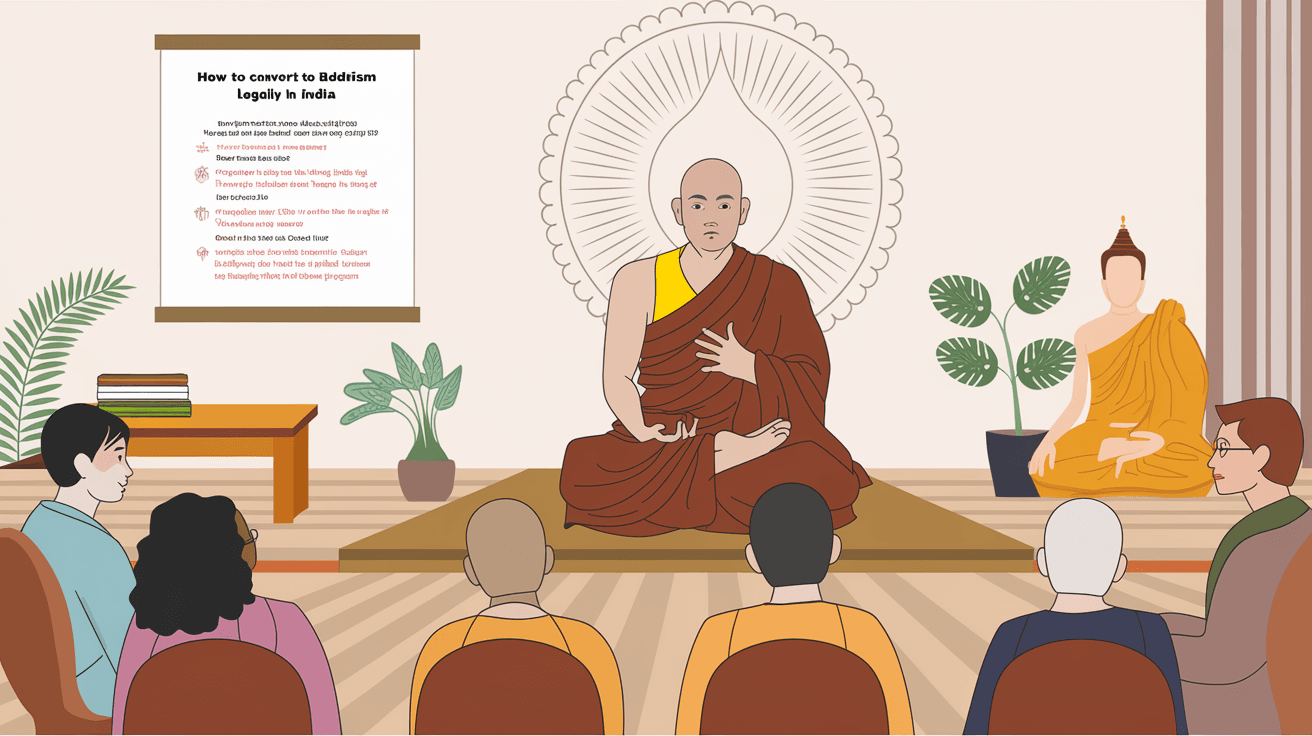
Conversion is often done in the presence of a Buddhist monk or at a Buddhist center. This connection is important for guidance and support.
This step also helps you become part of the Buddhist community.
The key ritual in converting to Buddhism is called “Taking Refuge.” This means you formally accept the Buddha, the Dharma (teachings), and the Sangha (community) as your guides.
This ceremony marks your official entry into Buddhism.
While there is no mandatory government procedure for conversion, you may want to update your legal documents to reflect your new religion.
This helps avoid confusion in legal or administrative matters.
Conversion can affect your social relationships. It’s important to communicate your decision respectfully to family and friends.
This helps maintain harmony and understanding.
No, India’s constitution guarantees freedom of religion, so you don’t need government approval to convert. The process is personal and spiritual, not legal.
Minors can convert with parental consent. It’s advisable for parents to be involved in the process to support the child’s spiritual growth.
Legally, conversion changes your religion but not your caste status. However, social perceptions may vary depending on your community.
Most Buddhist centers conduct conversion ceremonies free of charge or for a nominal donation. There are no official fees required by the government.
Yes, religious freedom allows you to change your religion again if you wish. However, it’s important to consider the spiritual and social implications.
Converting to Buddhism in India is more than a legal act; it’s a profound cultural and spiritual transformation. Buddhism has influenced Indian society for centuries, promoting values like compassion, mindfulness, and equality.
Understanding this cultural context helps you appreciate your new path and connect with others who share your beliefs.
To make your conversion journey fulfilling, consider these tips:
These steps will help you live your new faith fully and joyfully.
Once you have converted, updating your official documents is important for clarity and legal recognition.
Keeping your documents consistent avoids future complications.
While the legal process is simple, social challenges can arise.
To overcome these, seek support from Buddhist groups, online forums, or spiritual mentors. Remember, your journey is personal and valid.
Converting to Buddhism legally in India is a straightforward process protected by the constitution. By understanding the steps—from self-study to formal ceremonies and updating your documents—you can make this spiritual transition smoothly. Buddhism offers a path of peace, mindfulness, and ethical living that many find deeply rewarding.
Remember, conversion is not just a legal change but a heartfelt commitment to a new way of life. Take your time, connect with the community, and embrace the teachings fully. Your journey into Buddhism can bring profound transformation and joy.
The conversion ceremony itself usually takes a few hours. However, the preparation and learning phase can vary depending on your personal pace.
While not mandatory, a conversion certificate helps update your official documents and avoid confusion in legal matters.
Some Buddhist organizations offer online teachings, but the formal conversion ceremony is best done in person for authenticity.
Legally, conversion does not affect your inheritance rights under Indian law.
Yes, you can choose from Theravada, Mahayana, or Vajrayana traditions based on your interest and local availability.