

How to Choose Strike Price for Call Options in India
F
Discover verified facts, data, and insights about India’s states, culture, economy, education, and more — all in one place at FactBharat.
Search for a command to run...
Discover verified facts, data, and insights about India’s states, culture, economy, education, and more — all in one place at FactBharat.
No comments yet. Be the first to comment.
Moving to the USA from India is a dream for many. Whether you want to study, work, or live with family, the process can seem complex. But with the right information, you can plan your move confidently. I’ll guide you through the key steps and options...
Opening a college in India is a dream for many educators and entrepreneurs who want to contribute to the country’s education sector. If you are one of those who want to start a college, you need to understand the process clearly. It involves several ...
Opening a hospital in India is a significant and rewarding venture. If you’ve ever wondered how to start one, you’re in the right place. Whether you’re a healthcare professional, entrepreneur, or investor, understanding the process is crucial. You’ll...
Opening a medical store in India can be a rewarding business opportunity. You get to serve your community by providing essential medicines and healthcare products. If you are thinking about starting a medical store, you might wonder where to begin an...
Opening a restaurant in India can be an exciting and rewarding venture. Whether you dream of serving traditional Indian dishes or international cuisine, the process involves careful planning and understanding of local regulations. If you’re ready to ...
FactBharat | Insights About India
2558 posts
Discover verified facts, data, and insights about India’s states, culture, economy, education, and more — all in one place at FactBharat.
Choosing the right strike price for call options in India can feel tricky at first. But once you understand the basics and some practical strategies, you’ll find it easier to make smart decisions. Whether you’re new to options trading or looking to improve your skills, this guide will help you pick strike prices that fit your goals.
In this article, I’ll walk you through what strike prices are, how they affect your trades, and the key factors to consider when choosing them. You’ll also get tips on managing risk and maximizing potential profits. By the end, you’ll feel more confident in your options trading journey.
The strike price is the fixed price at which you can buy the underlying asset when you exercise a call option. In India, options are mostly traded on stocks and indices like Nifty and Bank Nifty.
Here’s a simple way to think about it:
The strike price you choose affects your potential profit and risk. For example, an ITM call option costs more but has a higher chance of profit. An OTM option is cheaper but riskier.
Picking the right strike price is crucial because it influences:
If you pick a strike price without considering these factors, you might lose money or miss out on gains. So, it’s important to balance your risk tolerance and market outlook.
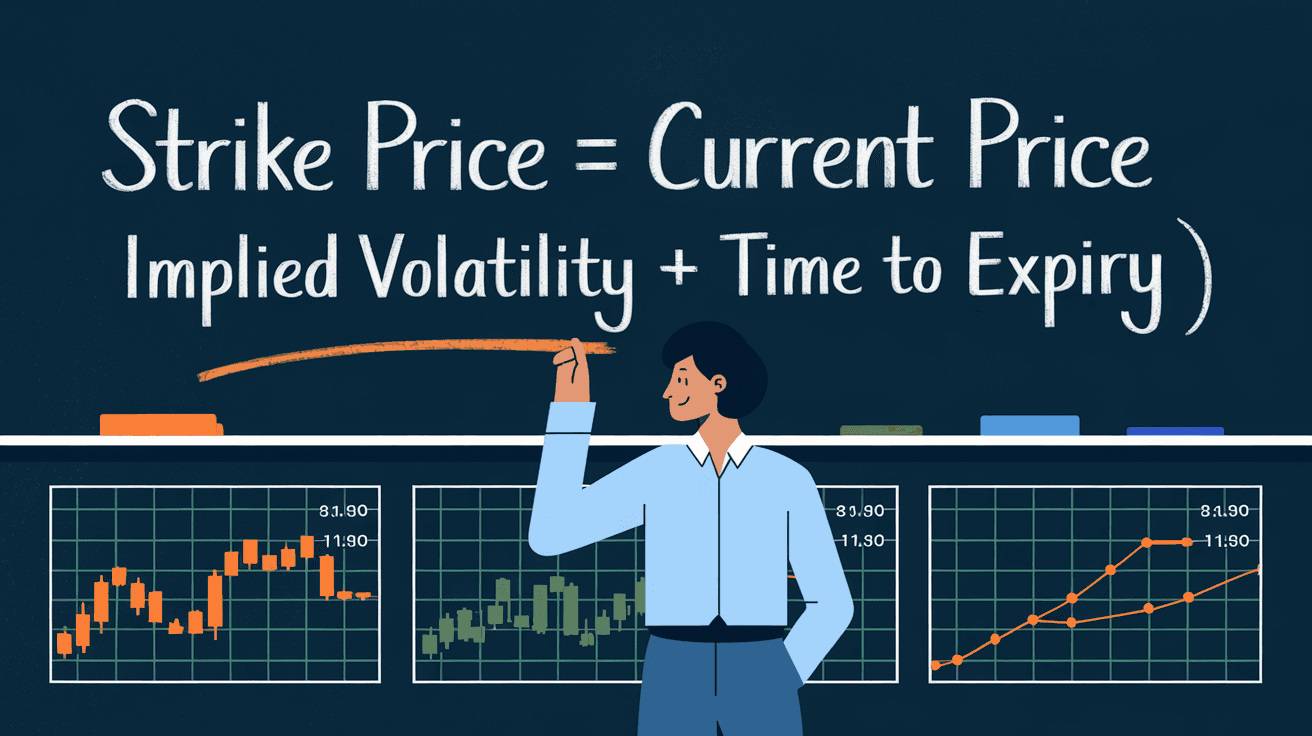
Start by looking at the current price of the stock or index. This helps you decide if you want to buy ITM, ATM, or OTM options.
For example, if Nifty is trading at 18,000, a strike price of 17,800 is ITM, 18,000 is ATM, and 18,200 is OTM.
Your view on the market direction influences strike price choice.
The more time until expiry, the more expensive the option, but also the more time for the price to move favorably.
Higher volatility increases option premiums and chances of big price swings.
Premium is the price you pay for the option.
Decide how much you are willing to risk and choose accordingly.
Look at support and resistance levels, moving averages, and trends to estimate where the price might move. This helps you pick strike prices that align with expected price action.
High open interest and volume at certain strike prices indicate strong market interest and liquidity. These strikes are easier to trade and may offer better pricing.
Delta measures how much the option price changes with a 1-point move in the underlying.
Choose strike prices with delta matching your risk and reward preference.
IV reflects market expectations of future volatility. High IV means expensive options.
Options lose value quickly near expiry. If you want to buy OTM options, avoid doing so in the last week unless you expect a big move.
Choosing the right strike price for call options in India is a key skill for successful trading. It depends on your market view, risk appetite, and the underlying asset’s price and volatility. By understanding ITM, ATM, and OTM options, and considering factors like time to expiry and premium cost, you can make better decisions.
Remember to use technical analysis, check open interest, and monitor implied volatility to guide your choices. Avoid common mistakes like chasing cheap options without a plan. With practice and discipline, you’ll improve your strike price selection and increase your chances of profitable trades.
Beginners should start with ATM or slightly ITM call options. These have a higher chance of profit and lower risk compared to far OTM options, making them easier to manage.
Higher volatility increases option premiums and the chance of price swings. In volatile markets, choosing OTM options can be profitable, while in stable markets, ITM or ATM options are safer.
No, once you buy a call option at a specific strike price, you cannot change it. You can sell the option and buy another with a different strike price if you want to adjust your position.
More time to expiry allows OTM options to become profitable but costs more premium. Shorter expiry favors ITM or ATM options to reduce time decay risk.
Delta shows how much the option price moves with the underlying asset. Choose strike prices with delta matching your risk preference: higher delta for safer bets, lower delta for higher leverage.