

How to Become Barrister in India
F
Discover verified facts, data, and insights about India’s states, culture, economy, education, and more — all in one place at FactBharat.
Search for a command to run...
Discover verified facts, data, and insights about India’s states, culture, economy, education, and more — all in one place at FactBharat.
No comments yet. Be the first to comment.
Moving to the USA from India is a dream for many. Whether you want to study, work, or live with family, the process can seem complex. But with the right information, you can plan your move confidently. I’ll guide you through the key steps and options...
Opening a college in India is a dream for many educators and entrepreneurs who want to contribute to the country’s education sector. If you are one of those who want to start a college, you need to understand the process clearly. It involves several ...
Opening a hospital in India is a significant and rewarding venture. If you’ve ever wondered how to start one, you’re in the right place. Whether you’re a healthcare professional, entrepreneur, or investor, understanding the process is crucial. You’ll...
Opening a medical store in India can be a rewarding business opportunity. You get to serve your community by providing essential medicines and healthcare products. If you are thinking about starting a medical store, you might wonder where to begin an...
Opening a restaurant in India can be an exciting and rewarding venture. Whether you dream of serving traditional Indian dishes or international cuisine, the process involves careful planning and understanding of local regulations. If you’re ready to ...
FactBharat | Insights About India
2558 posts
Discover verified facts, data, and insights about India’s states, culture, economy, education, and more — all in one place at FactBharat.
Becoming a barrister in India is a dream for many aspiring lawyers. You might wonder how to start and what steps to follow to achieve this prestigious title. The journey involves education, training, and passing certain exams. If you are curious about the process, I will guide you through everything you need to know.
In this article, we will explore the path to becoming a barrister in India. You will learn about the educational qualifications, the role of the Bar Council of India, and how to practice law professionally. By the end, you will have a clear roadmap to start your career as a barrister.
In India, the term "barrister" is often used interchangeably with "advocate" or "lawyer." However, traditionally, a barrister refers to a lawyer who has the right to represent clients in higher courts. The British legal system influenced this term, and some Indian lawyers still use it to highlight their expertise.
Understanding this role helps you know what skills and qualifications you need to develop.
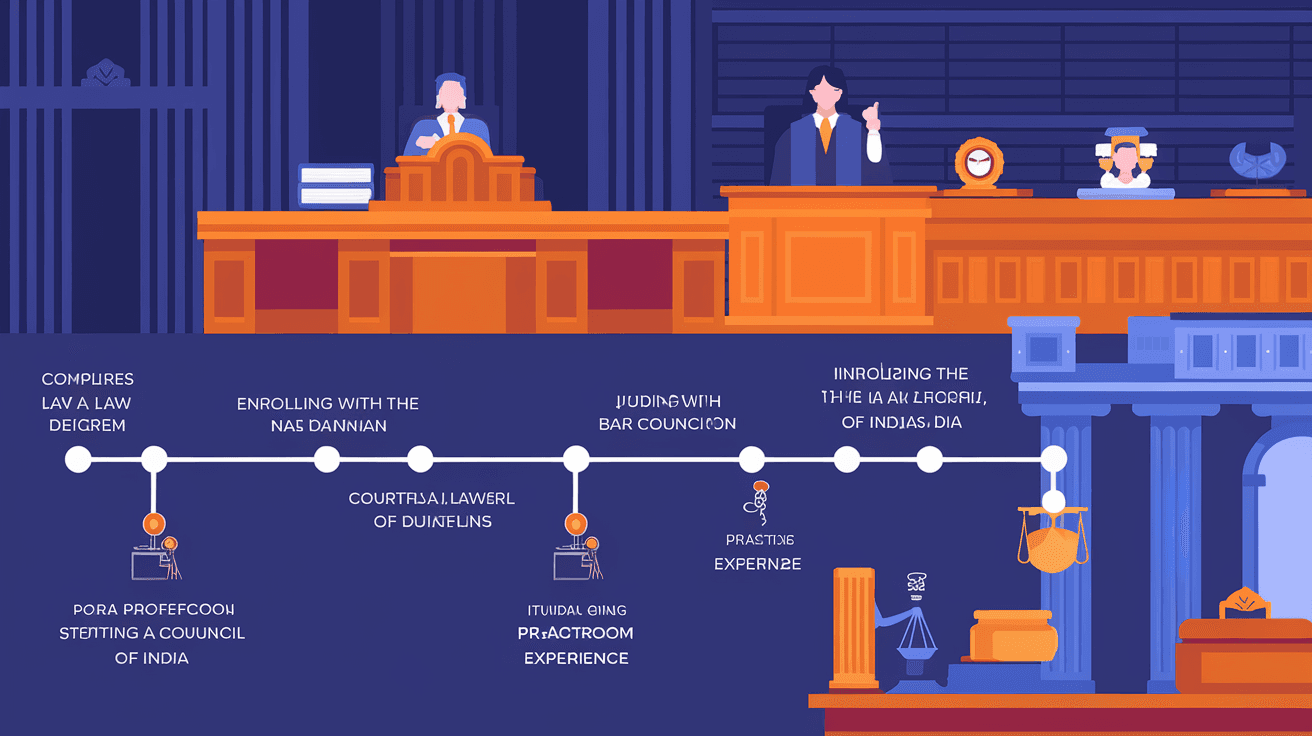
To become a barrister in India, you must first complete your legal education. There are two main routes:
Five-Year Integrated Law Course
Three-Year Law Course
Both courses are recognized by the Bar Council of India (BCI), which regulates legal education and practice.
After completing your law degree, the next step is to enroll with the Bar Council of India or the respective State Bar Council. This enrollment is mandatory to practice law in India.
Once enrolled, you become a "lawyer" or "advocate" legally authorized to represent clients in courts.
To practice law independently, you must clear the All India Bar Examination (AIBE). This exam tests your knowledge of law and professional ethics.
Preparing for the AIBE involves revising core legal subjects and understanding courtroom procedures.
Theory alone is not enough to become a successful barrister. Practical experience is crucial. Here are ways to gain it:
These experiences build your confidence and legal acumen.
After becoming an advocate, you might want to specialize in a particular area of law. Specialization can enhance your career prospects.
Popular specializations include:
You can pursue additional certifications or diplomas in these fields or gain experience by working on related cases.
To be recognized as a barrister in the traditional sense, you need to practice in higher courts like the High Court or Supreme Court.
Practicing in higher courts requires strong legal knowledge and courtroom skills.
Some Indian students choose to study law abroad, especially in the UK, to become barristers.
This path is costlier but offers international exposure.
Becoming a barrister is rewarding but challenging. Some common hurdles include:
Staying committed, networking, and continuous learning help overcome these challenges.
If you want to succeed, consider these tips:
These habits will help you grow your career steadily.
Becoming a barrister in India involves a clear path of education, enrollment, examination, and practical training. Whether you choose the five-year integrated course or the three-year LLB, your journey starts with solid legal education. Enrolling with the Bar Council and passing the AIBE are essential steps to practice law.
Gaining experience through internships and specializing in your preferred legal field will strengthen your career. You can also explore foreign qualifications for broader opportunities. While challenges exist, dedication and continuous learning will help you become a successful barrister in India.
In India, both terms are often used interchangeably. However, a barrister traditionally refers to a lawyer who specializes in courtroom advocacy, while an advocate is anyone enrolled to practice law.
It typically takes 3 to 5 years to complete a law degree, followed by enrollment and passing the AIBE. Practical training and specialization may add more time.
Yes, but you must enroll with the Bar Council of India and pass the All India Bar Examination to practice law in India.
Yes, passing the AIBE is mandatory to obtain a Certificate of Practice and appear in Indian courts.
Strong communication, analytical thinking, legal knowledge, courtroom skills, and professionalism are essential for success as a barrister.