

How to Become an Oncologist in India
F
Discover verified facts, data, and insights about India’s states, culture, economy, education, and more — all in one place at FactBharat.
Search for a command to run...
Discover verified facts, data, and insights about India’s states, culture, economy, education, and more — all in one place at FactBharat.
No comments yet. Be the first to comment.
Moving to the USA from India is a dream for many. Whether you want to study, work, or live with family, the process can seem complex. But with the right information, you can plan your move confidently. I’ll guide you through the key steps and options...
Opening a college in India is a dream for many educators and entrepreneurs who want to contribute to the country’s education sector. If you are one of those who want to start a college, you need to understand the process clearly. It involves several ...
Opening a hospital in India is a significant and rewarding venture. If you’ve ever wondered how to start one, you’re in the right place. Whether you’re a healthcare professional, entrepreneur, or investor, understanding the process is crucial. You’ll...
Opening a medical store in India can be a rewarding business opportunity. You get to serve your community by providing essential medicines and healthcare products. If you are thinking about starting a medical store, you might wonder where to begin an...
Opening a restaurant in India can be an exciting and rewarding venture. Whether you dream of serving traditional Indian dishes or international cuisine, the process involves careful planning and understanding of local regulations. If you’re ready to ...
FactBharat | Insights About India
2558 posts
Discover verified facts, data, and insights about India’s states, culture, economy, education, and more — all in one place at FactBharat.
Becoming an oncologist in India is a rewarding journey if you are passionate about helping cancer patients. You might be wondering what steps you need to take to enter this specialized medical field. Whether you are a student planning your career or a medical graduate exploring options, this guide will walk you through the entire process.
We will cover everything from the basic educational requirements to the specialization courses and career opportunities. By the end, you will have a clear roadmap to becoming an oncologist in India and understand what it takes to succeed in this challenging yet fulfilling profession.
Oncology is the branch of medicine that deals with the diagnosis, treatment, and research of cancer. As cancer cases rise globally and in India, the demand for skilled oncologists has increased significantly. Oncologists play a crucial role in managing cancer patients through chemotherapy, radiation therapy, surgery, and palliative care.
There are three main types of oncologists you can specialize in:
Knowing these specialties helps you decide which path suits your interests and skills best.
Your journey begins with completing higher secondary education (10+2) with Physics, Chemistry, and Biology as core subjects. Scoring well in these subjects is essential because medical colleges consider your marks during admission.
To enter medical school in India, you must clear the National Eligibility cum Entrance Test (NEET UG). This exam is highly competitive and tests your knowledge of Physics, Chemistry, and Biology.
After clearing NEET UG, you can enroll in an MBBS (Bachelor of Medicine and Bachelor of Surgery) program. This is a 5.5-year course, including one year of internship.
During MBBS, you will learn the basics of medicine, surgery, and patient care. This degree is mandatory to practice as a doctor in India.
Once you complete MBBS, the next step is to clear the NEET PG exam. This exam allows you to pursue postgraduate medical courses like MD or MS.
To become an oncologist, you need to specialize in oncology-related fields. The common postgraduate courses include:
After your MD or MS, you can apply for super-specialty courses:
These courses usually last 3 years and provide in-depth knowledge and hands-on experience in cancer treatment.
During your super-specialty course, you will work closely with cancer patients, learning advanced treatment techniques. Many institutes also offer research opportunities in oncology.
After completing your education, you must register with the Medical Council of India (MCI) or the respective State Medical Council. This registration allows you to legally practice as an oncologist.
Oncology offers diverse career paths. You can work in:
The demand for oncologists is growing due to increasing cancer cases and awareness. Salaries vary based on experience, location, and sector but are generally lucrative.
Being an oncologist requires more than just medical knowledge. You need:
Developing these skills will help you build a successful and fulfilling career.
While oncology is rewarding, it comes with challenges:
Being aware of these challenges prepares you mentally and emotionally for the profession.
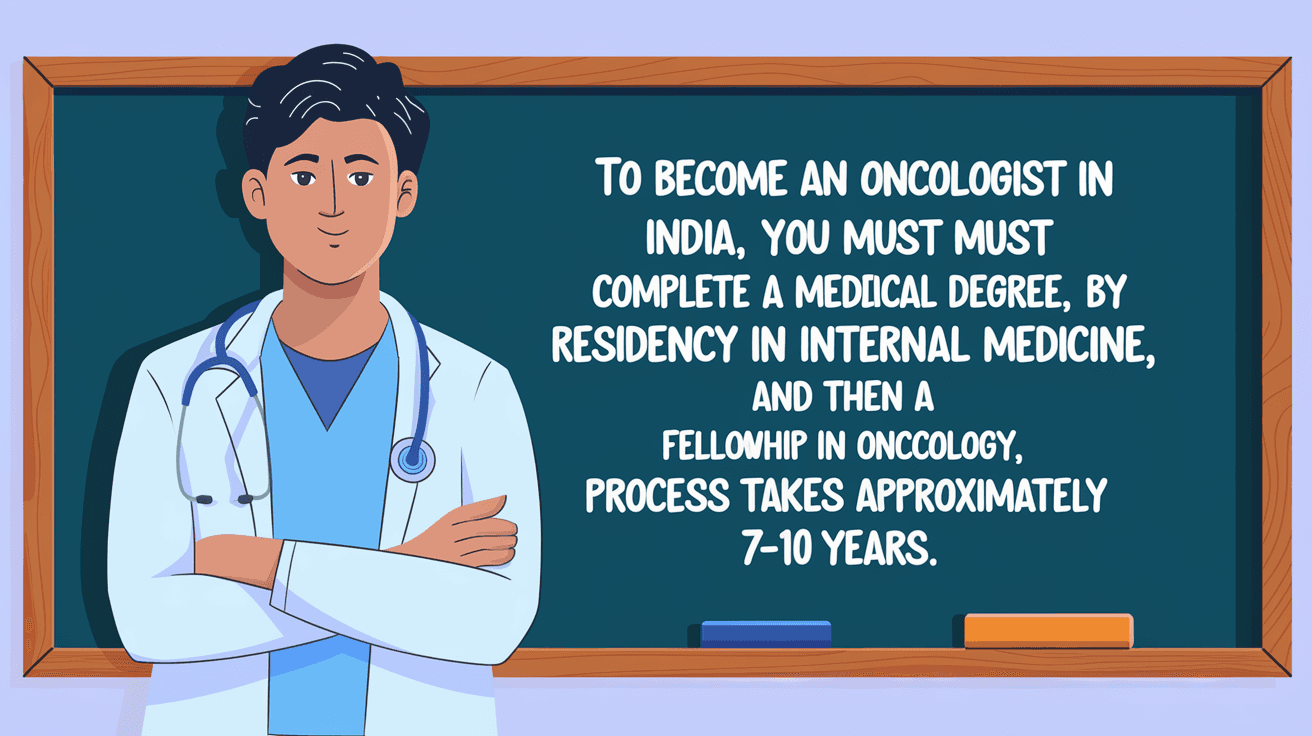
Becoming an oncologist in India is a long but rewarding journey. It requires dedication, hard work, and a passion for helping cancer patients. Starting from your 10+2 education, you will need to clear competitive exams, complete MBBS, and specialize through postgraduate and super-specialty courses.
Oncology offers diverse career options and the chance to make a real difference in people’s lives. If you are ready to face challenges and commit to lifelong learning, this field can be highly fulfilling. With the right guidance and effort, you can become a skilled oncologist and contribute to cancer care in India.
It typically takes around 11 to 14 years, including MBBS (5.5 years), MD/MS (3 years), and DM/MCh (3 years) super-specialty courses.
No, you must first complete an MD or MS in related fields before pursuing super-specialty oncology courses.
Yes, clearing NEET PG is essential to enter postgraduate medical courses required for oncology specialization.
Medical oncologists, surgical oncologists, and radiation oncologists are the primary types.
Yes, due to rising cancer cases, demand for oncologists is increasing in hospitals, research, and private practice.