

How to Become an Airforce Pilot in India
F
Discover verified facts, data, and insights about India’s states, culture, economy, education, and more — all in one place at FactBharat.
Search for a command to run...
Discover verified facts, data, and insights about India’s states, culture, economy, education, and more — all in one place at FactBharat.
No comments yet. Be the first to comment.
Moving to the USA from India is a dream for many. Whether you want to study, work, or live with family, the process can seem complex. But with the right information, you can plan your move confidently. I’ll guide you through the key steps and options...
Opening a college in India is a dream for many educators and entrepreneurs who want to contribute to the country’s education sector. If you are one of those who want to start a college, you need to understand the process clearly. It involves several ...
Opening a hospital in India is a significant and rewarding venture. If you’ve ever wondered how to start one, you’re in the right place. Whether you’re a healthcare professional, entrepreneur, or investor, understanding the process is crucial. You’ll...
Opening a medical store in India can be a rewarding business opportunity. You get to serve your community by providing essential medicines and healthcare products. If you are thinking about starting a medical store, you might wonder where to begin an...
Opening a restaurant in India can be an exciting and rewarding venture. Whether you dream of serving traditional Indian dishes or international cuisine, the process involves careful planning and understanding of local regulations. If you’re ready to ...
FactBharat | Insights About India
2558 posts
Discover verified facts, data, and insights about India’s states, culture, economy, education, and more — all in one place at FactBharat.
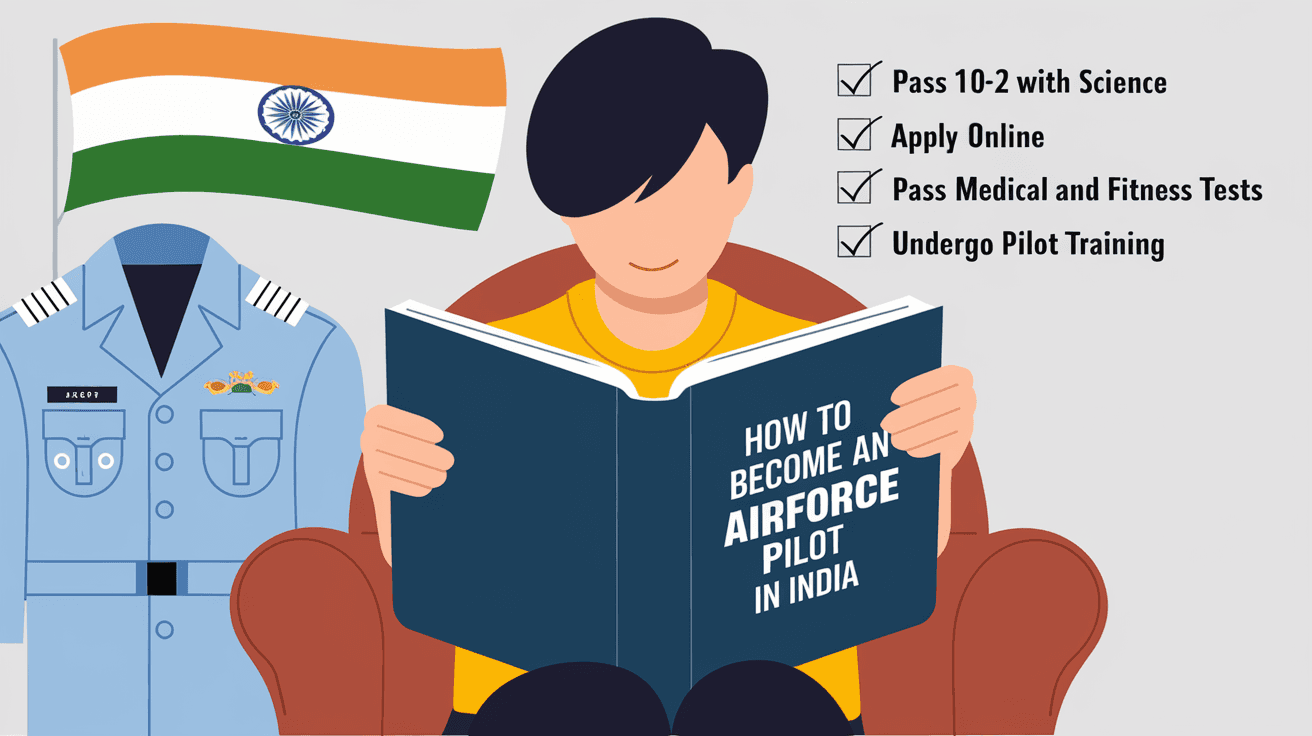
Becoming an Airforce pilot in India is a dream for many young people who want to serve their country while flying advanced aircraft. If you’re passionate about aviation and want to join the Indian Air Force (IAF) as a pilot, you need to understand the process clearly. I’ll guide you through the steps, eligibility criteria, exams, and training involved in becoming an Airforce pilot in India.
You might wonder what qualifications you need or how competitive the selection is. Don’t worry—I’ll break down everything in simple terms so you can plan your path effectively. Whether you’re a student or someone considering a career change, this guide will help you take the right steps toward your goal.
Before you start preparing, it’s important to know if you meet the basic eligibility requirements. The Indian Air Force has specific rules about age, education, and physical fitness.
Meeting these criteria is the first step. If you don’t meet them, you won’t be eligible to apply.
The Indian Air Force offers several entry routes to become a pilot. Each has its own selection process and requirements.
Each entry scheme has its own advantages. For example, NDA is ideal for younger candidates, while AFCAT suits graduates.
The selection process to become an Airforce pilot is tough and competitive. It tests your physical, mental, and psychological abilities.
Once selected, you will undergo rigorous training to become a qualified pilot.
Training is designed to prepare you for the challenges of flying in different conditions and combat situations.
After completing training, you will be commissioned as a Flying Officer in the Indian Air Force. Here’s what you can expect:
You will also have chances to participate in international exercises and advanced training programs.
Preparing for this career requires dedication and smart planning.
Consistency and discipline will help you clear the tough selection process.
Becoming an Airforce pilot is not easy. You may face challenges like:
To overcome these:
Remember, persistence is key.
Becoming an Airforce pilot in India is a prestigious and rewarding career choice. It requires meeting strict eligibility criteria, clearing competitive exams, and undergoing intense training. Whether you choose NDA, CDS, AFCAT, or NCC entry, each path demands dedication and hard work.
If you are passionate about flying and serving your country, start preparing early. Focus on your academics, physical fitness, and personality development. With determination and the right guidance, you can achieve your dream of soaring high as an Airforce pilot.
You must have completed 10+2 with Physics and Mathematics for NDA and most other entries. Graduates can apply through CDS or AFCAT.
The age limit varies by entry scheme but generally ranges from 16.5 to 24 years.
It is highly competitive, involving written exams, SSB interviews, and strict medical tests.
Yes, women are eligible and have been serving as fighter and transport pilots in the Indian Air Force.
Training includes physical fitness, basic flying, advanced flying on trainer aircraft, and combat tactics over 1.5 to 2 years.