

How to Become a Tax Lawyer in India
F
Discover verified facts, data, and insights about India’s states, culture, economy, education, and more — all in one place at FactBharat.
Search for a command to run...
Discover verified facts, data, and insights about India’s states, culture, economy, education, and more — all in one place at FactBharat.
No comments yet. Be the first to comment.
Moving to the USA from India is a dream for many. Whether you want to study, work, or live with family, the process can seem complex. But with the right information, you can plan your move confidently. I’ll guide you through the key steps and options...
Opening a college in India is a dream for many educators and entrepreneurs who want to contribute to the country’s education sector. If you are one of those who want to start a college, you need to understand the process clearly. It involves several ...
Opening a hospital in India is a significant and rewarding venture. If you’ve ever wondered how to start one, you’re in the right place. Whether you’re a healthcare professional, entrepreneur, or investor, understanding the process is crucial. You’ll...
Opening a medical store in India can be a rewarding business opportunity. You get to serve your community by providing essential medicines and healthcare products. If you are thinking about starting a medical store, you might wonder where to begin an...
Opening a restaurant in India can be an exciting and rewarding venture. Whether you dream of serving traditional Indian dishes or international cuisine, the process involves careful planning and understanding of local regulations. If you’re ready to ...
FactBharat | Insights About India
2558 posts
Discover verified facts, data, and insights about India’s states, culture, economy, education, and more — all in one place at FactBharat.
Becoming a tax lawyer in India is a rewarding career choice if you enjoy working with laws related to taxation. You get to help individuals and businesses navigate complex tax rules and save money legally. If you want to specialize in tax law, you need to understand the right path to follow and the skills required.
In this article, I will guide you through the steps to become a tax lawyer in India. We will cover the educational qualifications, necessary skills, and career options available. Whether you are a student or a professional looking to switch careers, this guide will help you plan your journey effectively.
A tax lawyer specializes in laws related to taxation. They advise clients on tax planning, compliance, and disputes with tax authorities. In India, tax laws include income tax, GST (Goods and Services Tax), customs duty, and other indirect taxes.
Tax lawyers help clients:
They work with individuals, companies, and government bodies. The role requires strong legal knowledge and an understanding of finance and accounting.
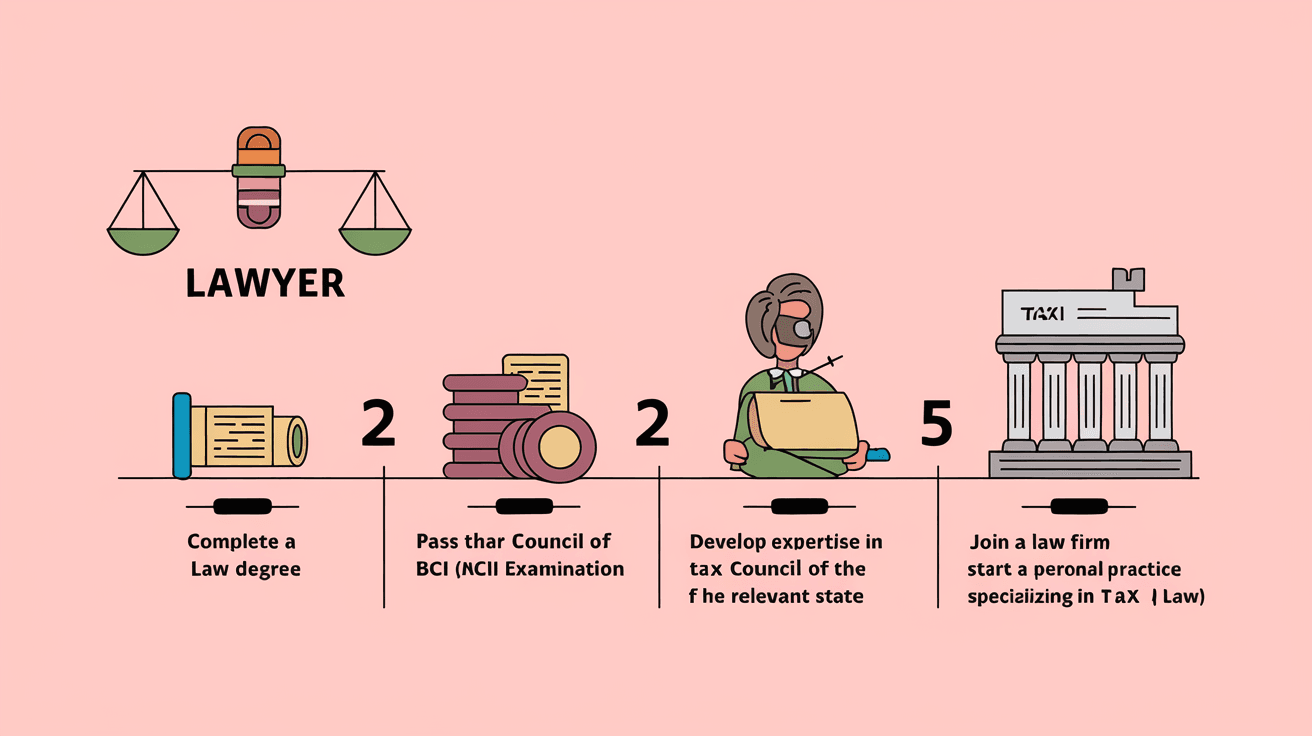
To become a tax lawyer in India, you must first complete a law degree. Here’s how you can do it:
You need to finish your higher secondary education (12th standard) from a recognized board. Science, commerce, or arts streams are all acceptable, but commerce is preferred for a better understanding of finance and taxation.
There are two main routes to get an LLB degree in India:
Make sure to choose a law college recognized by the Bar Council of India (BCI).
During your LLB, focus on subjects related to taxation such as:
You can also take additional certificate courses or diplomas in tax law from reputed institutes to deepen your knowledge.
After completing your LLB, you must register with the Bar Council of India or your respective State Bar Council to practice law legally.
Being a tax lawyer requires more than just legal knowledge. You should develop the following skills:
Tax lawyers have a variety of career paths to choose from:
You can start your own practice or join a law firm specializing in tax law. Many firms offer services in tax planning, compliance, and litigation.
Large companies hire tax lawyers to manage their tax affairs and ensure compliance with laws. You can work as an in-house counsel or tax advisor.
You can work with government departments like the Income Tax Department, GST Council, or the Ministry of Finance. These roles involve policy-making, tax administration, and enforcement.
Big consulting firms like Deloitte, PwC, and KPMG hire tax lawyers to provide advisory services to clients on tax matters.
If you enjoy teaching, you can become a law professor specializing in tax law or work with research organizations.
While tax law is a promising field, it comes with challenges:
Becoming a tax lawyer in India is a great career choice if you enjoy working with laws and finance. You need to complete your law degree, specialize in tax law, and register with the Bar Council to start practicing. Developing strong analytical and communication skills will help you succeed.
There are many career options, from private practice to government jobs and corporate roles. Keep learning and gaining experience to stay ahead in this dynamic field. If you are ready to put in the effort, a career as a tax lawyer can be both financially rewarding and intellectually satisfying.
You need to complete an LLB degree from a recognized university and register with the Bar Council of India to practice law.
Yes, you can pursue law after any stream in 12th standard. However, commerce helps in understanding taxation better.
While not mandatory, specializing in tax law subjects and taking additional courses improves your expertise and job prospects.
Analytical thinking, communication, attention to detail, negotiation, and research skills are essential for tax lawyers.
Yes, tax lawyers can work in departments like the Income Tax Department, GST Council, and other government agencies related to taxation.