

How to Become a Real Estate Agent in India
F
Discover verified facts, data, and insights about India’s states, culture, economy, education, and more — all in one place at FactBharat.
Search for a command to run...
Discover verified facts, data, and insights about India’s states, culture, economy, education, and more — all in one place at FactBharat.
No comments yet. Be the first to comment.
Moving to the USA from India is a dream for many. Whether you want to study, work, or live with family, the process can seem complex. But with the right information, you can plan your move confidently. I’ll guide you through the key steps and options...
Opening a college in India is a dream for many educators and entrepreneurs who want to contribute to the country’s education sector. If you are one of those who want to start a college, you need to understand the process clearly. It involves several ...
Opening a hospital in India is a significant and rewarding venture. If you’ve ever wondered how to start one, you’re in the right place. Whether you’re a healthcare professional, entrepreneur, or investor, understanding the process is crucial. You’ll...
Opening a medical store in India can be a rewarding business opportunity. You get to serve your community by providing essential medicines and healthcare products. If you are thinking about starting a medical store, you might wonder where to begin an...
Opening a restaurant in India can be an exciting and rewarding venture. Whether you dream of serving traditional Indian dishes or international cuisine, the process involves careful planning and understanding of local regulations. If you’re ready to ...
FactBharat | Insights About India
2558 posts
Discover verified facts, data, and insights about India’s states, culture, economy, education, and more — all in one place at FactBharat.
Becoming a real estate agent in India can open doors to a rewarding career filled with opportunities. Whether you want to help people find their dream homes or assist investors in making smart property decisions, this profession offers flexibility and growth. If you’re curious about how to start, you’re in the right place.
In this article, I’ll guide you through the essential steps to become a licensed real estate agent in India. We’ll cover everything from educational requirements to legal registrations and practical tips to build your career. By the end, you’ll have a clear roadmap to begin your journey in the real estate market.
A real estate agent acts as a bridge between buyers and sellers of property. Your job involves helping clients buy, sell, or rent properties like homes, offices, or land. You’ll need to understand market trends, negotiate deals, and ensure all legal paperwork is in order.
Here’s what you can expect as a real estate agent:
In India, the real estate market is growing rapidly, especially in urban areas. This means more opportunities for agents who are knowledgeable and trustworthy.
Unlike some countries, India does not have a strict educational requirement to become a real estate agent. However, having a basic understanding of property laws and business practices is crucial.
India does not have a centralized licensing system for real estate agents yet. However, the Real Estate (Regulation and Development) Act, 2016 (RERA) has introduced regulations to protect buyers and improve transparency.
Following these steps ensures you operate legally and gain client trust.
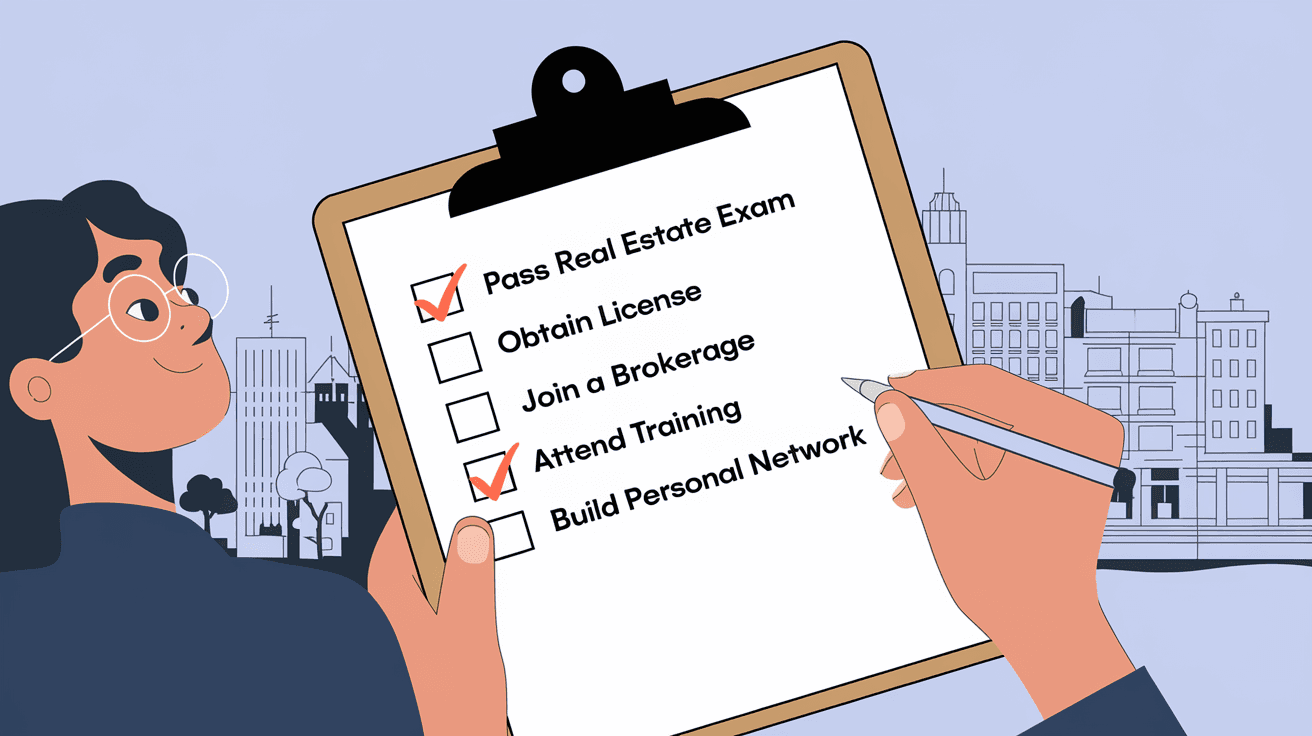
Here’s a clear step-by-step guide to help you start your career:
Start by learning about the property market, types of properties, and legal aspects like title deeds, registration, and taxes. This knowledge forms the foundation of your career.
Enroll in a recognized real estate course to understand laws, marketing, and negotiation skills. Many institutes offer short-term courses tailored for beginners.
Check your state’s RERA website to see if you need to register as an agent or promoter. Registration helps you comply with regulations and builds credibility.
Connect with property developers, brokers, and clients. Attend property exhibitions and join real estate forums to expand your contacts.
You can begin by joining an established agency to gain experience or start your own business if you have enough resources.
Use social media, online property portals, and local advertising to reach potential clients.
Being a real estate agent requires more than just knowledge of properties. Here are key skills to develop:
While the real estate sector offers many opportunities, it also comes with challenges:
To overcome these, focus on continuous learning and ethical practices.
Technology is reshaping how real estate agents work. Here’s how you can leverage it:
Adopting these tools can give you a competitive edge.
Once you start, here are some tips to help you grow:
Becoming a real estate agent in India is a practical and rewarding career choice. While the path may seem simple, success requires dedication, knowledge, and ethical practices. By understanding the legal requirements, gaining the right skills, and leveraging technology, you can build a thriving business.
Remember, real estate is about people as much as properties. Focus on helping your clients genuinely, and your reputation will grow. Whether you join an agency or start your own, the Indian real estate market offers vast opportunities for those ready to work hard and learn continuously.
Costs vary depending on courses and registrations. Basic certification courses can cost between ₹10,000 to ₹50,000. Business registration and GST may add to expenses. Starting with an agency reduces initial costs.
Currently, India does not require a specific license for agents. However, registration under RERA is mandatory for promoters and developers. Agents benefit from legal business registration and RERA compliance.
RERA stands for Real Estate (Regulation and Development) Act. It regulates real estate transactions to protect buyers. Agents working with developers must comply with RERA rules, ensuring transparency and accountability.
Yes, you can work independently as a freelance agent. However, registering your business and complying with tax laws is advisable for legal protection and credibility.
Communication, negotiation, market knowledge, networking, and legal understanding are key skills. Patience and persistence also help in closing deals and building client trust.