

How to Become a Physiotherapist in India
F
Discover verified facts, data, and insights about India’s states, culture, economy, education, and more — all in one place at FactBharat.
Search for a command to run...
Discover verified facts, data, and insights about India’s states, culture, economy, education, and more — all in one place at FactBharat.
No comments yet. Be the first to comment.
Moving to the USA from India is a dream for many. Whether you want to study, work, or live with family, the process can seem complex. But with the right information, you can plan your move confidently. I’ll guide you through the key steps and options...
Opening a college in India is a dream for many educators and entrepreneurs who want to contribute to the country’s education sector. If you are one of those who want to start a college, you need to understand the process clearly. It involves several ...
Opening a hospital in India is a significant and rewarding venture. If you’ve ever wondered how to start one, you’re in the right place. Whether you’re a healthcare professional, entrepreneur, or investor, understanding the process is crucial. You’ll...
Opening a medical store in India can be a rewarding business opportunity. You get to serve your community by providing essential medicines and healthcare products. If you are thinking about starting a medical store, you might wonder where to begin an...
Opening a restaurant in India can be an exciting and rewarding venture. Whether you dream of serving traditional Indian dishes or international cuisine, the process involves careful planning and understanding of local regulations. If you’re ready to ...
FactBharat | Insights About India
2558 posts
Discover verified facts, data, and insights about India’s states, culture, economy, education, and more — all in one place at FactBharat.
Becoming a physiotherapist in India is a rewarding career choice if you want to help people recover from injuries and improve their physical health. If you’re passionate about health and fitness, this profession offers a chance to make a real difference. You might be wondering how to start your journey and what steps you need to take.
In this article, I’ll walk you through the entire process of becoming a physiotherapist in India. From the educational requirements to the skills you need and career options available, you’ll get a clear picture of what it takes. Let’s dive in and explore how you can build a successful career in physiotherapy.
Physiotherapy is a healthcare profession focused on helping people improve their movement and manage pain. Physiotherapists use exercises, manual therapy, and other techniques to treat injuries, disabilities, and chronic conditions. They work with patients recovering from surgeries, accidents, or illnesses.
Physiotherapists play a vital role in rehabilitation and preventive care. They help patients regain strength, flexibility, and mobility. This profession requires a deep understanding of the human body, muscles, and joints.
To become a physiotherapist in India, you need to follow a structured educational path. The government and professional bodies regulate the courses and qualifications required.
The first step is to finish your higher secondary education (10+2) with science subjects. You should focus on:
These subjects are essential because they form the foundation for understanding human anatomy and physiology.
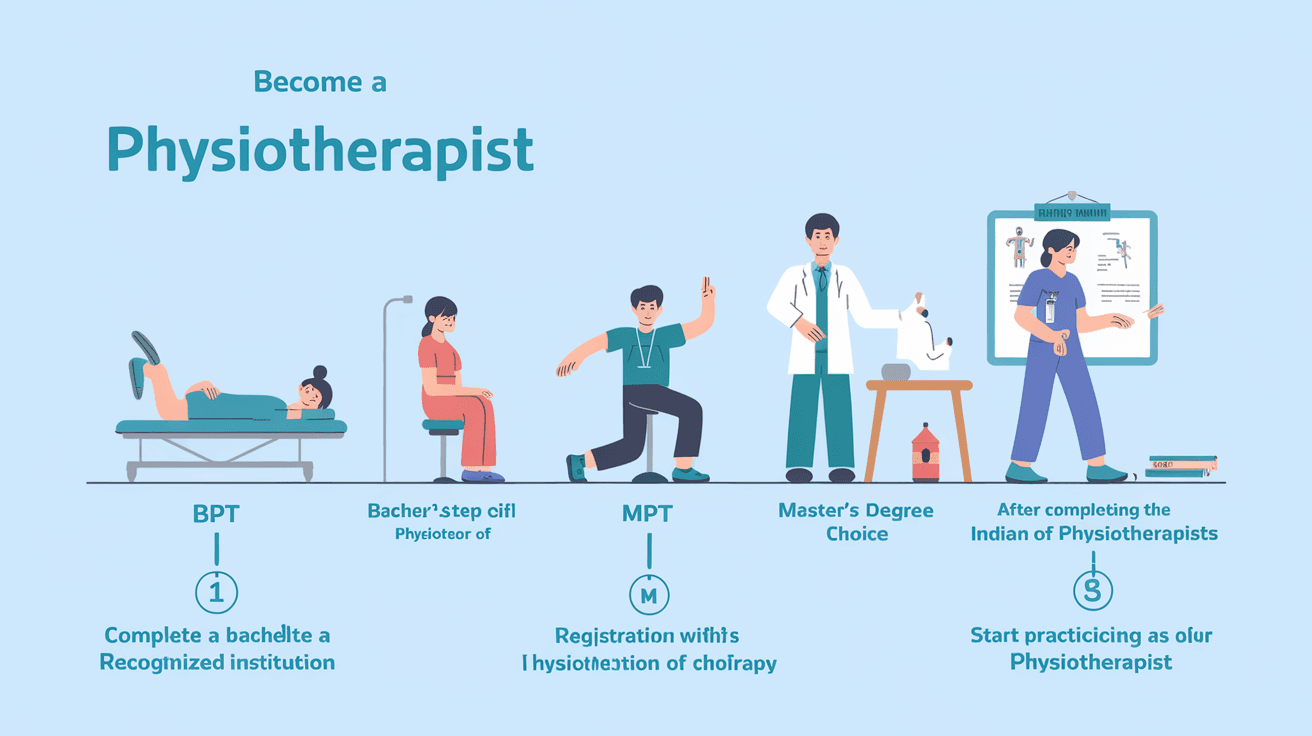
After 10+2, you must enroll in a Bachelor of Physiotherapy (BPT) program. This is a 4.5-year course, including six months of internship. The curriculum covers:
The internship provides practical experience in hospitals or clinics, helping you apply theoretical knowledge.
Admission to BPT courses is usually based on entrance exams or merit in 10+2 exams. Some popular entrance exams include:
You should check the specific requirements of the college or university you want to join.
After completing BPT, you can pursue a Master of Physiotherapy (MPT) degree. This 2-year course allows you to specialize in areas like:
Postgraduate studies enhance your knowledge and open up advanced career opportunities.
Once you complete your degree, you must register with the Indian Association of Physiotherapists (IAP) or the respective State Physiotherapy Council. Registration is mandatory to practice legally in India.
This process ensures that you meet the professional standards required for physiotherapy practice.
Being a good physiotherapist requires more than just academic knowledge. You need a mix of technical and interpersonal skills.
Developing these skills will help you build trust with patients and deliver effective care.
Physiotherapy offers diverse career paths in India. You can work in various settings depending on your interests and specialization.
Most physiotherapists work in hospitals, clinics, or rehabilitation centers. You can join:
If you love sports, you can specialize in sports physiotherapy. This involves working with athletes to prevent injuries and improve performance.
With advanced degrees, you can become a lecturer or researcher in physiotherapy colleges. This path allows you to contribute to education and scientific studies.
Many physiotherapists start their own clinics or join wellness centers. This option offers flexibility and the chance to build your own brand.
Physiotherapy is a growing field in India with increasing demand. Salaries vary based on experience, location, and specialization.
The healthcare sector’s growth and rising awareness about physical health ensure good job security and career growth.
To build a successful career, consider these tips:
Like any career, physiotherapy has its challenges. You may face:
Being aware of these challenges helps you prepare and stay motivated.
Choosing the right college is crucial for your career. Look for:
Visiting campuses and talking to current students can also help you decide.
The physiotherapy field is evolving with new technologies and approaches. Some trends to watch include:
Staying informed about these trends will keep you ahead in your career.
Becoming a physiotherapist in India involves a clear educational path, from completing 10+2 science to earning a BPT degree and registering with professional bodies. You’ll need both academic knowledge and strong interpersonal skills to succeed. The career offers diverse opportunities in clinical practice, sports, research, and private practice.
If you’re passionate about helping others improve their physical health, physiotherapy is a fulfilling choice. With dedication and continuous learning, you can build a rewarding career that makes a real difference in people’s lives.
You need to complete 10+2 with science subjects and then pursue a Bachelor of Physiotherapy (BPT) degree.
No, a BPT degree is sufficient to practice, but an MPT helps you specialize and advance your career.
The BPT course is 4.5 years long, including a six-month internship.
Yes, after completing your degree and registration, you can open a private clinic.
Good communication, empathy, physical stamina, problem-solving, and attention to detail are essential skills.