

How to Become a Pharmacist in India
F
Discover verified facts, data, and insights about India’s states, culture, economy, education, and more — all in one place at FactBharat.
Search for a command to run...
Discover verified facts, data, and insights about India’s states, culture, economy, education, and more — all in one place at FactBharat.
No comments yet. Be the first to comment.
Moving to the USA from India is a dream for many. Whether you want to study, work, or live with family, the process can seem complex. But with the right information, you can plan your move confidently. I’ll guide you through the key steps and options...
Opening a college in India is a dream for many educators and entrepreneurs who want to contribute to the country’s education sector. If you are one of those who want to start a college, you need to understand the process clearly. It involves several ...
Opening a hospital in India is a significant and rewarding venture. If you’ve ever wondered how to start one, you’re in the right place. Whether you’re a healthcare professional, entrepreneur, or investor, understanding the process is crucial. You’ll...
Opening a medical store in India can be a rewarding business opportunity. You get to serve your community by providing essential medicines and healthcare products. If you are thinking about starting a medical store, you might wonder where to begin an...
Opening a restaurant in India can be an exciting and rewarding venture. Whether you dream of serving traditional Indian dishes or international cuisine, the process involves careful planning and understanding of local regulations. If you’re ready to ...
FactBharat | Insights About India
2558 posts
Discover verified facts, data, and insights about India’s states, culture, economy, education, and more — all in one place at FactBharat.
Becoming a pharmacist in India is a rewarding career choice if you are interested in healthcare and medicines. You get to play a vital role in patient care by ensuring the safe use of drugs. If you want to know how to become a pharmacist in India, this guide will walk you through the entire process, from education to licensing and career opportunities.
You might be wondering what qualifications you need, how long it takes, and what the job prospects look like. I’ll explain everything clearly so you can plan your path with confidence. Let’s dive into the steps you need to take to become a pharmacist in India.
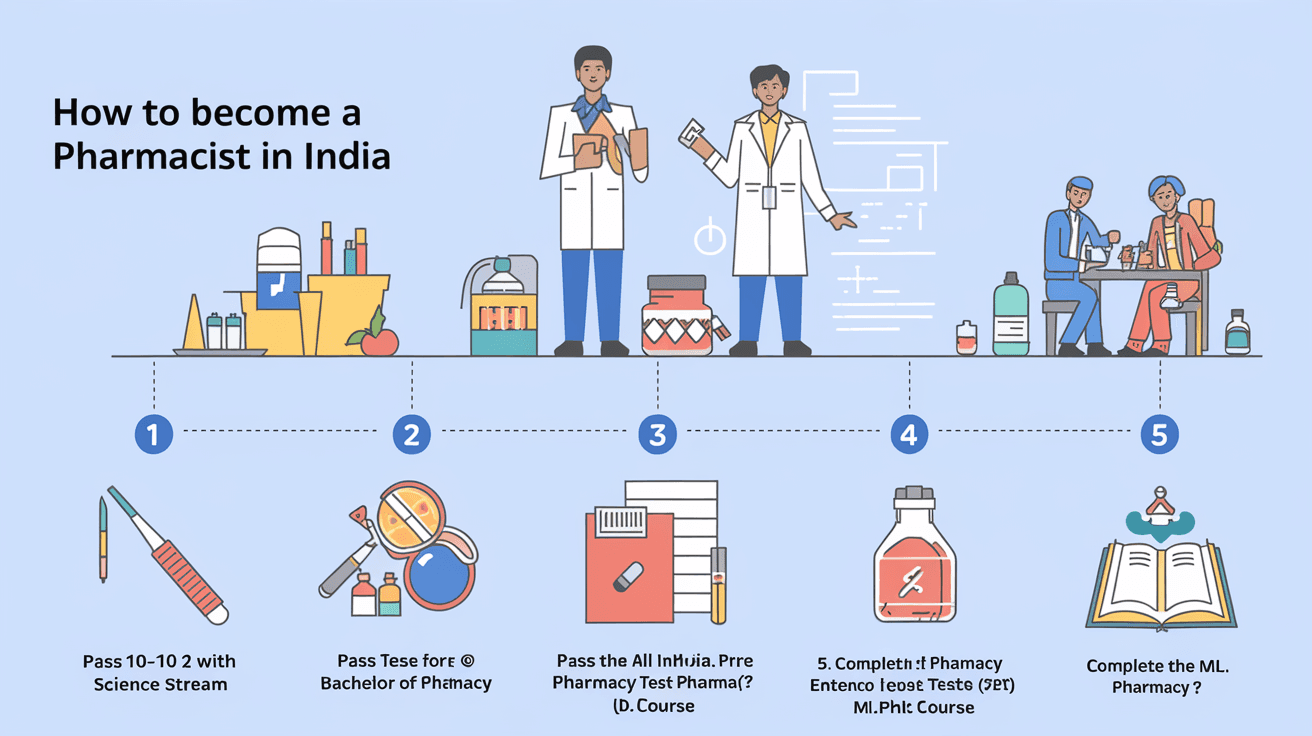
The first step to becoming a pharmacist is getting the right education. In India, pharmacy education is regulated by the Pharmacy Council of India (PCI), which ensures quality and standardization.
There are mainly two courses you can pursue:
Many students start with D.Pharm and then move on to B.Pharm for advanced opportunities. Some also pursue Master of Pharmacy (M.Pharm) for specialization.
To enroll in these courses, you must meet certain requirements:
Entrance exams may be required depending on the college or state.
India has many pharmacy colleges approved by PCI. When selecting a college, consider:
Some top pharmacy colleges include Jamia Hamdard University, Manipal College of Pharmaceutical Sciences, and National Institute of Pharmaceutical Education and Research (NIPER).
After completing your education, you must register with the Pharmacy Council to legally practice as a pharmacist.
Once registered, you get a license to work as a pharmacist in India.
Without registration, you cannot legally dispense medicines or work in pharmacies. This step ensures you meet professional standards.
Pharmacy offers diverse career paths beyond just working in retail pharmacies.
Being a pharmacist requires more than just academic knowledge.
Once you start working as a pharmacist, you can take steps to grow professionally.
Pharmacy is evolving rapidly with new technologies and regulations.
Pharmacy remains a stable and respected profession with many paths to explore.
If you want to become a pharmacist in India, you need to start with the right education, either a Diploma or Bachelor’s degree in Pharmacy. After that, registering with the State Pharmacy Council is essential to practice legally. The career options are broad, ranging from retail and hospital pharmacies to pharmaceutical industries and research.
Developing strong skills and continuously upgrading your knowledge will help you succeed. Pharmacy is a promising field with a bright future, especially as healthcare grows in India. By following these steps, you can build a rewarding career helping people through medicines.
The minimum qualification is a Diploma in Pharmacy (D.Pharm), which is a 2-year course after 10+2 in science.
Yes, you must register with your State Pharmacy Council after completing your pharmacy course to legally practice.
No, pharmacy courses require 10+2 with science subjects like Physics, Chemistry, and Biology or Mathematics.
You can work as a retail or hospital pharmacist, join pharmaceutical companies, pursue research, or take government jobs.
While not mandatory, higher education like M.Pharm or Pharm.D improves job opportunities and specialization options.