

How to Become a Nutritionist in India
F
Discover verified facts, data, and insights about India’s states, culture, economy, education, and more — all in one place at FactBharat.
Search for a command to run...
Discover verified facts, data, and insights about India’s states, culture, economy, education, and more — all in one place at FactBharat.
No comments yet. Be the first to comment.
Moving to the USA from India is a dream for many. Whether you want to study, work, or live with family, the process can seem complex. But with the right information, you can plan your move confidently. I’ll guide you through the key steps and options...
Opening a college in India is a dream for many educators and entrepreneurs who want to contribute to the country’s education sector. If you are one of those who want to start a college, you need to understand the process clearly. It involves several ...
Opening a hospital in India is a significant and rewarding venture. If you’ve ever wondered how to start one, you’re in the right place. Whether you’re a healthcare professional, entrepreneur, or investor, understanding the process is crucial. You’ll...
Opening a medical store in India can be a rewarding business opportunity. You get to serve your community by providing essential medicines and healthcare products. If you are thinking about starting a medical store, you might wonder where to begin an...
Opening a restaurant in India can be an exciting and rewarding venture. Whether you dream of serving traditional Indian dishes or international cuisine, the process involves careful planning and understanding of local regulations. If you’re ready to ...
FactBharat | Insights About India
2558 posts
Discover verified facts, data, and insights about India’s states, culture, economy, education, and more — all in one place at FactBharat.
Becoming a nutritionist in India is a rewarding path if you are passionate about health and wellness. You get to help people improve their diets, manage diseases, and lead healthier lives. If you’re wondering how to start this career, you’re in the right place. I’ll guide you through the steps, qualifications, and options available to become a successful nutritionist in India.
Whether you want to work in hospitals, fitness centers, or start your own consultancy, understanding the right education and certifications is key. Let’s explore the journey to becoming a nutritionist in India, including the courses you need, the skills to develop, and the career paths you can follow.
A nutritionist advises people on what to eat to stay healthy or manage illnesses. They study food science and human biology to understand how diet affects the body. Nutritionists create meal plans, educate clients, and sometimes work with doctors to support patient care.
Here’s what a nutritionist typically does:
Nutritionists play a vital role in promoting wellness and preventing lifestyle diseases like diabetes, obesity, and heart conditions.
Education is the foundation of your career as a nutritionist. In India, there are several academic paths you can take:
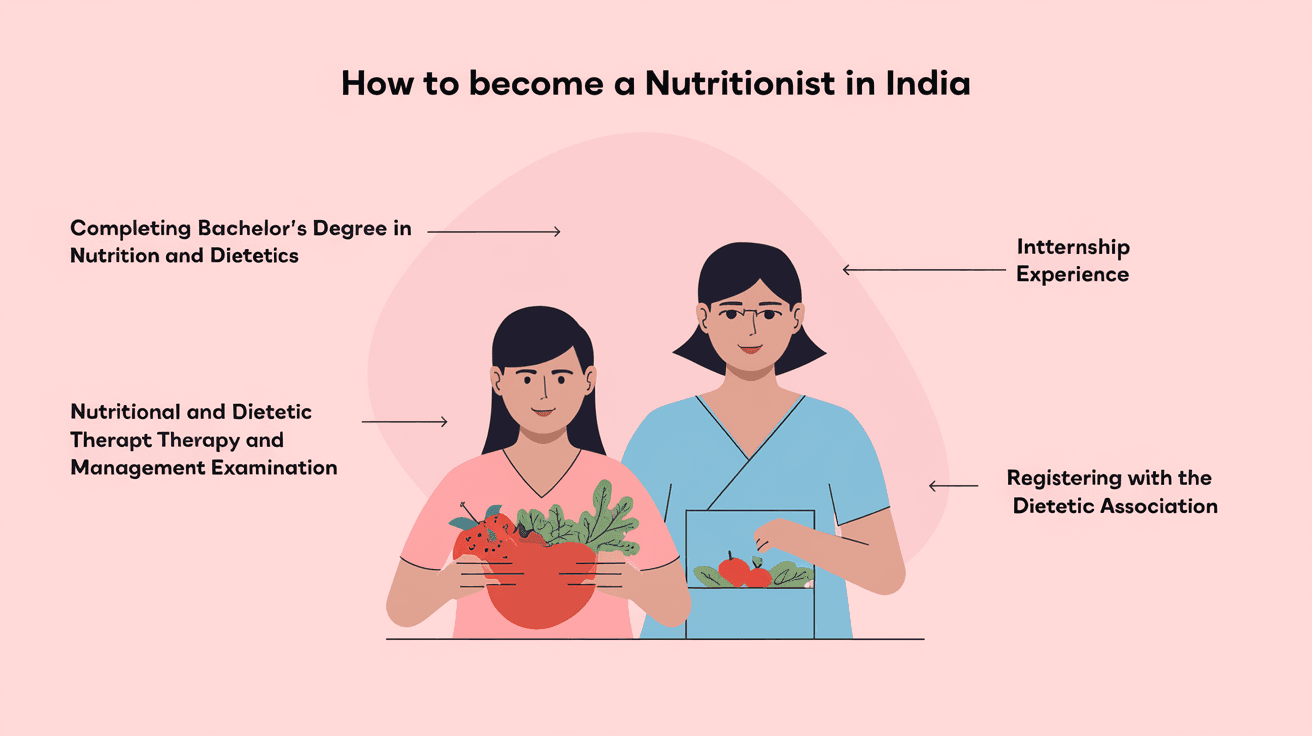
The most common route is to pursue a Bachelor of Science (B.Sc) in Nutrition, Dietetics, or Food Science. This is a 3-year undergraduate program offered by many universities and colleges.
Key points about the B.Sc Nutrition course:
If you want a shorter course, diploma programs in nutrition and dietetics are available. These typically last 1 to 2 years and provide basic knowledge and skills.
Diplomas are good for entry-level jobs but may limit higher career growth compared to a degree.
For advanced knowledge and better job prospects, a Master of Science (M.Sc) in Nutrition or Dietetics is recommended. This postgraduate course deepens your understanding of clinical nutrition, public health nutrition, and research methods.
After your education, getting certified adds credibility and opens more opportunities.
In India, the Indian Dietetic Association (IDA) is the main professional body. To become a Registered Dietitian Nutritionist:
Being an RDN shows you meet professional standards and ethics.
Besides education, certain skills help you excel:
Developing these skills during your studies and internships will prepare you for real-world challenges.
Nutritionists have a wide range of job options depending on their interests and qualifications.
Hands-on experience is crucial. Here’s how you can get it:
Practical experience helps you apply your knowledge and build confidence.
Becoming a nutritionist has its challenges, but with the right approach, you can overcome them.
The demand for nutritionists is growing rapidly in India. Rising lifestyle diseases, increasing health awareness, and government initiatives are driving this trend.
This means your career as a nutritionist can be both stable and dynamic.
If you want to become a nutritionist in India, start by choosing the right educational path. A bachelor’s degree in nutrition or dietetics is the most common and effective route. Supplement your studies with certifications and practical experience to build credibility.
Nutritionists have diverse career options in healthcare, fitness, research, and entrepreneurship. With the growing focus on health and wellness, this profession offers promising opportunities. Keep learning, stay passionate, and you can make a real difference in people’s lives through nutrition.
The minimum qualification is usually a diploma in nutrition or dietetics. However, a bachelor’s degree (B.Sc) in nutrition is preferred for better career prospects.
Most nutrition courses require a science background in 10+2, especially biology. Some diploma courses may have flexible eligibility, but science knowledge helps.
Certification from bodies like the Indian Dietetic Association is highly recommended. It adds credibility and is often required by employers.
Entry-level nutritionists earn around ₹2.5 to ₹4 lakhs per year. With experience and specialization, salaries can increase significantly.
Yes, many reputed institutes offer online nutrition courses and certifications. These can supplement your formal education and help with continuous learning.