

How to Become a Neuropsychologist in India
F
Discover verified facts, data, and insights about India’s states, culture, economy, education, and more — all in one place at FactBharat.
Search for a command to run...
Discover verified facts, data, and insights about India’s states, culture, economy, education, and more — all in one place at FactBharat.
No comments yet. Be the first to comment.
Moving to the USA from India is a dream for many. Whether you want to study, work, or live with family, the process can seem complex. But with the right information, you can plan your move confidently. I’ll guide you through the key steps and options...
Opening a college in India is a dream for many educators and entrepreneurs who want to contribute to the country’s education sector. If you are one of those who want to start a college, you need to understand the process clearly. It involves several ...
Opening a hospital in India is a significant and rewarding venture. If you’ve ever wondered how to start one, you’re in the right place. Whether you’re a healthcare professional, entrepreneur, or investor, understanding the process is crucial. You’ll...
Opening a medical store in India can be a rewarding business opportunity. You get to serve your community by providing essential medicines and healthcare products. If you are thinking about starting a medical store, you might wonder where to begin an...
Opening a restaurant in India can be an exciting and rewarding venture. Whether you dream of serving traditional Indian dishes or international cuisine, the process involves careful planning and understanding of local regulations. If you’re ready to ...
FactBharat | Insights About India
2558 posts
Discover verified facts, data, and insights about India’s states, culture, economy, education, and more — all in one place at FactBharat.
Becoming a neuropsychologist in India is an exciting journey if you are passionate about understanding the brain and behavior. You might be wondering how to start and what steps you need to follow. This article will guide you through the entire process, from education to career options, so you can plan your path confidently.
We will explore the qualifications you need, the skills to develop, and the career opportunities available in India. Whether you are a student or a professional looking to switch careers, this guide will help you understand what it takes to become a successful neuropsychologist in India.
Neuropsychology is a branch of psychology that studies how the brain affects behavior and cognitive functions. Neuropsychologists assess and treat people with brain injuries, neurological disorders, or cognitive impairments. They work closely with neurologists, psychiatrists, and other healthcare professionals.
In India, neuropsychology is growing as a field due to increasing awareness of mental health and brain disorders. Neuropsychologists use tests and clinical interviews to understand brain-behavior relationships and help patients improve their quality of life.
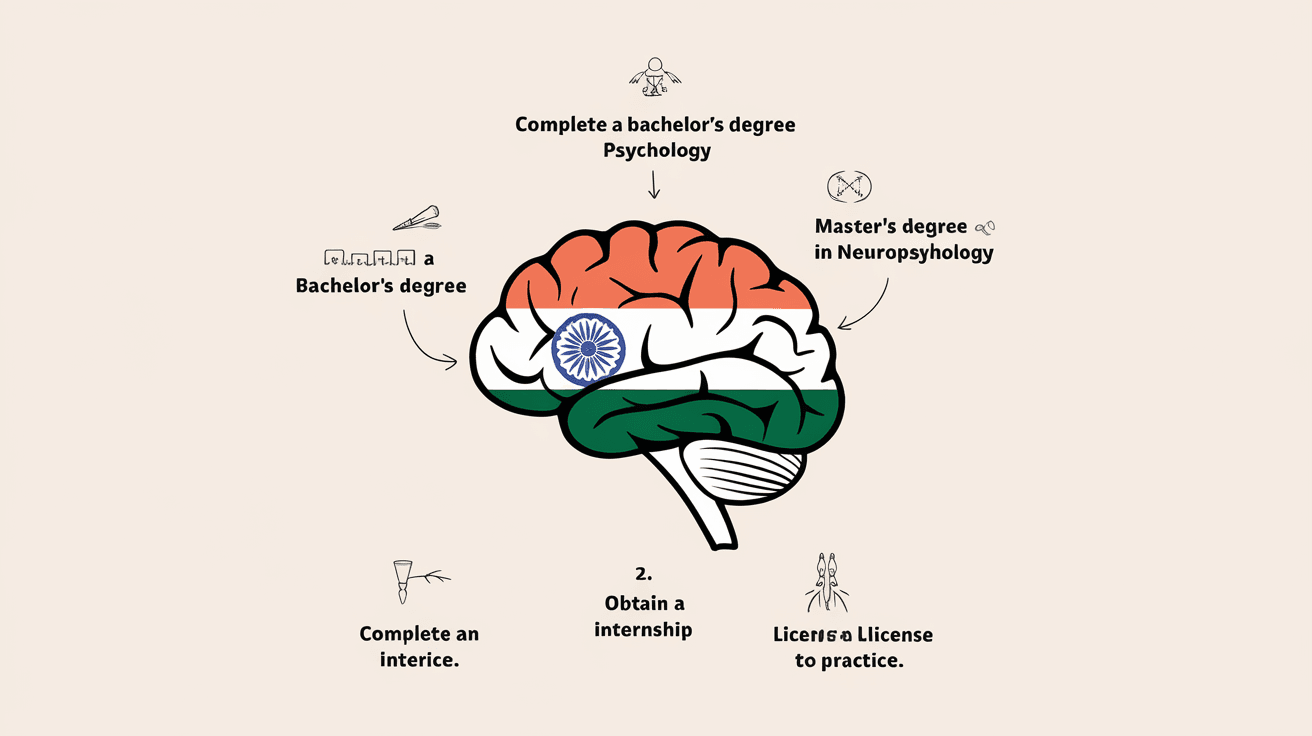
To become a neuropsychologist in India, you need to follow a structured educational path. This involves completing specific degrees and gaining practical experience.
Start with a bachelor's degree in psychology or a related field. Many universities in India offer a Bachelor of Arts (BA) or Bachelor of Science (BSc) in Psychology. This degree usually takes three years.
During your bachelor's, focus on subjects like:
This foundation will prepare you for advanced studies in neuropsychology.
After your bachelor's, enroll in a master's program specializing in clinical psychology, neuropsychology, or applied psychology. A Master of Arts (MA) or Master of Science (MSc) in Psychology typically takes two years.
Look for programs that offer courses in:
Some top Indian universities and institutes offering these courses include:
To become a licensed neuropsychologist, you need advanced training. Many professionals pursue an M.Phil in Clinical Psychology or Neuropsychology, which is a two-year program recognized by the Rehabilitation Council of India (RCI).
Alternatively, you can pursue a PhD in Neuropsychology or Clinical Psychology. A doctoral degree involves research and clinical training, which is essential for expertise in this field.
The RCI is the regulatory body for clinical psychologists in India. To practice legally as a neuropsychologist, you must register with RCI after completing your M.Phil or equivalent degree.
Registration ensures you meet professional standards and ethical guidelines.
Besides formal education, certain skills are crucial for success in neuropsychology.
You need to analyze complex brain-behavior relationships and interpret test results accurately.
Clear communication helps in explaining diagnoses and treatment plans to patients and families.
Working with patients with brain injuries or disorders requires understanding and patience.
Neuropsychologists often engage in research to develop new assessment tools and treatment methods.
Familiarity with neuroimaging techniques and computerized cognitive tests is beneficial.
Hands-on experience is vital in neuropsychology. You can gain this through internships, clinical placements, or research projects during your studies.
Look for internships at:
Clinical training under experienced neuropsychologists helps you learn assessment and therapy techniques.
Participating in research enhances your understanding of brain functions and disorders.
Neuropsychologists in India have diverse career options in healthcare, research, and academia.
You can work in neurology or psychiatry departments, assessing and treating patients with brain injuries, strokes, or neurodegenerative diseases.
Helping patients recover cognitive functions after brain damage is a key role here.
Teaching psychology or conducting research on brain-behavior relationships is another path.
Experienced neuropsychologists may open private clinics offering assessments and therapy.
Some neuropsychologists work in human factors, ergonomics, or cognitive training for employees.
Neuropsychology is still developing in India, so you might face challenges like limited job openings and lack of awareness. However, the demand for neuropsychologists is growing due to increased focus on mental health and neurological disorders.
These trends offer exciting opportunities for new professionals.
Becoming a neuropsychologist in India requires dedication, education, and practical experience. Starting with a psychology degree, advancing through specialized master's and doctoral programs, and registering with the RCI are essential steps. Developing strong analytical, communication, and research skills will help you succeed.
The field offers rewarding career options in healthcare, research, and private practice. Despite some challenges, the future of neuropsychology in India looks promising with growing awareness and technological advancements. If you are passionate about understanding the brain and helping people, this career path can be very fulfilling.
You need at least a master's degree in psychology followed by an M.Phil or PhD in clinical or neuropsychology, along with registration from the Rehabilitation Council of India.
While medical doctors can specialize in neurology or psychiatry, neuropsychology typically requires psychology degrees and clinical training in neuropsychology.
Some universities offer online or hybrid courses in psychology, but clinical neuropsychology requires hands-on training and internships.
Salaries vary widely but typically range from ₹4 to ₹10 lakhs per annum, depending on experience and workplace.
Yes, with increasing awareness of brain health and mental disorders, neuropsychology is gaining importance and offers good career prospects.