

How to Become a Geologist in India
F
Discover verified facts, data, and insights about India’s states, culture, economy, education, and more — all in one place at FactBharat.
Search for a command to run...
Discover verified facts, data, and insights about India’s states, culture, economy, education, and more — all in one place at FactBharat.
No comments yet. Be the first to comment.
Moving to the USA from India is a dream for many. Whether you want to study, work, or live with family, the process can seem complex. But with the right information, you can plan your move confidently. I’ll guide you through the key steps and options...
Opening a college in India is a dream for many educators and entrepreneurs who want to contribute to the country’s education sector. If you are one of those who want to start a college, you need to understand the process clearly. It involves several ...
Opening a hospital in India is a significant and rewarding venture. If you’ve ever wondered how to start one, you’re in the right place. Whether you’re a healthcare professional, entrepreneur, or investor, understanding the process is crucial. You’ll...
Opening a medical store in India can be a rewarding business opportunity. You get to serve your community by providing essential medicines and healthcare products. If you are thinking about starting a medical store, you might wonder where to begin an...
Opening a restaurant in India can be an exciting and rewarding venture. Whether you dream of serving traditional Indian dishes or international cuisine, the process involves careful planning and understanding of local regulations. If you’re ready to ...
FactBharat | Insights About India
2558 posts
Discover verified facts, data, and insights about India’s states, culture, economy, education, and more — all in one place at FactBharat.
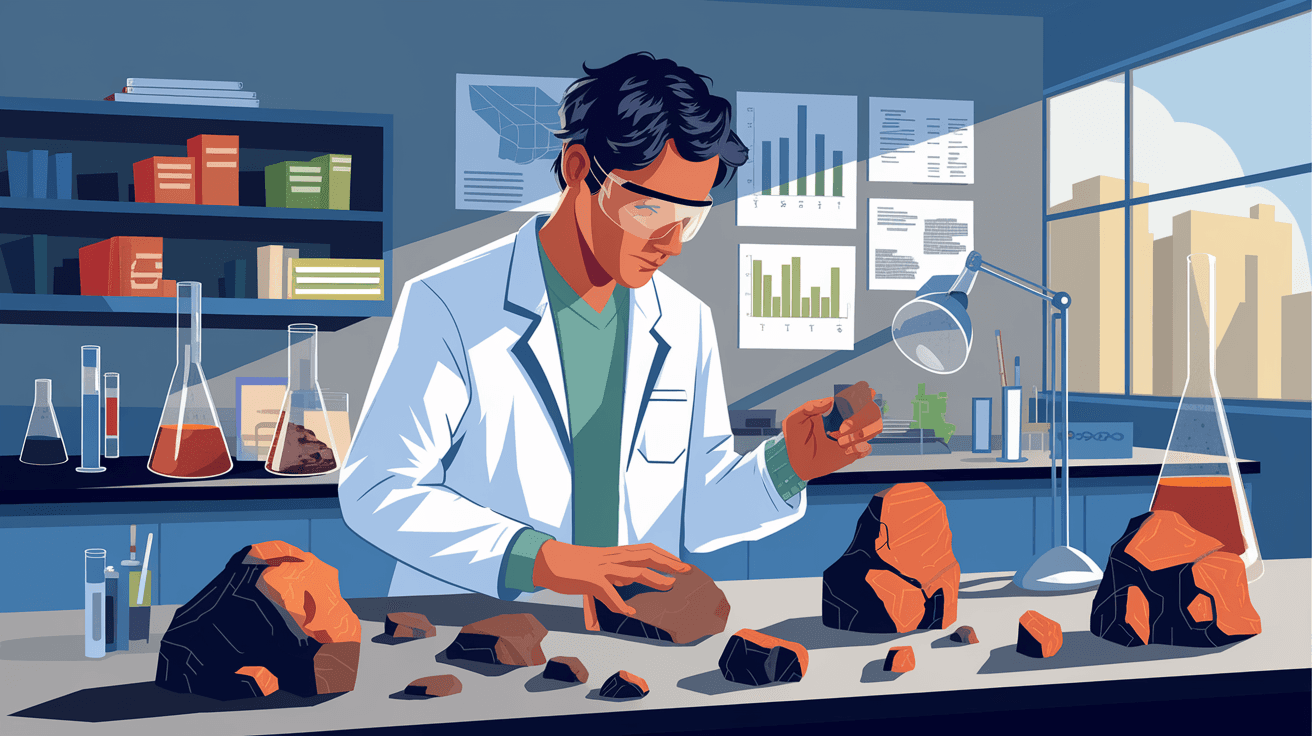
Becoming a geologist in India is an exciting journey if you love exploring the Earth and understanding its processes. You might be curious about rocks, minerals, earthquakes, or how natural resources form. If that sounds like you, then geology could be the perfect career path. In this article, I’ll guide you through the steps to become a geologist in India, from education to job opportunities.
You don’t need to be overwhelmed by the process. I’ll break down everything clearly, so you know what to study, which exams to take, and how to build your career. Whether you’re a student just finishing school or someone looking to switch careers, this guide will help you take the right steps toward becoming a successful geologist in India.
A geologist studies the Earth’s structure, materials, and processes. They analyze rocks, minerals, soil, and fossils to understand how the Earth has changed over time. Geologists help find natural resources like oil, gas, coal, and minerals. They also study natural hazards such as earthquakes and landslides to help protect people and the environment.
Here are some common tasks geologists perform:
Geologists work in various fields like mining, oil and gas, environmental consulting, government agencies, and research institutions.
Education is the first and most important step to becoming a geologist. In India, you need to follow a specific academic path to enter this field.
You should focus on science subjects in your higher secondary education (10+2). The key subjects are:
Choosing science with a focus on Physics, Chemistry, and Mathematics (PCM) is essential because geology involves understanding physical and chemical processes.
After 12th, you need to enroll in a Bachelor of Science (B.Sc.) degree in Geology or Earth Sciences. Some colleges also offer B.Sc. degrees in Applied Geology or Geological Sciences.
Top universities and institutes offering geology courses in India include:
The B.Sc. course usually lasts three years and covers subjects like mineralogy, petrology, paleontology, structural geology, and geophysics.
While a bachelor’s degree can get you entry-level jobs, a Master of Science (M.Sc.) in Geology or related fields improves your chances of better roles and research opportunities.
An M.Sc. typically takes two years and allows you to specialize in areas like:
Many government jobs and research positions require a master’s degree.
Admission to geology courses in India often requires passing entrance exams. Here are some common exams you might encounter:
Make sure to check the specific admission criteria of the college or university you want to join.
Besides formal education, certain skills will help you excel as a geologist:
Developing these skills during your studies and internships will prepare you for real-world geology jobs.
Geology offers diverse career options in India. Here are some popular sectors where geologists work:
India is rich in minerals like coal, iron ore, bauxite, and mica. Geologists help locate and evaluate these resources. Companies like Coal India Limited and National Mineral Development Corporation (NMDC) hire geologists for exploration and mining projects.
Geologists play a key role in finding oil and natural gas reserves. Organizations such as Oil and Natural Gas Corporation (ONGC) and Oil India Limited employ geologists to analyze subsurface formations and guide drilling operations.
Environmental geologists assess the impact of construction, mining, and industrial projects on the environment. They help in groundwater management, pollution control, and disaster risk assessment.
Government bodies like the Geological Survey of India (GSI) offer jobs in mapping, research, and resource management. Research institutions and universities also hire geologists for teaching and scientific studies.
If you enjoy teaching, you can become a geology professor or lecturer after completing your M.Sc. and possibly a Ph.D. Many universities and colleges in India offer geology courses.
Practical experience is crucial in geology. Here are ways to gain hands-on knowledge:
Practical experience improves your resume and helps you understand real-world geology challenges.
Joining professional organizations can boost your career. Some important bodies in India include:
Certifications from these organizations add credibility and help you stay updated with industry trends.
The demand for geologists in India is steady due to ongoing exploration and environmental needs. Salaries vary based on education, experience, and sector.
With India’s focus on sustainable resource management and infrastructure development, geology remains a promising career.
To build a successful career as a geologist, keep these tips in mind:
By following these steps, you can enjoy a rewarding career exploring the Earth and its secrets.
Becoming a geologist in India is a rewarding path if you love science and nature. Starting with a strong foundation in science at the 10+2 level, pursuing a bachelor’s and possibly a master’s degree in geology, and gaining practical experience will set you on the right track. The field offers diverse opportunities in mining, oil and gas, environmental consulting, and research.
Remember, geology is not just about studying rocks; it’s about understanding our planet and helping society manage its resources wisely. If you are passionate and dedicated, you can build a successful career as a geologist in India.
You should choose Physics, Chemistry, and Mathematics (PCM) in 12th. Biology is optional but not necessary. These subjects provide the foundation needed for geology studies.
A bachelor’s degree allows entry-level jobs, but a master’s degree improves job prospects, specialization, and chances for research roles.
Organizations like the Geological Survey of India (GSI), Oil and Natural Gas Corporation (ONGC), and Coal India Limited hire geologists for various roles.
It is difficult because geology requires understanding scientific concepts. A science background in 12th is essential.
Analytical thinking, observation, physical fitness, communication, and technical skills like GIS are important for success in geology.