

How to Become a Financial Analyst in India
F
Discover verified facts, data, and insights about India’s states, culture, economy, education, and more — all in one place at FactBharat.
Search for a command to run...
Discover verified facts, data, and insights about India’s states, culture, economy, education, and more — all in one place at FactBharat.
No comments yet. Be the first to comment.
Moving to the USA from India is a dream for many. Whether you want to study, work, or live with family, the process can seem complex. But with the right information, you can plan your move confidently. I’ll guide you through the key steps and options...
Opening a college in India is a dream for many educators and entrepreneurs who want to contribute to the country’s education sector. If you are one of those who want to start a college, you need to understand the process clearly. It involves several ...
Opening a hospital in India is a significant and rewarding venture. If you’ve ever wondered how to start one, you’re in the right place. Whether you’re a healthcare professional, entrepreneur, or investor, understanding the process is crucial. You’ll...
Opening a medical store in India can be a rewarding business opportunity. You get to serve your community by providing essential medicines and healthcare products. If you are thinking about starting a medical store, you might wonder where to begin an...
Opening a restaurant in India can be an exciting and rewarding venture. Whether you dream of serving traditional Indian dishes or international cuisine, the process involves careful planning and understanding of local regulations. If you’re ready to ...
FactBharat | Insights About India
2558 posts
Discover verified facts, data, and insights about India’s states, culture, economy, education, and more — all in one place at FactBharat.
Becoming a financial analyst in India is a smart career choice if you enjoy working with numbers, analyzing data, and making financial decisions. You might be wondering how to start this journey and what steps you need to take. In this article, I’ll guide you through the entire process, from education to gaining experience and certifications.
Whether you are a student planning your career or a professional looking to switch fields, understanding the path to becoming a financial analyst will help you make informed decisions. Let’s explore what it takes to succeed in this growing and rewarding profession in India.
A financial analyst studies financial data to help businesses and individuals make investment decisions. They analyze market trends, prepare reports, and forecast future financial performance. In India, financial analysts work in banks, investment firms, insurance companies, and corporate finance departments.
Here are some common tasks financial analysts handle:
Financial analysts play a key role in helping companies grow and manage risks. If you enjoy problem-solving and working with numbers, this career can be very satisfying.
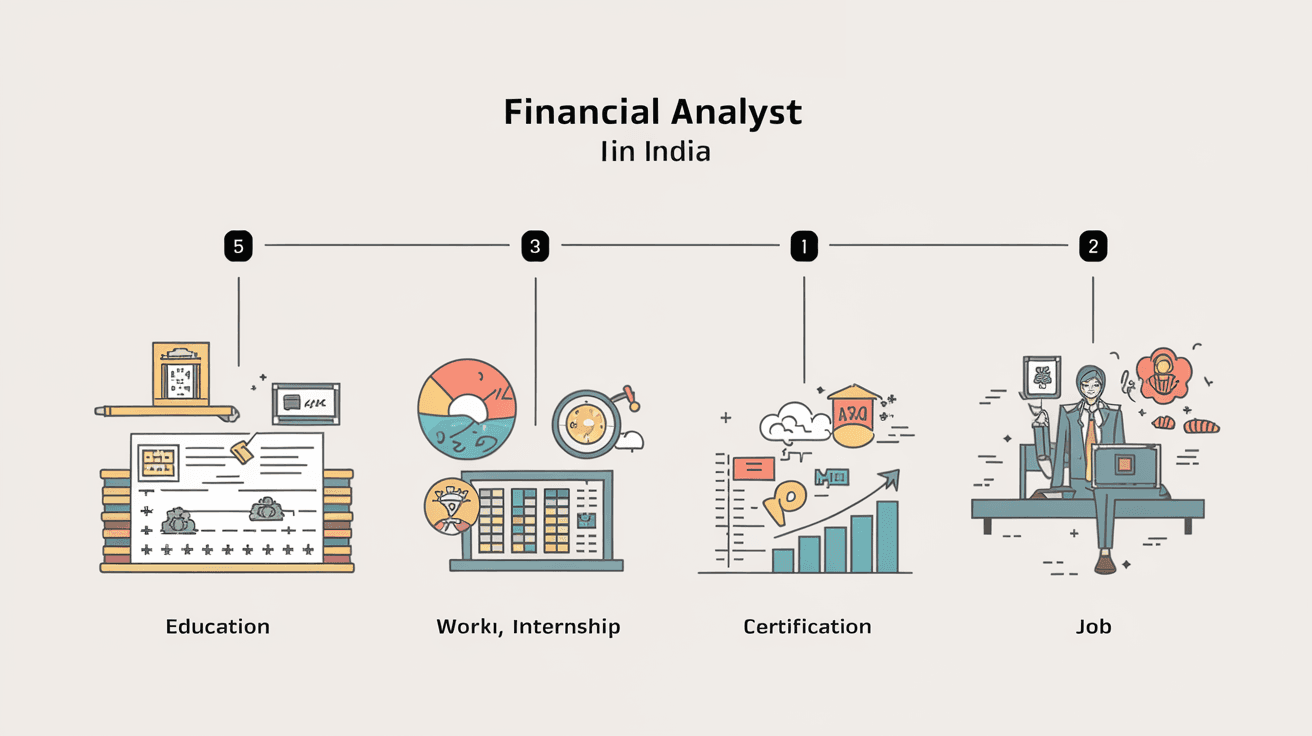
To become a financial analyst in India, you need a strong educational foundation in finance, economics, or related fields. Most employers prefer candidates with at least a bachelor’s degree.
Many students also pursue postgraduate degrees like an MBA with a specialization in finance to improve their job prospects and salary potential.
A relevant degree helps you understand financial concepts, accounting principles, and market dynamics. It also prepares you for certifications and practical work experience.
Besides education, certain skills are crucial to succeed as a financial analyst. These skills help you analyze data effectively and communicate your findings clearly.
Developing these skills through internships, online courses, or workshops can give you a competitive edge.
Certifications are highly valued in the financial industry. They demonstrate your expertise and commitment to the profession. Here are some popular certifications for financial analysts in India:
Earning these certifications can increase your chances of landing a good job and advancing your career.
Experience is vital to becoming a successful financial analyst. Many companies look for candidates who have hands-on experience in finance or related fields.
Practical experience helps you apply theoretical knowledge and develop confidence in your skills.
The job market for financial analysts in India is growing, especially in cities like Mumbai, Bangalore, Delhi, and Hyderabad. Here’s how you can find job opportunities:
Check career pages of banks, financial institutions, and consulting firms.
Many colleges have tie-ups with companies for campus recruitment.
Some agencies specialize in finance and can help you find suitable roles.
Financial analysts in India can expect steady career growth and competitive salaries. Entry-level analysts typically earn between ₹3 to ₹6 lakhs per year. With experience and certifications, mid-level analysts can earn ₹7 to ₹15 lakhs annually. Senior analysts and managers may earn ₹20 lakhs or more.
Continuous learning and networking are key to climbing the career ladder.
Like any profession, being a financial analyst comes with challenges:
Being prepared for these challenges will help you stay motivated and succeed.
Here are some practical tips to help you on your journey:
By following these steps, you’ll be well on your way to a rewarding career as a financial analyst.
Becoming a financial analyst in India requires a mix of education, skills, certifications, and practical experience. Starting with a relevant degree and building strong analytical and communication skills will set a solid foundation. Certifications like CFA and NCFM can boost your credibility and open doors to better opportunities.
Remember, gaining hands-on experience through internships and entry-level roles is just as important as formal education. Stay updated with market trends and continuously improve your skills to grow in this dynamic field. With dedication and the right approach, you can build a successful career as a financial analyst in India.
The average salary ranges from ₹3 to ₹6 lakhs per year for entry-level roles, increasing to ₹15 lakhs or more with experience and certifications.
An MBA is not mandatory but can improve job prospects and salary, especially with a finance specialization.
CFA is highly respected and can significantly enhance your career opportunities in investment and financial analysis.
Yes, but you need to gain relevant skills, certifications, and experience to compete effectively.
Focus on analytical thinking, Excel, financial modeling, communication, and knowledge of financial software.