

How to Become a Doctor in USA from India
F
Discover verified facts, data, and insights about India’s states, culture, economy, education, and more — all in one place at FactBharat.
Search for a command to run...
Discover verified facts, data, and insights about India’s states, culture, economy, education, and more — all in one place at FactBharat.
No comments yet. Be the first to comment.
Moving to the USA from India is a dream for many. Whether you want to study, work, or live with family, the process can seem complex. But with the right information, you can plan your move confidently. I’ll guide you through the key steps and options...
Opening a college in India is a dream for many educators and entrepreneurs who want to contribute to the country’s education sector. If you are one of those who want to start a college, you need to understand the process clearly. It involves several ...
Opening a hospital in India is a significant and rewarding venture. If you’ve ever wondered how to start one, you’re in the right place. Whether you’re a healthcare professional, entrepreneur, or investor, understanding the process is crucial. You’ll...
Opening a medical store in India can be a rewarding business opportunity. You get to serve your community by providing essential medicines and healthcare products. If you are thinking about starting a medical store, you might wonder where to begin an...
Opening a restaurant in India can be an exciting and rewarding venture. Whether you dream of serving traditional Indian dishes or international cuisine, the process involves careful planning and understanding of local regulations. If you’re ready to ...
FactBharat | Insights About India
2558 posts
Discover verified facts, data, and insights about India’s states, culture, economy, education, and more — all in one place at FactBharat.
Becoming a doctor in the USA from India is a dream for many aspiring medical professionals. If you’re one of them, you might wonder about the exact steps you need to take. The process can seem complex, but with the right guidance, you can navigate it successfully. I’ll walk you through the key stages, from exams to residency applications.
You’ll learn about the exams you must clear, how to apply for residency, and what to expect during the process. Whether you’ve just finished medical school in India or are planning ahead, this guide will help you understand what it takes to practice medicine in the USA.
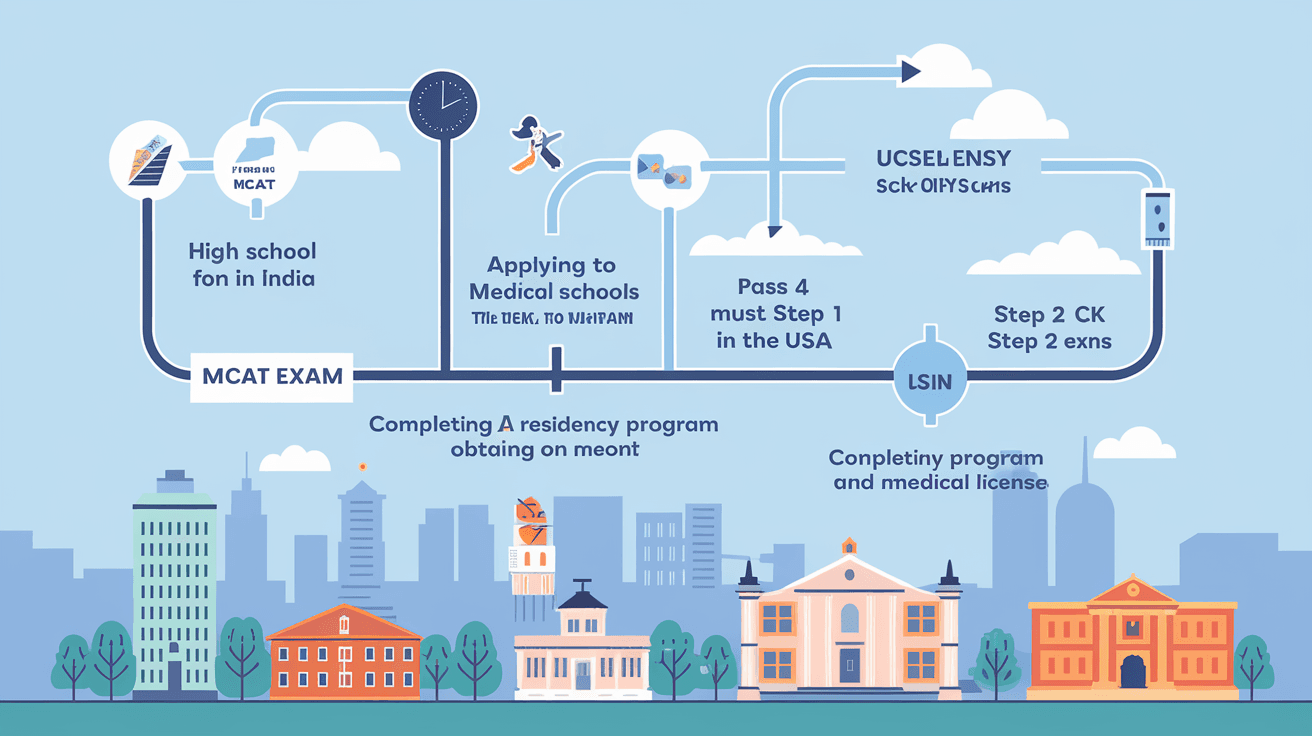
To practice medicine in the USA, you must obtain a medical license. This involves several steps, especially for international medical graduates (IMGs) like doctors from India. The process ensures that all doctors meet the high standards required to provide safe and effective care.
Here’s a quick overview of the main steps:
Each step is crucial and builds on the previous one. Let’s explore them in detail.
Before you can take the licensing exams, you need to verify your medical education credentials. This is done through the Educational Commission for Foreign Medical Graduates (ECFMG).
Make sure your medical school is listed in the World Directory of Medical Schools. If it’s not, you may face difficulties in getting certified.
The USMLE is a three-step exam series that tests your medical knowledge and clinical skills. It’s mandatory for all doctors who want to practice in the USA.
You should start preparing early, especially for Step 1 and Step 2 CK. Many Indian doctors use resources like UWorld, First Aid, and Kaplan for study.
Passing these exams is challenging but essential for moving forward.
After passing the USMLE exams and obtaining ECFMG certification, the next step is to apply for residency training in the USA. Residency is where you gain hands-on experience in your chosen specialty.
Residency programs are competitive, especially for IMGs. Some specialties are more open to international graduates, such as internal medicine, family medicine, and psychiatry.
Residency programs typically last 3 to 7 years, depending on the specialty. During this time, you work under supervision, gaining practical skills and knowledge.
Residency also allows you to build professional networks and improve your chances of securing a job.
Once you finish residency, you can apply for a medical license in the state where you want to work. Each state has its own medical board with specific requirements.
You may also consider board certification in your specialty, which enhances your credentials and job prospects.
Moving to the USA to become a doctor involves more than exams and training. Here are some practical tips:
The journey to becoming a doctor in the USA from India is tough. You might face:
To overcome these:
Becoming a doctor in the USA from India is a rewarding but demanding path. You need to verify your credentials, pass the USMLE exams, secure a residency, and obtain a medical license. Each step requires careful planning and dedication.
If you stay committed and use the right resources, you can achieve your dream of practicing medicine in the USA. Remember, many Indian doctors have successfully made this journey, and you can too. Keep learning, stay motivated, and take one step at a time.
It typically takes 6 to 10 years, including USMLE preparation, residency training, and licensing. The exact time depends on your specialty and exam success.
You must pass the USMLE Step 1, Step 2 CK, and Step 3 exams, along with obtaining ECFMG certification.
While not mandatory, US clinical experience improves your chances of matching into a residency program.
Most use the J-1 exchange visitor visa or the H-1B work visa during residency and training.
Yes, completing a US residency program is required to obtain a medical license and practice independently in the USA.