

How to Become a Doctor in Switzerland from India
F
Discover verified facts, data, and insights about India’s states, culture, economy, education, and more — all in one place at FactBharat.
Search for a command to run...
Discover verified facts, data, and insights about India’s states, culture, economy, education, and more — all in one place at FactBharat.
No comments yet. Be the first to comment.
Moving to the USA from India is a dream for many. Whether you want to study, work, or live with family, the process can seem complex. But with the right information, you can plan your move confidently. I’ll guide you through the key steps and options...
Opening a college in India is a dream for many educators and entrepreneurs who want to contribute to the country’s education sector. If you are one of those who want to start a college, you need to understand the process clearly. It involves several ...
Opening a hospital in India is a significant and rewarding venture. If you’ve ever wondered how to start one, you’re in the right place. Whether you’re a healthcare professional, entrepreneur, or investor, understanding the process is crucial. You’ll...
Opening a medical store in India can be a rewarding business opportunity. You get to serve your community by providing essential medicines and healthcare products. If you are thinking about starting a medical store, you might wonder where to begin an...
Opening a restaurant in India can be an exciting and rewarding venture. Whether you dream of serving traditional Indian dishes or international cuisine, the process involves careful planning and understanding of local regulations. If you’re ready to ...
FactBharat | Insights About India
2558 posts
Discover verified facts, data, and insights about India’s states, culture, economy, education, and more — all in one place at FactBharat.
Becoming a doctor in Switzerland from India is a dream for many aspiring medical professionals. You might be wondering how to navigate the complex process of education, licensing, and adapting to a new healthcare system. I’m here to guide you through the essential steps, so you can plan your journey with confidence.
In this article, we’ll explore the educational requirements, language skills, licensing exams, and practical tips to help you succeed. Whether you’re just starting medical school or already a practicing doctor in India, this guide will clarify what you need to do to practice medicine in Switzerland.
Switzerland has a high standard of healthcare, with a strong emphasis on quality and patient safety. The medical education system is rigorous, and foreign-trained doctors must meet strict requirements to practice.
If you’re coming from India, you’ll need to understand how your qualifications fit into this system and what additional steps you must take.
If you are an Indian student planning to study medicine in Switzerland, here’s what you should know:
Studying medicine in Switzerland from India is a long-term commitment but offers excellent training and career opportunities.
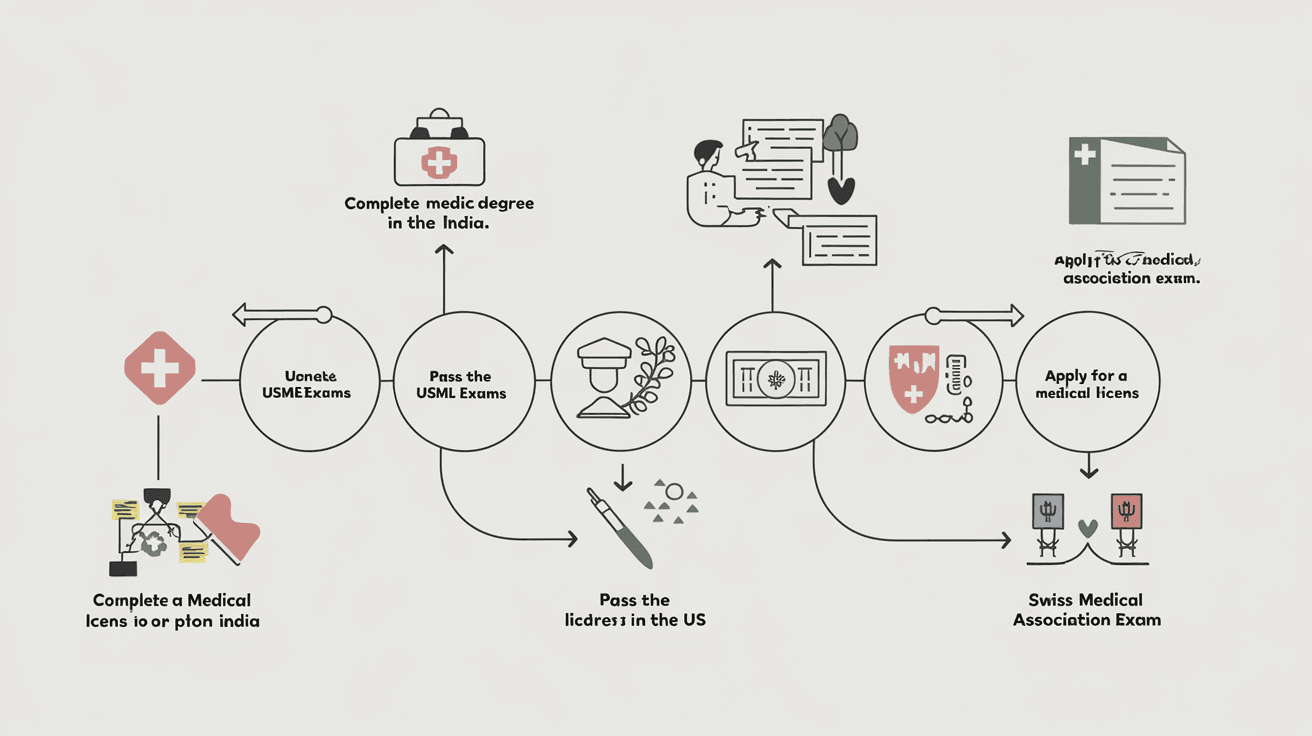
If you have already completed your medical degree in India and want to practice in Switzerland, the process is different:
This pathway requires patience and preparation but allows you to leverage your Indian medical education.
Language is one of the biggest challenges for Indian doctors in Switzerland. Here’s why it matters:
To prepare:
Being fluent in the local language increases your chances of success significantly.
Passing the Swiss Federal Licensing Examination is mandatory for foreign-trained doctors. Here’s what you need to know:
This process can take several months, so plan accordingly.
Once licensed, you need to find a job in Switzerland to get a work permit. Here’s how to approach this:
Having a job offer is essential before moving to Switzerland.
Moving from India to Switzerland to become a doctor involves many challenges. Here are some tips to make the transition easier:
These steps will help you adapt and succeed in your new environment.
Studying or working in Switzerland can be expensive. Here’s what to keep in mind:
Planning your finances carefully is crucial for a successful journey.
| Step | Indian Student Pathway | Indian Qualified Doctor Pathway |
| Education | Complete 6-year medical degree in Switzerland | Recognize Indian medical degree via SRC |
| Language | Pass German/French proficiency tests | Demonstrate local language proficiency |
| Exams | Pass Swiss medical school entrance exams | Pass Swiss Federal Licensing Exam |
| Licensing | Obtain Swiss medical license after graduation | Obtain license after exam and adaptation |
| Work Permit | Apply after graduation and job offer | Apply after job offer |
| Practical Training | Included in medical curriculum | May require supervised adaptation period |
| Financial Planning | Tuition + living costs | Living costs until employment |
Becoming a doctor in Switzerland from India is a challenging but rewarding path. Whether you choose to study medicine in Switzerland or bring your Indian medical degree, you must meet strict language, licensing, and regulatory requirements. Preparing early, improving your language skills, and understanding the Swiss healthcare system will help you succeed.
Remember, patience and persistence are key. The Swiss medical profession offers excellent career opportunities and a high quality of life. With the right approach, you can achieve your dream of practicing medicine in Switzerland.
It typically takes six years to complete medical school in Switzerland. If you already have a medical degree from India, the licensing process and exams can take 1–2 years depending on your preparation and adaptation period.
Yes, proficiency in the local language (German, French, or Italian) is mandatory. Most medical schools and hospitals require fluency to communicate effectively with patients and colleagues.
After passing the exam, you must register with the cantonal medical authority and secure a job offer. Only then can you apply for a work permit to start practicing.
Your degree must be evaluated and recognized by the Swiss Red Cross. Recognition is essential before you can take the licensing exam or apply for registration.
Yes, some universities and organizations offer scholarships for international students. It’s best to check with individual universities and Swiss scholarship portals for current opportunities.