

How to Become a Doctor in India After 12th
F
Discover verified facts, data, and insights about India’s states, culture, economy, education, and more — all in one place at FactBharat.
Search for a command to run...
Discover verified facts, data, and insights about India’s states, culture, economy, education, and more — all in one place at FactBharat.
No comments yet. Be the first to comment.
Moving to the USA from India is a dream for many. Whether you want to study, work, or live with family, the process can seem complex. But with the right information, you can plan your move confidently. I’ll guide you through the key steps and options...
Opening a college in India is a dream for many educators and entrepreneurs who want to contribute to the country’s education sector. If you are one of those who want to start a college, you need to understand the process clearly. It involves several ...
Opening a hospital in India is a significant and rewarding venture. If you’ve ever wondered how to start one, you’re in the right place. Whether you’re a healthcare professional, entrepreneur, or investor, understanding the process is crucial. You’ll...
Opening a medical store in India can be a rewarding business opportunity. You get to serve your community by providing essential medicines and healthcare products. If you are thinking about starting a medical store, you might wonder where to begin an...
Opening a restaurant in India can be an exciting and rewarding venture. Whether you dream of serving traditional Indian dishes or international cuisine, the process involves careful planning and understanding of local regulations. If you’re ready to ...
FactBharat | Insights About India
2558 posts
Discover verified facts, data, and insights about India’s states, culture, economy, education, and more — all in one place at FactBharat.
Becoming a doctor in India is a dream for many students after completing their 12th grade. If you are one of those aspiring to wear the white coat and serve society, you are in the right place. I will guide you through the entire process, from choosing the right subjects to clearing entrance exams and starting your medical career.
You might wonder what steps you need to take, which exams to prepare for, and how long the journey will be. Don’t worry; I will break down everything clearly so you can plan your path confidently and efficiently.
To become a doctor in India, you must first meet the eligibility criteria after your 12th standard. Here’s what you need to know:
Meeting these criteria is the first step to applying for medical entrance exams. Without this, you cannot move forward in your medical career.
The most important step after 12th is to clear the medical entrance exams. These exams test your knowledge in Physics, Chemistry, and Biology and determine your admission to medical colleges.
NEET is the single most important exam for MBBS admissions across India. Here’s what you should know:
While NEET is the main exam, some states and private colleges may have their own entrance tests or counseling processes. However, NEET qualification is still required for MBBS admission.
After clearing NEET, you can choose from various medical courses. The most common path to becoming a doctor is MBBS, but there are other options too.
Choosing MBBS is the most direct route if you want to become a medical doctor.
Once you clear NEET, the admission process begins. Here’s how it works:
It is important to keep track of counseling dates and documents required to avoid missing out.
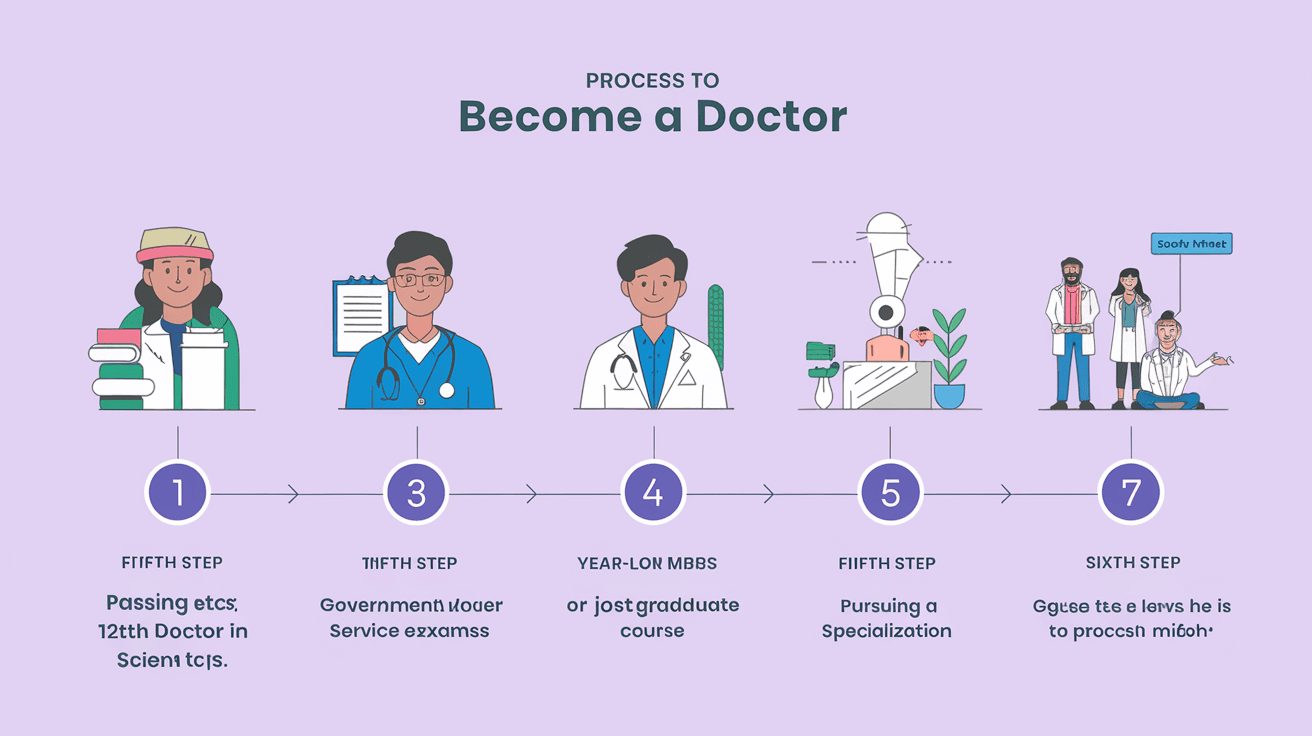
Becoming a doctor is a long but rewarding journey. Here’s the timeline you can expect:
| Stage | Duration | Description |
| MBBS Course | 4.5 years | Classroom and practical learning |
| Internship | 1 year | Hands-on training in hospitals |
| Postgraduate Degree | 3 years (optional) | Specialization in a medical field |
After completing MBBS and internship, you become a registered medical practitioner. You can start practicing or pursue further studies.
The one-year internship is mandatory after MBBS. During this time:
After completing the internship, you must register with the Medical Council of India (now National Medical Commission) or respective state medical councils. Registration allows you to legally practice medicine in India.
Many doctors choose to specialize after MBBS. Specialization helps you become an expert in a particular field such as:
To pursue postgraduate studies, you need to clear the NEET-PG exam. This course usually lasts 3 years and leads to an MD or MS degree.
Once you become a doctor, many career paths open up:
Doctors are always in demand, and you can choose a career that suits your interests and lifestyle.
Preparing for NEET and other exams requires dedication. Here are some tips:
Consistent effort and smart preparation will increase your chances of success.
Medical education can be expensive, especially in private colleges. Here’s what you should consider:
Planning your finances early will help you manage the cost of medical education.
Becoming a doctor in India after 12th is a challenging but fulfilling journey. You need to meet eligibility criteria, prepare well for NEET, choose the right medical course, and complete your education and internship. With dedication and the right guidance, you can achieve your dream of becoming a doctor.
Remember, the path requires patience and hard work, but the reward is a respected profession that saves lives. If you stay focused and follow the steps carefully, you will soon be on your way to a successful medical career.
You need at least 50% marks in Physics, Chemistry, and Biology combined. For reserved categories, the minimum is 40%.
Yes, NEET is compulsory for admission to all government and private medical colleges offering MBBS.
It takes about 5.5 years to complete MBBS including internship. Specialization adds 3 more years.
No, NEET qualification is mandatory for MBBS admission in India.
You can work as a general physician, pursue specialization, join hospitals, start a clinic, or work in research and teaching.