

How the Poverty Line is Estimated in India
F
Discover verified facts, data, and insights about India’s states, culture, economy, education, and more — all in one place at FactBharat.
Search for a command to run...
Discover verified facts, data, and insights about India’s states, culture, economy, education, and more — all in one place at FactBharat.
No comments yet. Be the first to comment.
Moving to the USA from India is a dream for many. Whether you want to study, work, or live with family, the process can seem complex. But with the right information, you can plan your move confidently. I’ll guide you through the key steps and options...
Opening a college in India is a dream for many educators and entrepreneurs who want to contribute to the country’s education sector. If you are one of those who want to start a college, you need to understand the process clearly. It involves several ...
Opening a hospital in India is a significant and rewarding venture. If you’ve ever wondered how to start one, you’re in the right place. Whether you’re a healthcare professional, entrepreneur, or investor, understanding the process is crucial. You’ll...
Opening a medical store in India can be a rewarding business opportunity. You get to serve your community by providing essential medicines and healthcare products. If you are thinking about starting a medical store, you might wonder where to begin an...
Opening a restaurant in India can be an exciting and rewarding venture. Whether you dream of serving traditional Indian dishes or international cuisine, the process involves careful planning and understanding of local regulations. If you’re ready to ...
FactBharat | Insights About India
2558 posts
Discover verified facts, data, and insights about India’s states, culture, economy, education, and more — all in one place at FactBharat.
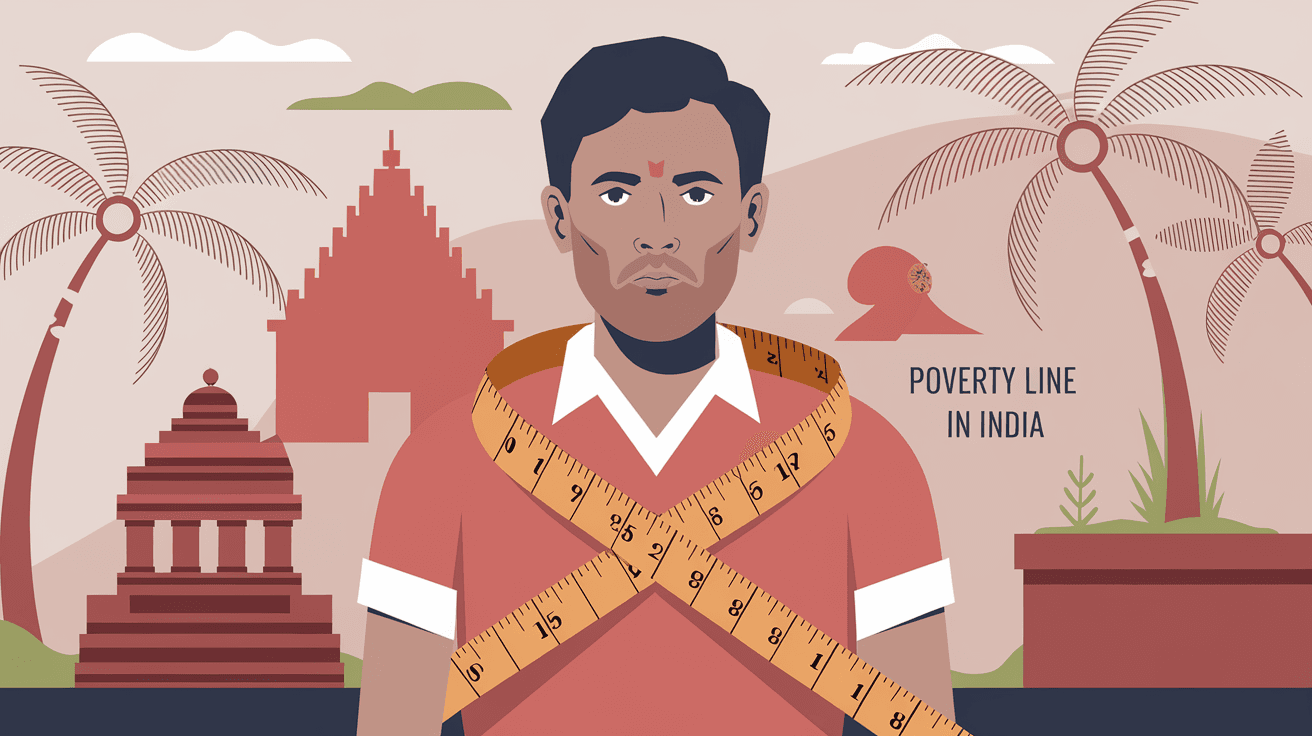
Understanding how the poverty line is estimated in India can feel complicated. But it’s important because it helps decide who needs government support. When you know how this line is drawn, you can better understand poverty and the efforts to reduce it.
In this article, I’ll explain the methods India uses to estimate the poverty line. We’ll look at the key factors, the role of consumption and income data, and how recent changes affect millions of people. By the end, you’ll see how this process shapes policies and impacts lives.
The poverty line is a benchmark that shows the minimum income or consumption level needed to meet basic needs. In India, it helps identify people who live in poverty and need assistance.
India’s poverty line is not fixed. It changes based on inflation, consumption patterns, and economic conditions. This makes it a dynamic tool to measure poverty accurately.
India mainly uses consumption expenditure to estimate the poverty line. This means they look at how much money a household spends on basic needs.
This method is called the calorie intake method because it focuses on the calories needed for survival. Over time, it has evolved to include other factors.
In 2009, the Tendulkar Committee changed how India estimates poverty. Before this, poverty was based mainly on calorie intake and food expenditure.
The committee recommended:
This made the poverty line more realistic and reflective of actual living costs.
This approach is still the foundation for poverty estimation in India today.
The National Sample Survey Office (NSSO) conducts large surveys every few years. These surveys collect detailed data on household consumption.
This data helps calculate average consumption and identify the poverty line based on minimum expenditure needed.
Here’s a simple breakdown of how the poverty line is estimated:
People spending less than this amount are considered below the poverty line.
Living costs vary between rural and urban India, so poverty lines differ too.
This helps target poverty reduction programs more effectively in different areas.
While India’s poverty line estimation is detailed, it has some limitations:
Experts suggest combining consumption data with other indicators like education, health, and living conditions for a fuller picture.
India has been exploring new ways to measure poverty beyond the traditional line.
These methods complement the consumption-based poverty line to better target help.
Knowing how the poverty line is estimated helps you understand:
It also shows the importance of accurate data and regular updates to reflect real living conditions.
If you’re interested in social work, policy, or just want to understand India better, knowing about the poverty line is useful.
Estimating the poverty line in India is a careful process based on consumption expenditure and calorie needs. The Tendulkar Committee’s recommendations made the method more realistic by including non-food expenses and adjusting for inflation.
While the poverty line helps identify who needs support, it has limitations. New measures like the Multidimensional Poverty Index are helping create a fuller picture of poverty. Understanding this process is key to grasping how India fights poverty and supports its vulnerable citizens.
By knowing how the poverty line is estimated, you can better appreciate the challenges and efforts involved in reducing poverty in India.
The poverty line is updated periodically, usually after major surveys like the National Sample Survey. Adjustments are made for inflation and changes in consumption patterns.
Typically, 2,400 calories per person per day for rural areas and 2,100 calories for urban areas are used as minimum calorie requirements.
Because living costs, especially for housing and food, are higher in urban areas, the poverty line is set higher there to reflect these differences.
The NSS collects detailed data on household consumption, which is the main basis for calculating the poverty line in India.
Yes, India also uses measures like the Multidimensional Poverty Index, which considers health, education, and living standards alongside income or consumption.