

How Sri Lanka Separated from India
F
Discover verified facts, data, and insights about India’s states, culture, economy, education, and more — all in one place at FactBharat.
Search for a command to run...
Discover verified facts, data, and insights about India’s states, culture, economy, education, and more — all in one place at FactBharat.
No comments yet. Be the first to comment.
Moving to the USA from India is a dream for many. Whether you want to study, work, or live with family, the process can seem complex. But with the right information, you can plan your move confidently. I’ll guide you through the key steps and options...
Opening a college in India is a dream for many educators and entrepreneurs who want to contribute to the country’s education sector. If you are one of those who want to start a college, you need to understand the process clearly. It involves several ...
Opening a hospital in India is a significant and rewarding venture. If you’ve ever wondered how to start one, you’re in the right place. Whether you’re a healthcare professional, entrepreneur, or investor, understanding the process is crucial. You’ll...
Opening a medical store in India can be a rewarding business opportunity. You get to serve your community by providing essential medicines and healthcare products. If you are thinking about starting a medical store, you might wonder where to begin an...
Opening a restaurant in India can be an exciting and rewarding venture. Whether you dream of serving traditional Indian dishes or international cuisine, the process involves careful planning and understanding of local regulations. If you’re ready to ...
FactBharat | Insights About India
2558 posts
Discover verified facts, data, and insights about India’s states, culture, economy, education, and more — all in one place at FactBharat.
Have you ever wondered how Sri Lanka became an island separate from India? It’s a fascinating story that combines geology, geography, and history. Understanding this separation helps us appreciate the unique culture and natural beauty of Sri Lanka today.
In this article, I’ll take you through the process of how Sri Lanka separated from India. We’ll explore the geological events that shaped the land and the timeline of this separation. By the end, you’ll have a clear picture of how these two neighboring countries came to be distinct islands.
The story of Sri Lanka’s separation begins deep in Earth’s history. Both India and Sri Lanka are part of the Indian Plate, a large section of Earth’s crust. This plate was once part of a supercontinent called Gondwana, which existed over 200 million years ago.
Sri Lanka and India were once connected as part of this landmass. The geological forces that moved the Indian Plate also influenced the separation of Sri Lanka.
Sri Lanka’s separation from India was not a sudden event but a gradual process shaped by tectonic activity and sea-level changes.
The Palk Strait is the narrow body of water that now separates Sri Lanka from India. It is only about 40 to 85 kilometers wide, depending on the location.
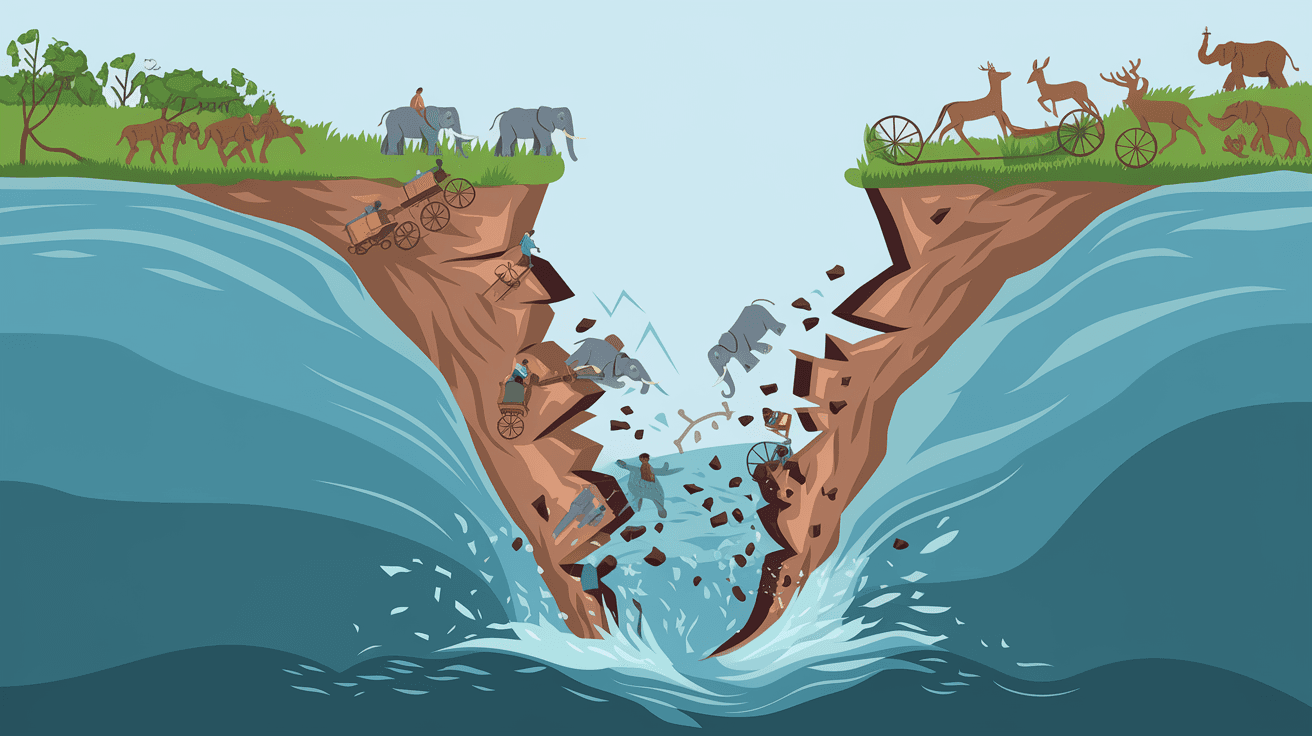
As the Ice Age ended, glaciers melted, and sea levels rose. This rise in sea level submerged the land bridge, creating the Palk Strait and separating Sri Lanka from India physically.
Sea-level changes played a crucial role in the final separation.
This process is still ongoing, with minor changes in sea levels affecting the coastline and marine geography.
Even though Sri Lanka became an island, it maintained strong cultural and historical ties with India.
These connections show that while geography separated the lands, human history kept them linked.
Today, the separation of Sri Lanka from India has important implications.
| Aspect | Details |
| Geological Origin | Part of Indian Plate, once connected to India |
| Time of Separation | Gradual, finalized around 10,000-15,000 years ago |
| Land Bridge Name | Adam’s Bridge (Ram Setu) |
| Current Separation | Palk Strait, 40-85 km wide |
| Cultural Links | Shared history, religion, language |
| Modern Implications | Sovereign nation, unique biodiversity |
Understanding how Sri Lanka separated from India gives you a glimpse into Earth’s dynamic history. It’s amazing to see how natural forces like tectonic movements and sea-level changes shaped the geography we know today. This separation created a unique island with its own culture and environment.
Even though Sri Lanka is physically separate, its deep historical and cultural ties with India remain strong. This story reminds us how geography and history are intertwined, shaping the identities of nations and their people.
Sri Lanka separated from India gradually, with the final physical separation occurring around 10,000 to 15,000 years ago due to rising sea levels after the last Ice Age.
Adam’s Bridge, also known as Ram Setu, is a chain of sandbanks and limestone shoals that once connected India and Sri Lanka, now mostly submerged under the Palk Strait.
While physically separated by the Palk Strait, Sri Lanka and India share strong cultural, religious, and historical ties, especially through Buddhism and Tamil heritage.
The Palk Strait is the narrow sea channel separating Sri Lanka from India. It is important for maritime navigation, fishing, and serves as an international boundary.
There have been proposals to build a bridge or tunnel across the Palk Strait, but environmental concerns and political issues have so far prevented such projects from moving forward.