

How President is Elected in India
F
Discover verified facts, data, and insights about India’s states, culture, economy, education, and more — all in one place at FactBharat.
Search for a command to run...
Discover verified facts, data, and insights about India’s states, culture, economy, education, and more — all in one place at FactBharat.
No comments yet. Be the first to comment.
Moving to the USA from India is a dream for many. Whether you want to study, work, or live with family, the process can seem complex. But with the right information, you can plan your move confidently. I’ll guide you through the key steps and options...
Opening a college in India is a dream for many educators and entrepreneurs who want to contribute to the country’s education sector. If you are one of those who want to start a college, you need to understand the process clearly. It involves several ...
Opening a hospital in India is a significant and rewarding venture. If you’ve ever wondered how to start one, you’re in the right place. Whether you’re a healthcare professional, entrepreneur, or investor, understanding the process is crucial. You’ll...
Opening a medical store in India can be a rewarding business opportunity. You get to serve your community by providing essential medicines and healthcare products. If you are thinking about starting a medical store, you might wonder where to begin an...
Opening a restaurant in India can be an exciting and rewarding venture. Whether you dream of serving traditional Indian dishes or international cuisine, the process involves careful planning and understanding of local regulations. If you’re ready to ...
FactBharat | Insights About India
2558 posts
Discover verified facts, data, and insights about India’s states, culture, economy, education, and more — all in one place at FactBharat.
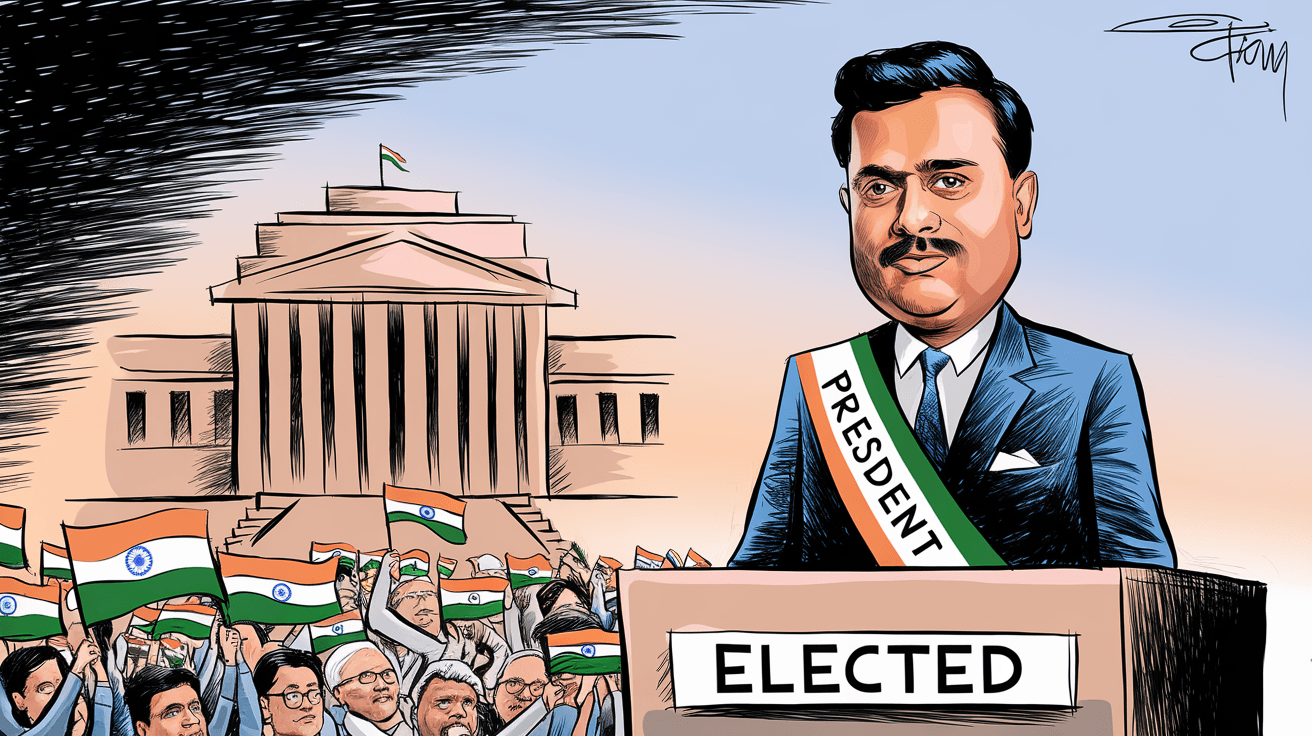
You might wonder how the President of India is chosen. Unlike many countries where citizens directly vote for the president, India follows a unique and detailed process. This system ensures that the President represents the entire country fairly.
In this article, I will walk you through the step-by-step process of how the President is elected in India. You will learn about the electoral college, voting method, and the importance of this role in the Indian democracy.
Before diving into the election process, it’s important to understand why the President’s role matters. The President is the head of state and acts as a symbol of unity for the country. Although the Prime Minister runs the government, the President has key constitutional powers.
Some important functions of the President include:
This makes the election process very significant because the President must be someone who can represent the nation’s interests impartially.
Not just anyone can become the President. There are specific eligibility criteria set by the Constitution:
These rules ensure that the candidate has enough maturity and experience to handle the responsibilities of the office.
Unlike a direct election, the President of India is elected by an Electoral College. This group includes:
It’s important to note that nominated members of Parliament or state assemblies do not vote. This system balances the influence of both the central and state governments.
The idea is to keep the election free from direct public influence and political pressure. Elected representatives are expected to vote responsibly, reflecting the will of the people they represent.
One unique feature of the Indian presidential election is the weighted value of votes. Not all votes carry the same weight. This system ensures fairness between states with different populations and balances the power between Parliament and state assemblies.
For MLAs (Members of Legislative Assembly):
The value of an MLA’s vote depends on the population of their state. The formula is:
[
\text{Value of MLA's vote} = \frac{\text{Population of the state}}{\text{Total elected MLAs in the state} \times 1000}
]
The population figure is based on the 1971 census.
For MPs (Members of Parliament):
The total value of all MLA votes is added up. Then, this total is divided by the total number of elected MPs. Each MP’s vote value is the quotient of this division.
This method balances the influence of populous states and smaller states, ensuring equal representation.
Candidates for the President must be nominated by at least 50 electors from the Electoral College as proposers and 50 electors as seconders. This prevents frivolous candidates from contesting.
The nomination papers are submitted to the Returning Officer appointed by the Election Commission of India.
The election uses a secret ballot and a system called the Single Transferable Vote (STV). Here’s how it works:
This method ensures the elected President has broad support among the electors.
The Election Commission of India oversees the entire presidential election process. Their responsibilities include:
The Commission ensures the election is free, fair, and transparent.
The President’s term is five years. The election is held before the current President’s term ends, usually about a month prior. If the office becomes vacant due to resignation or death, a new election is held within six months.
The 2022 presidential election in India saw a smooth process with candidates nominated by major political parties. The Electoral College voted using the weighted system, and the winner secured a clear majority through the Single Transferable Vote method.
This election demonstrated the strength and fairness of India’s system, balancing regional and political interests.
India’s presidential election stands out because:
This system reflects India’s federal structure and diversity, making sure the President represents the whole nation.
Now you know how the President of India is elected. It’s a carefully designed process involving elected representatives from across the country. The weighted voting system and Single Transferable Vote method ensure fairness and broad support.
Understanding this process helps you appreciate the role of the President and the strength of Indian democracy. Next time you hear about a presidential election, you’ll know the detailed steps behind choosing the nation’s head of state.
The President serves a term of five years but can be re-elected for multiple terms.
No, only elected members of Parliament and state assemblies can vote.
The candidate with the least votes is eliminated, and their votes are transferred based on preferences until someone wins.
The Election Commission of India is responsible for conducting and supervising the election.
No, holding an office of profit under the government disqualifies a person from contesting the presidential election.