

How Postmortem Is Done in India
F
Discover verified facts, data, and insights about India’s states, culture, economy, education, and more — all in one place at FactBharat.
Search for a command to run...
Discover verified facts, data, and insights about India’s states, culture, economy, education, and more — all in one place at FactBharat.
No comments yet. Be the first to comment.
Moving to the USA from India is a dream for many. Whether you want to study, work, or live with family, the process can seem complex. But with the right information, you can plan your move confidently. I’ll guide you through the key steps and options...
Opening a college in India is a dream for many educators and entrepreneurs who want to contribute to the country’s education sector. If you are one of those who want to start a college, you need to understand the process clearly. It involves several ...
Opening a hospital in India is a significant and rewarding venture. If you’ve ever wondered how to start one, you’re in the right place. Whether you’re a healthcare professional, entrepreneur, or investor, understanding the process is crucial. You’ll...
Opening a medical store in India can be a rewarding business opportunity. You get to serve your community by providing essential medicines and healthcare products. If you are thinking about starting a medical store, you might wonder where to begin an...
Opening a restaurant in India can be an exciting and rewarding venture. Whether you dream of serving traditional Indian dishes or international cuisine, the process involves careful planning and understanding of local regulations. If you’re ready to ...
FactBharat | Insights About India
2558 posts
Discover verified facts, data, and insights about India’s states, culture, economy, education, and more — all in one place at FactBharat.
When someone dies under suspicious or unclear circumstances in India, a postmortem is often necessary. You might wonder how this process works and what steps are involved. Understanding how postmortem is done in India can help you navigate difficult situations with more clarity and confidence.
In this article, I will walk you through the entire postmortem procedure in India. We will cover why it is done, who performs it, the legal framework, and what happens during the examination. By the end, you will have a clear picture of this important medical and legal process.
A postmortem, also called an autopsy, is a medical examination of a body after death. It helps determine the cause and manner of death. In India, postmortems are usually conducted when the death is unnatural, sudden, or suspicious.
The main goals of a postmortem include:
Doctors trained in forensic medicine perform the postmortem. They carefully examine the body both externally and internally.
In India, a postmortem is mandatory in certain cases. These include:
The police usually order a postmortem when they receive a report of such deaths. Sometimes, a magistrate may also direct a postmortem.
Postmortems in India are conducted by qualified doctors known as forensic pathologists or medical officers trained in forensic medicine. These doctors work in government hospitals, medical colleges, or forensic labs.
The doctor performing the postmortem must be impartial and follow strict protocols. They prepare a detailed report based on their findings, which is submitted to the police or court.
The postmortem process in India is governed by several laws and guidelines to ensure transparency and accuracy:
These laws ensure that postmortems are conducted fairly and the findings are legally valid.
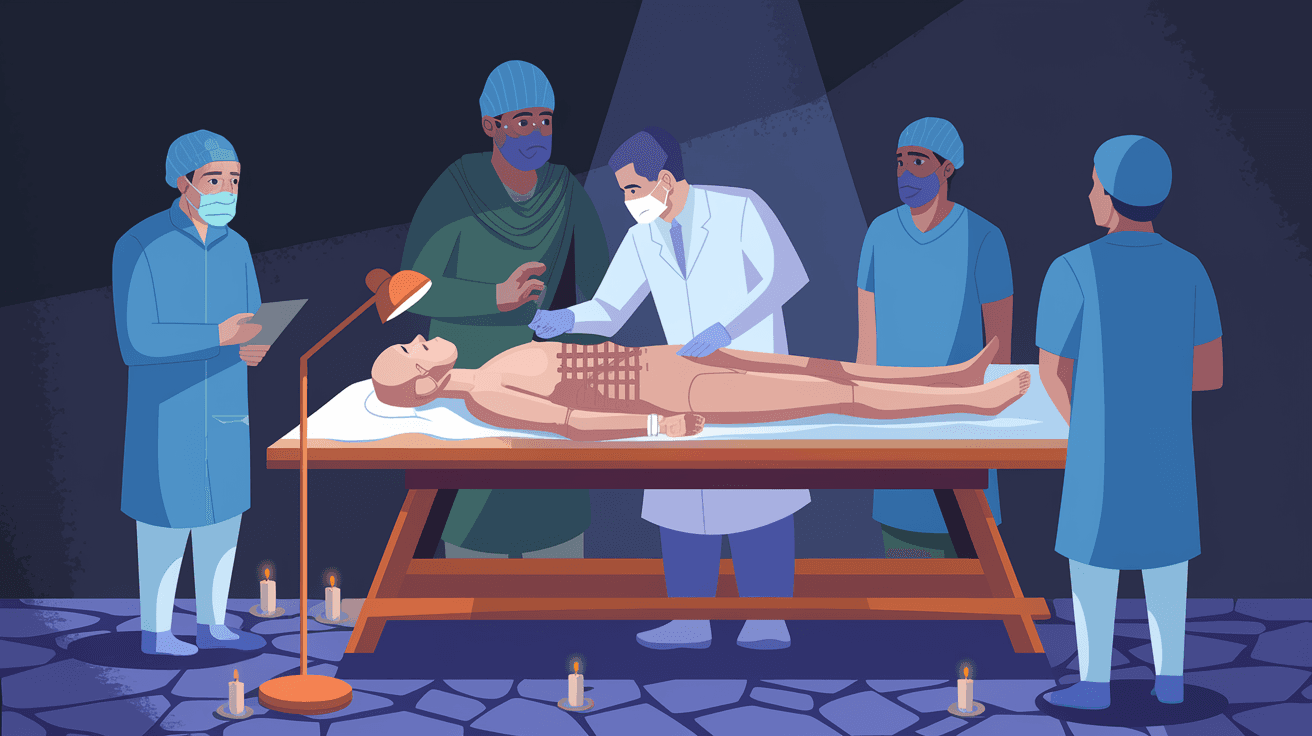
Here’s what typically happens during a postmortem:
The body is brought to the mortuary or forensic department, usually by the police. It is registered with details like name, age, and case number.
The doctor first examines the body externally. They note:
Photos may be taken for documentation.
Next, the doctor makes incisions to examine internal organs. This includes:
The internal exam helps confirm the cause of death.
If poisoning or drug overdose is suspected, samples like blood, stomach contents, or urine are sent for toxicology tests. These tests identify harmful substances.
After completing the examination, the doctor writes a detailed report. It includes:
This report is signed and submitted to the investigating officer.
A routine postmortem in India usually takes 2 to 4 hours. Complex cases involving detailed toxicology or histopathology tests may take longer. The final report may be available within a few days to weeks, depending on lab results.
In India, family members are generally not allowed to witness the postmortem due to legal and hygiene reasons. However, they can be present during the body handover before and after the procedure.
Some states or hospitals may allow limited viewing under special circumstances, but this is rare.
Many people have misconceptions about postmortems. Here are some facts to clear up confusion:
Myth: Postmortems mutilate the body beyond recognition.
Fact: Doctors perform the procedure carefully to preserve the body’s appearance for funeral rites.
Myth: Postmortems are only for criminal cases.
Fact: They are also done for accidental, natural, or unexplained deaths.
Myth: Postmortems delay funeral arrangements.
Fact: While it may take some time, authorities try to complete the process quickly.
Postmortem reports are crucial in criminal investigations and court trials. They provide:
Without a postmortem, it is often difficult to prove the exact cause of death legally.
Despite its importance, the postmortem system in India faces some challenges:
Efforts are ongoing to improve facilities and training to address these issues.
If you are a family member of the deceased, here are some tips to handle the postmortem process:
Being informed helps reduce stress during this difficult time.
Understanding how postmortem is done in India can ease the anxiety around this sensitive process. It is a careful medical examination that helps find the cause of death and supports legal investigations. The procedure follows strict legal and medical guidelines to ensure accuracy and fairness.
While it may seem daunting, knowing the steps involved—from external and internal examination to report preparation—can help you feel more prepared. If you ever face such a situation, remember that postmortems are done with respect and professionalism to serve justice and truth.
In India, both terms mean the same thing—a medical examination of a body after death to determine cause and manner of death.
Usually, the police or a magistrate orders a postmortem when a death is suspicious, unnatural, or unexplained.
Legally, if the death falls under mandatory categories, a postmortem cannot be refused by the family.
Postmortems are typically conducted within 24 hours of death to preserve evidence and body condition.
Yes, the postmortem report is a key piece of evidence in criminal and civil court cases in India.