

How Much Time Difference Between India and Australia
F
Discover verified facts, data, and insights about India’s states, culture, economy, education, and more — all in one place at FactBharat.
Search for a command to run...
Discover verified facts, data, and insights about India’s states, culture, economy, education, and more — all in one place at FactBharat.
No comments yet. Be the first to comment.
Moving to the USA from India is a dream for many. Whether you want to study, work, or live with family, the process can seem complex. But with the right information, you can plan your move confidently. I’ll guide you through the key steps and options...
Opening a college in India is a dream for many educators and entrepreneurs who want to contribute to the country’s education sector. If you are one of those who want to start a college, you need to understand the process clearly. It involves several ...
Opening a hospital in India is a significant and rewarding venture. If you’ve ever wondered how to start one, you’re in the right place. Whether you’re a healthcare professional, entrepreneur, or investor, understanding the process is crucial. You’ll...
Opening a medical store in India can be a rewarding business opportunity. You get to serve your community by providing essential medicines and healthcare products. If you are thinking about starting a medical store, you might wonder where to begin an...
Opening a restaurant in India can be an exciting and rewarding venture. Whether you dream of serving traditional Indian dishes or international cuisine, the process involves careful planning and understanding of local regulations. If you’re ready to ...
FactBharat | Insights About India
2558 posts
Discover verified facts, data, and insights about India’s states, culture, economy, education, and more — all in one place at FactBharat.
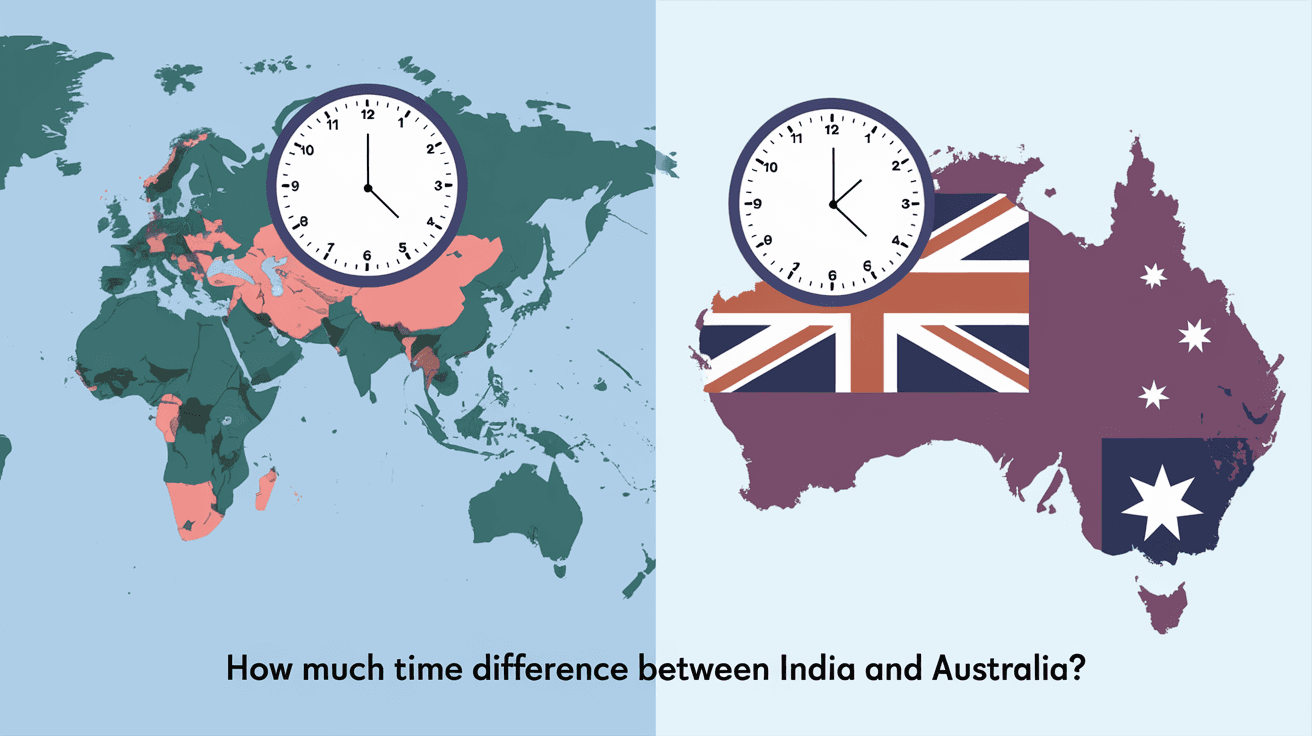
Understanding the time difference between India and Australia is important if you communicate, travel, or do business between these two countries. You might wonder, "How many hours ahead or behind is Australia compared to India?" The answer isn’t straightforward because Australia has multiple time zones, and some regions observe daylight saving time.
In this article, I’ll help you understand the exact time difference between India and Australia. We’ll explore the different Australian time zones, how daylight saving affects the clocks, and practical tips to manage this difference in your daily life. By the end, you’ll feel confident scheduling meetings, planning trips, or chatting with friends across these countries.
India uses a single time zone called Indian Standard Time (IST). IST is 5 hours and 30 minutes ahead of Coordinated Universal Time (UTC+5:30). This means the entire country follows the same clock time, making it simple to calculate time differences with other countries.
Australia, on the other hand, is much larger and spans three main time zones:
Additionally, some parts of Australia observe daylight saving time (DST), which shifts clocks forward by one hour during summer months. This affects the time difference with India during those periods.
Australia’s vast size means the sun rises and sets at different times across the country. To keep daily activities aligned with daylight, the country is divided into zones. Western Australia uses AWST, South Australia and the Northern Territory use ACST, and the eastern states like New South Wales and Queensland use AEST.
Daylight saving time is observed in New South Wales, Victoria, South Australia, Tasmania, and the Australian Capital Territory. Western Australia, Queensland, and the Northern Territory do not observe DST.
To find the time difference, you subtract India’s time (IST) from the Australian time zone. Here’s a breakdown of the time difference without daylight saving:
| Australian Time Zone | UTC Offset | Time Difference from IST (UTC+5:30) |
| AWST | UTC+8:00 | +2 hours 30 minutes |
| ACST | UTC+9:30 | +4 hours |
| AEST | UTC+10:00 | +4 hours 30 minutes |
For example, when it is 12:00 noon in India:
During daylight saving months (usually from early October to early April), clocks in some Australian states move one hour forward. This changes the time difference with India:
| Australian Time Zone (with DST) | UTC Offset | Time Difference from IST |
| ACST (South Australia) | UTC+10:30 | +5 hours |
| AEST (New South Wales, Victoria, Tasmania) | UTC+11:00 | +5 hours 30 minutes |
So, during DST, when it is 12:00 noon in India:
Western Australia (AWST) and Queensland do not observe daylight saving, so their time difference remains the same year-round.
Let’s look at some real-world examples to help you visualize the time difference:
Managing time differences can be tricky, but these tips can help you stay on track:
Daylight saving time can cause confusion if you’re not aware of when it starts or ends. For example, if you regularly call a friend in Melbourne, the time difference will change by one hour twice a year.
During these months, Australia is ahead by an extra hour compared to India. This means you may need to adjust your communication schedule accordingly.
| Location in Australia | Standard Time Offset | Time Difference from IST | DST Observed? | DST Offset | Time Difference During DST |
| Perth (AWST) | UTC+8:00 | +2:30 hours | No | N/A | +2:30 hours |
| Adelaide (ACST) | UTC+9:30 | +4:00 hours | Yes | +1 hour | +5:00 hours |
| Sydney (AEST) | UTC+10:00 | +4:30 hours | Yes | +1 hour | +5:30 hours |
| Brisbane (AEST) | UTC+10:00 | +4:30 hours | No | N/A | +4:30 hours |
Whether you’re working remotely, planning a vacation, or chatting with family, knowing the time difference helps you avoid missed calls or meetings. It also shows respect for others’ time and helps you stay productive.
Now you know that the time difference between India and Australia varies depending on the Australian region and whether daylight saving time is in effect. India’s single time zone (IST) makes it easy to calculate, but Australia’s multiple zones and DST can complicate things.
By understanding the different time zones—AWST, ACST, and AEST—and how daylight saving shifts clocks, you can confidently plan your calls, meetings, and travel. Using tools like world clock apps and calendars with time zone support will make managing this difference easier. With this knowledge, you’re ready to stay connected across these two vibrant countries without confusion.
Sydney follows Australian Eastern Standard Time (AEST), which is UTC+10:00. The time difference from India (UTC+5:30) is 4 hours and 30 minutes ahead. During daylight saving, Sydney is 5 hours and 30 minutes ahead.
No, India does not observe daylight saving time. Indian Standard Time (IST) remains UTC+5:30 throughout the year.
Western Australia, Queensland, and the Northern Territory do not observe daylight saving time. Their clocks remain the same year-round.
You can use world clock apps like World Time Buddy, Google Clock, or smartphone calendar apps that automatically adjust for time zones and daylight saving changes.
Daylight saving time in Australia typically starts on the first Sunday in October and ends on the first Sunday in April. During this period, clocks are set one hour ahead in participating states.