

How Much Tax on Alcohol in India
F
Discover verified facts, data, and insights about India’s states, culture, economy, education, and more — all in one place at FactBharat.
Search for a command to run...
Discover verified facts, data, and insights about India’s states, culture, economy, education, and more — all in one place at FactBharat.
No comments yet. Be the first to comment.
Moving to the USA from India is a dream for many. Whether you want to study, work, or live with family, the process can seem complex. But with the right information, you can plan your move confidently. I’ll guide you through the key steps and options...
Opening a college in India is a dream for many educators and entrepreneurs who want to contribute to the country’s education sector. If you are one of those who want to start a college, you need to understand the process clearly. It involves several ...
Opening a hospital in India is a significant and rewarding venture. If you’ve ever wondered how to start one, you’re in the right place. Whether you’re a healthcare professional, entrepreneur, or investor, understanding the process is crucial. You’ll...
Opening a medical store in India can be a rewarding business opportunity. You get to serve your community by providing essential medicines and healthcare products. If you are thinking about starting a medical store, you might wonder where to begin an...
Opening a restaurant in India can be an exciting and rewarding venture. Whether you dream of serving traditional Indian dishes or international cuisine, the process involves careful planning and understanding of local regulations. If you’re ready to ...
FactBharat | Insights About India
2558 posts
Discover verified facts, data, and insights about India’s states, culture, economy, education, and more — all in one place at FactBharat.
Understanding how much tax you pay on alcohol in India can be confusing. Taxes on alcohol vary widely depending on the state, type of beverage, and even the alcohol content. If you’re curious about why your favorite drink costs what it does, or you want to know how taxes affect alcohol prices, this article will guide you through the details.
We’ll explore the different types of taxes on alcohol, how they vary across states, and what factors influence these taxes. By the end, you’ll have a clear picture of how much tax you pay when buying alcohol in India.
In India, alcohol is considered a state subject, meaning each state government controls its taxation. This leads to a complex tax structure with multiple layers.
Excise duty is the primary tax on alcohol. It is imposed by state governments and varies significantly from one state to another. Excise duty is usually calculated based on:
For example, whisky often attracts higher excise duty than beer or wine.
VAT is another major tax on alcohol. It is charged on the sale price of alcoholic beverages and differs by state. VAT rates on alcohol can range from 20% to over 50%, depending on the state and type of alcohol.
Besides excise duty and VAT, some states impose other taxes such as:
These additional charges add to the final price you pay.
Since alcohol taxation is under state jurisdiction, the rates and rules vary widely.
States like Maharashtra, Tamil Nadu, Kerala, and Punjab have some of the highest alcohol taxes in India. For example:
States such as Goa, Sikkim, and Himachal Pradesh have relatively lower alcohol taxes. This makes alcohol cheaper and often attracts tourists.
Some states have partial or full prohibition, affecting alcohol availability and taxation. For example:
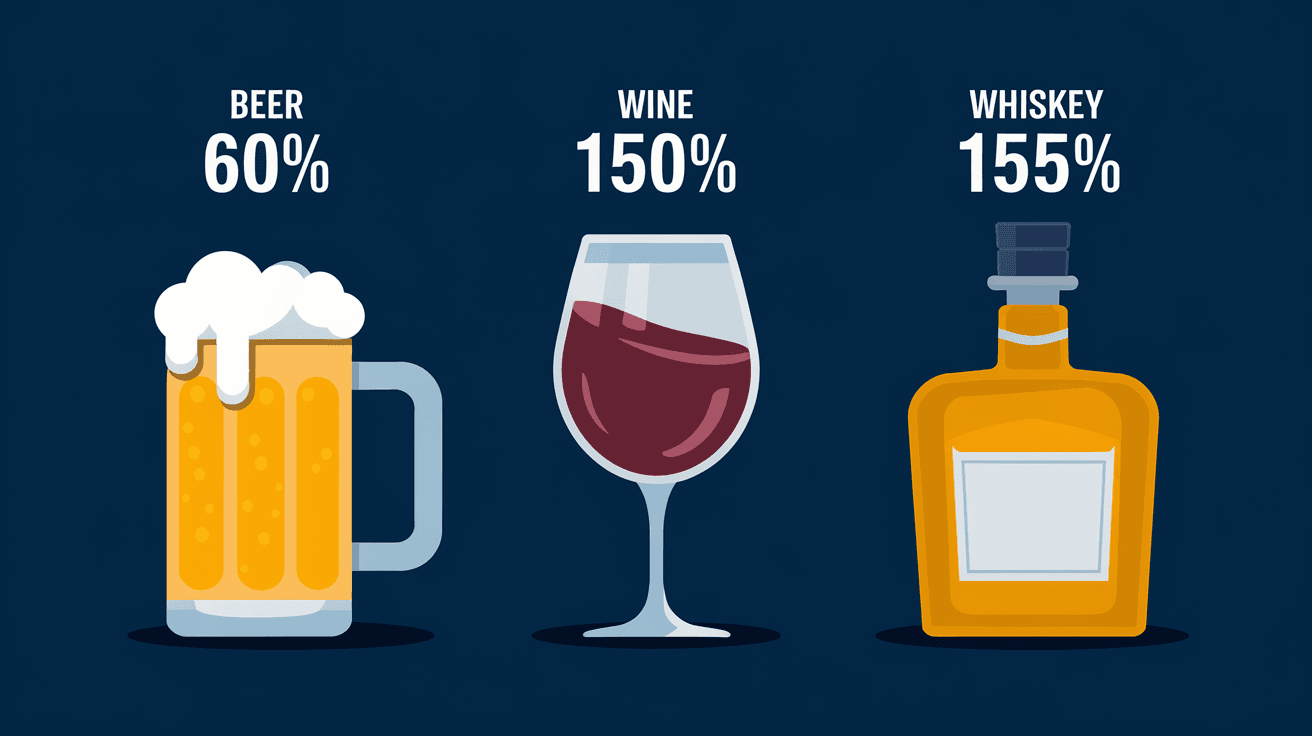
Taxes form a significant part of the retail price of alcohol in India. On average, taxes can account for 50% to 80% of the final price, depending on the state and type of alcohol.
This example shows how taxes more than double the base cost.
Beer and wine generally attract lower excise duty and VAT compared to spirits. However, in some states, beer can be heavily taxed to discourage consumption.
High taxes increase the cost of alcohol, which can reduce consumption but also encourage illegal or unregulated sales. States balance tax rates to maximize revenue while controlling alcohol-related issues.
In recent years, several states have revised alcohol taxes to increase revenue or address public health concerns.
Many states have raised excise duty rates, especially on spirits, to boost government income. For example, Maharashtra increased excise duty by 10% recently.
Some states have adjusted VAT rates on alcohol to align with GST structures, even though alcohol is outside GST.
During the pandemic, some states increased alcohol taxes to compensate for revenue losses from lockdowns. Others temporarily reduced taxes to support the hospitality industry.
If you want to estimate how much tax you pay on alcohol, follow these steps:
Many state excise department websites publish updated tax rates.
Several reasons explain the wide variation in alcohol taxes across states:
Understanding how much tax you pay on alcohol in India requires knowing the state-specific excise duty, VAT, and other charges. Taxes can make up a large part of the price you pay, often doubling or tripling the base cost of production.
Since alcohol taxation is a state subject, rates vary widely across India. High-tax states like Maharashtra and Tamil Nadu have expensive alcohol, while states like Goa and Himachal Pradesh offer cheaper options. Recent trends show states adjusting taxes to balance revenue and public health.
By knowing the tax structure in your state, you can better understand why your favorite drink costs what it does and how government policies shape alcohol pricing in India.
Excise duty varies by state and type of alcohol. It can range from ₹100 to over ₹500 per liter for spirits, with beer and wine usually taxed lower.
No, alcohol for human consumption is excluded from GST. Instead, states levy excise duty and VAT on alcohol.
Higher taxes, excise duties, and stricter regulations increase alcohol prices in states like Maharashtra and Tamil Nadu.
Yes, state governments often revise alcohol taxes annually or as needed to meet revenue goals or control consumption.
No state legally sells alcohol without tax, but states with prohibition like Gujarat do not have legal alcohol sales or taxes.