

How Much Percentage of GDP India Spends on Education
F
Discover verified facts, data, and insights about India’s states, culture, economy, education, and more — all in one place at FactBharat.
Search for a command to run...
Discover verified facts, data, and insights about India’s states, culture, economy, education, and more — all in one place at FactBharat.
No comments yet. Be the first to comment.
Moving to the USA from India is a dream for many. Whether you want to study, work, or live with family, the process can seem complex. But with the right information, you can plan your move confidently. I’ll guide you through the key steps and options...
Opening a college in India is a dream for many educators and entrepreneurs who want to contribute to the country’s education sector. If you are one of those who want to start a college, you need to understand the process clearly. It involves several ...
Opening a hospital in India is a significant and rewarding venture. If you’ve ever wondered how to start one, you’re in the right place. Whether you’re a healthcare professional, entrepreneur, or investor, understanding the process is crucial. You’ll...
Opening a medical store in India can be a rewarding business opportunity. You get to serve your community by providing essential medicines and healthcare products. If you are thinking about starting a medical store, you might wonder where to begin an...
Opening a restaurant in India can be an exciting and rewarding venture. Whether you dream of serving traditional Indian dishes or international cuisine, the process involves careful planning and understanding of local regulations. If you’re ready to ...
FactBharat | Insights About India
2558 posts
Discover verified facts, data, and insights about India’s states, culture, economy, education, and more — all in one place at FactBharat.
When you think about a country's growth, education plays a huge role. You might wonder, how much does India invest in education compared to its economy? Understanding the percentage of GDP that India spends on education helps us see the government's commitment to building a skilled and knowledgeable population.
In this article, I will walk you through the current spending trends, how India compares globally, and what this means for the future of education in the country. By the end, you’ll have a clear picture of India’s educational investment and why it matters to you and the nation.
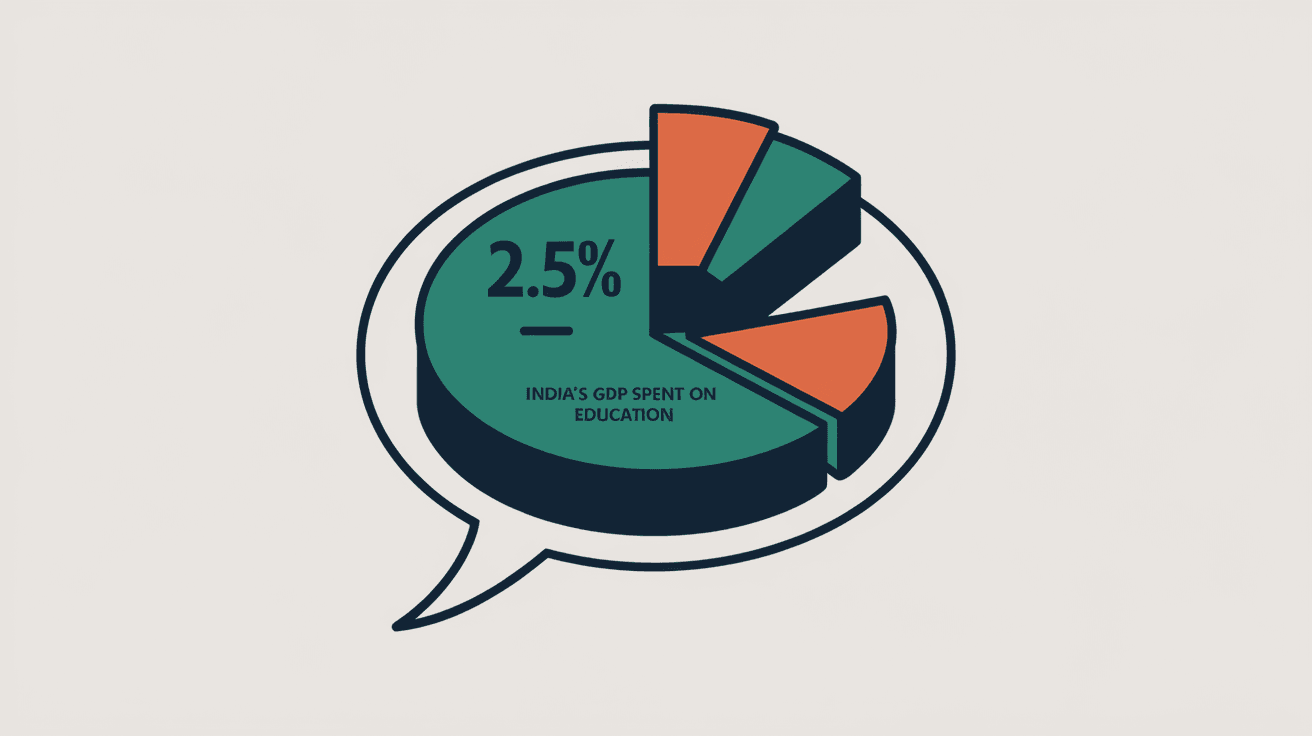
India’s spending on education as a percentage of its Gross Domestic Product (GDP) has been a topic of discussion for many years. Currently, India allocates around 3% of its GDP to education. This figure includes expenditure by both the central and state governments.
While 3% might sound like a decent number, it is important to understand how this compares with other countries and whether it meets India’s growing educational needs.
When you look at global standards, India’s education spending as a percentage of GDP is relatively low. Many developed countries spend between 4% to 6% of their GDP on education.
Here’s a quick comparison:
| Country | Education Spending (% of GDP) |
| United States | 5.0% |
| Germany | 4.8% |
| Japan | 3.5% |
| India | 3.0% |
| Brazil | 5.5% |
Understanding where the money goes helps you see the bigger picture. India’s education budget is divided across various sectors:
The government also spends on:
Despite these efforts, challenges like infrastructure gaps and teacher shortages remain.
You might ask, why does the percentage of GDP spent on education matter? Here are some reasons:
Increasing education spending can help India achieve its goals of becoming a knowledge-based economy.
While increasing the education budget sounds ideal, there are hurdles:
Addressing these challenges requires smart policies and better governance.
The Indian government has launched several initiatives to improve education funding and quality:
These programs show a commitment to raising education spending and improving outcomes.
If you are a student, parent, or professional, higher education spending can impact you directly:
Investing in education means investing in your future and the country’s progress.
Experts recommend India should:
These steps can help India build a stronger education system that meets global standards.
You now know that India spends about 3% of its GDP on education, which is lower than many developed countries. This spending covers all levels of education but faces challenges like budget constraints and uneven distribution. The government’s recent policies aim to increase this percentage and improve education quality.
Education spending is crucial for India’s economic growth and social development. By investing more wisely and efficiently, India can unlock the potential of its vast young population. This will benefit you, your community, and the nation as a whole.
India spends approximately 3% of its GDP on education, including both central and state government expenditures.
Many developed countries spend between 4% to 6% of GDP on education, which supports better infrastructure and quality. India’s 3% is below this average.
The budget mainly goes to primary and secondary education, higher education, vocational training, adult education, teacher salaries, and school infrastructure.
The National Education Policy 2020 aims to increase education spending to 6% of GDP over time to improve quality and access.
Higher education spending creates a skilled workforce, boosts innovation, reduces poverty, and helps India compete globally.