

How Much Loan Does India Have
F
Discover verified facts, data, and insights about India’s states, culture, economy, education, and more — all in one place at FactBharat.
Search for a command to run...
Discover verified facts, data, and insights about India’s states, culture, economy, education, and more — all in one place at FactBharat.
No comments yet. Be the first to comment.
Moving to the USA from India is a dream for many. Whether you want to study, work, or live with family, the process can seem complex. But with the right information, you can plan your move confidently. I’ll guide you through the key steps and options...
Opening a college in India is a dream for many educators and entrepreneurs who want to contribute to the country’s education sector. If you are one of those who want to start a college, you need to understand the process clearly. It involves several ...
Opening a hospital in India is a significant and rewarding venture. If you’ve ever wondered how to start one, you’re in the right place. Whether you’re a healthcare professional, entrepreneur, or investor, understanding the process is crucial. You’ll...
Opening a medical store in India can be a rewarding business opportunity. You get to serve your community by providing essential medicines and healthcare products. If you are thinking about starting a medical store, you might wonder where to begin an...
Opening a restaurant in India can be an exciting and rewarding venture. Whether you dream of serving traditional Indian dishes or international cuisine, the process involves careful planning and understanding of local regulations. If you’re ready to ...
FactBharat | Insights About India
2558 posts
Discover verified facts, data, and insights about India’s states, culture, economy, education, and more — all in one place at FactBharat.
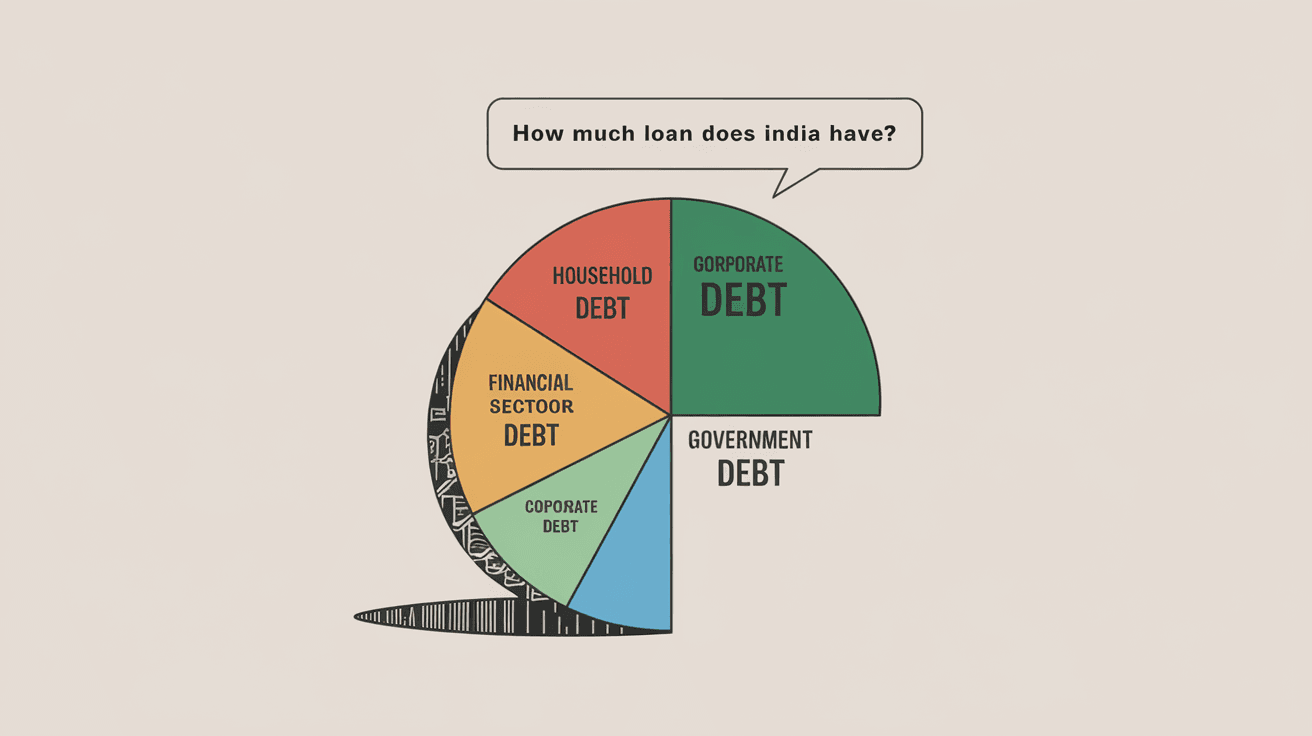
Understanding how much loan India has is important if you want to grasp the country's economic health. When we talk about loans in India, we usually mean government debt, which includes money borrowed from both inside and outside the country. This debt helps fund development projects, social programs, and other government expenses.
You might wonder why India borrows money and how much it owes. In this article, I will explain the current loan situation in India, including the types of loans, the total debt, and what it means for the economy and you as a citizen.
India’s total loan or debt is often called the national debt. It includes all the money the government owes to lenders. This debt is split into two main parts:
As of 2025, India’s total government debt is approximately 90% of its Gross Domestic Product (GDP). To put this in numbers, India’s GDP is around $3.7 trillion, so the total debt is close to $3.3 trillion.
Internal debt forms the largest part of India’s loan. The government raises this money by issuing bonds and securities to Indian investors. These bonds pay interest and must be repaid over time.
External debt is smaller but still significant. It includes loans from foreign countries, international banks, and organizations like the World Bank and IMF.
India borrows money for several reasons. Here are the main ones:
Borrowing is normal for any country, but it needs to be managed carefully to avoid problems like high inflation or currency depreciation.
India manages its debt through careful planning and policies. Here’s how:
India’s Finance Ministry releases regular reports on debt management. The Reserve Bank of India (RBI) also plays a key role in controlling inflation and currency stability, which affects debt.
Having a large loan affects the economy in different ways:
India’s debt level is moderate compared to other countries. Here’s a quick comparison:
| Country | Debt-to-GDP Ratio (%) |
| Japan | 250 |
| United States | 130 |
| India | 90 |
| China | 70 |
| Germany | 60 |
India’s debt is higher than some countries but lower than others like Japan and the US. This shows India still has room to borrow for growth but must be cautious.
Looking ahead, India’s loan situation will depend on several factors:
Experts expect India to keep borrowing moderately to fund its ambitious infrastructure and social programs. However, controlling the fiscal deficit will remain a priority.
You might wonder how government loans impact your daily life. Here are some ways:
Understanding this helps you see why government borrowing matters beyond just numbers.
India’s loan or government debt is a big part of its economy. With a total debt close to 90% of GDP, India balances borrowing from internal and external sources to fund growth and development. While borrowing helps build infrastructure and social programs, it also comes with risks like interest payments and inflation.
Managing this debt carefully is crucial for India’s future. By controlling the fiscal deficit and promoting economic growth, India aims to keep its debt sustainable. As a citizen, knowing about India’s loan helps you understand government policies and their impact on your life.
India’s total government debt is about 90% of its GDP, which equals roughly $3.3 trillion.
Internal debt is borrowed from within India in rupees, while external debt is borrowed from foreign lenders in foreign currencies.
India borrows to fund development projects, social programs, and to cover budget deficits.
High government borrowing can increase inflation by raising demand and money supply in the economy.
Yes, India’s debt-to-GDP ratio is moderate compared to countries like Japan and the US, but it requires careful management.