

How Much India Spends on Education
F
Discover verified facts, data, and insights about India’s states, culture, economy, education, and more — all in one place at FactBharat.
Search for a command to run...
Discover verified facts, data, and insights about India’s states, culture, economy, education, and more — all in one place at FactBharat.
No comments yet. Be the first to comment.
Moving to the USA from India is a dream for many. Whether you want to study, work, or live with family, the process can seem complex. But with the right information, you can plan your move confidently. I’ll guide you through the key steps and options...
Opening a college in India is a dream for many educators and entrepreneurs who want to contribute to the country’s education sector. If you are one of those who want to start a college, you need to understand the process clearly. It involves several ...
Opening a hospital in India is a significant and rewarding venture. If you’ve ever wondered how to start one, you’re in the right place. Whether you’re a healthcare professional, entrepreneur, or investor, understanding the process is crucial. You’ll...
Opening a medical store in India can be a rewarding business opportunity. You get to serve your community by providing essential medicines and healthcare products. If you are thinking about starting a medical store, you might wonder where to begin an...
Opening a restaurant in India can be an exciting and rewarding venture. Whether you dream of serving traditional Indian dishes or international cuisine, the process involves careful planning and understanding of local regulations. If you’re ready to ...
FactBharat | Insights About India
2558 posts
Discover verified facts, data, and insights about India’s states, culture, economy, education, and more — all in one place at FactBharat.
When you think about education in India, you might wonder how much the country invests in it. Education is a key factor in shaping the future of any nation, and India is no exception. Understanding how much India spends on education helps us see the government's priorities and the challenges the system faces.
In this article, I’ll walk you through the current spending on education in India, how the budget is divided, and what it means for students and schools across the country. You’ll also learn about recent trends and the impact of this spending on India's education landscape.
India’s spending on education is a topic of great interest for many. The government allocates a portion of its annual budget to education, but how much exactly?
This spending includes salaries for teachers, infrastructure development, scholarships, and programs aimed at improving literacy and enrollment rates.
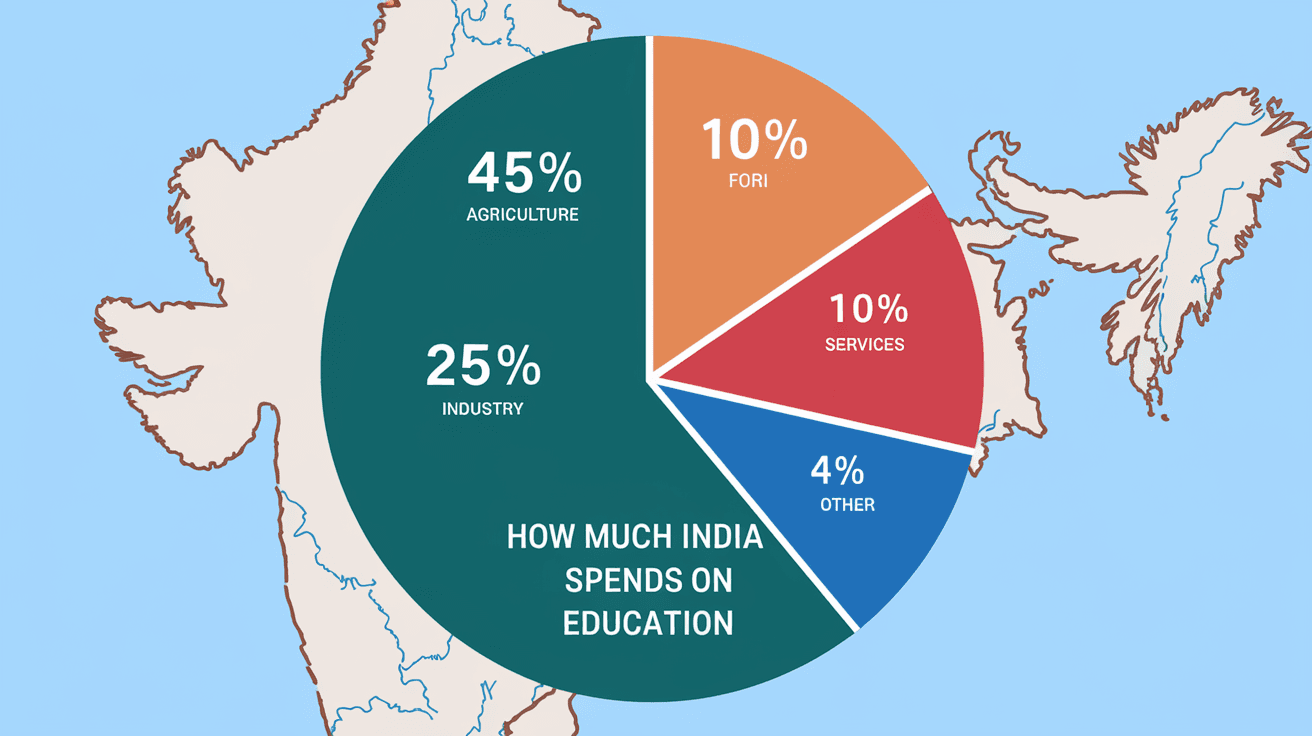
Understanding how the education budget is divided helps you see where the money goes. Here’s a simple breakdown:
To understand India’s education spending better, let’s compare it with some other countries:
| Country | Education Spending (% of GDP) | Notes |
| India | 4.5% | Focus on expanding access |
| United States | 5.0% | High spending on higher education |
| China | 4.9% | Rapid investment in technology |
| Brazil | 5.5% | Strong focus on public education |
India’s spending is competitive but still has room to grow, especially considering its large population and diverse education needs.
Even though India spends a significant amount on education, there are challenges that affect how effectively this money is used:
These challenges mean that increasing the budget alone is not enough; efficient use of funds is crucial.
Spending on education directly influences India’s social and economic development:
However, the impact varies by region and socio-economic group, highlighting the need for targeted policies.
The Indian government has launched several initiatives to improve education spending and outcomes:
These programs show a commitment to enhancing education through better funding and reforms.
As a student, parent, or educator, understanding India’s education spending helps you make informed decisions:
Knowing where the money goes can help you access the benefits and push for improvements where needed.
India spends a significant portion of its budget on education, aiming to improve access and quality for millions of students. While the current spending is around 4.5% of GDP, the government plans to increase this to 6% to meet growing demands. The budget supports various levels of education, from primary schools to universities, and includes programs for skill development.
Despite challenges like unequal distribution and quality issues, increased spending has positively impacted literacy and enrollment rates. Government initiatives like the National Education Policy and Digital India are paving the way for a stronger education system. By understanding how much India spends on education, you can better appreciate the efforts to build a brighter future for the country.
India spends about 4.5% of its GDP on education, which includes funding for schools, colleges, and skill development programs.
While India’s spending is significant, experts suggest increasing it to 6% of GDP to meet the growing needs of its population and improve education quality.
Funds are mainly used for school education, higher education, infrastructure, teacher training, scholarships, and digital learning initiatives.
India spends slightly less than the global average of 5% of GDP on education but is competitive compared to many developing countries.
Key programs include the National Education Policy 2020, Samagra Shiksha Abhiyan, Digital India, and Skill India Mission, all aimed at improving education access and quality.