

How Much Degraded Land Is Present in India
F
Discover verified facts, data, and insights about India’s states, culture, economy, education, and more — all in one place at FactBharat.
Search for a command to run...
Discover verified facts, data, and insights about India’s states, culture, economy, education, and more — all in one place at FactBharat.
No comments yet. Be the first to comment.
Moving to the USA from India is a dream for many. Whether you want to study, work, or live with family, the process can seem complex. But with the right information, you can plan your move confidently. I’ll guide you through the key steps and options...
Opening a college in India is a dream for many educators and entrepreneurs who want to contribute to the country’s education sector. If you are one of those who want to start a college, you need to understand the process clearly. It involves several ...
Opening a hospital in India is a significant and rewarding venture. If you’ve ever wondered how to start one, you’re in the right place. Whether you’re a healthcare professional, entrepreneur, or investor, understanding the process is crucial. You’ll...
Opening a medical store in India can be a rewarding business opportunity. You get to serve your community by providing essential medicines and healthcare products. If you are thinking about starting a medical store, you might wonder where to begin an...
Opening a restaurant in India can be an exciting and rewarding venture. Whether you dream of serving traditional Indian dishes or international cuisine, the process involves careful planning and understanding of local regulations. If you’re ready to ...
FactBharat | Insights About India
2558 posts
Discover verified facts, data, and insights about India’s states, culture, economy, education, and more — all in one place at FactBharat.
India faces a significant challenge with land degradation, affecting agriculture, biodiversity, and livelihoods. You might wonder how much land in India is degraded and what it means for the environment and economy. Understanding this helps us grasp the scale of the problem and the urgency of restoration efforts.
In this article, I’ll walk you through the current status of degraded land in India, the main causes behind it, and what steps are being taken to restore these lands. By the end, you’ll have a clear picture of the issue and how it impacts our future.
Land degradation means the decline in land quality caused by human activities or natural processes. It reduces the land’s ability to support plants, animals, and people. This can happen through soil erosion, loss of nutrients, salinity, waterlogging, and deforestation.
In India, land degradation mainly affects agricultural productivity and natural ecosystems. It threatens food security and the livelihoods of millions who depend on farming.
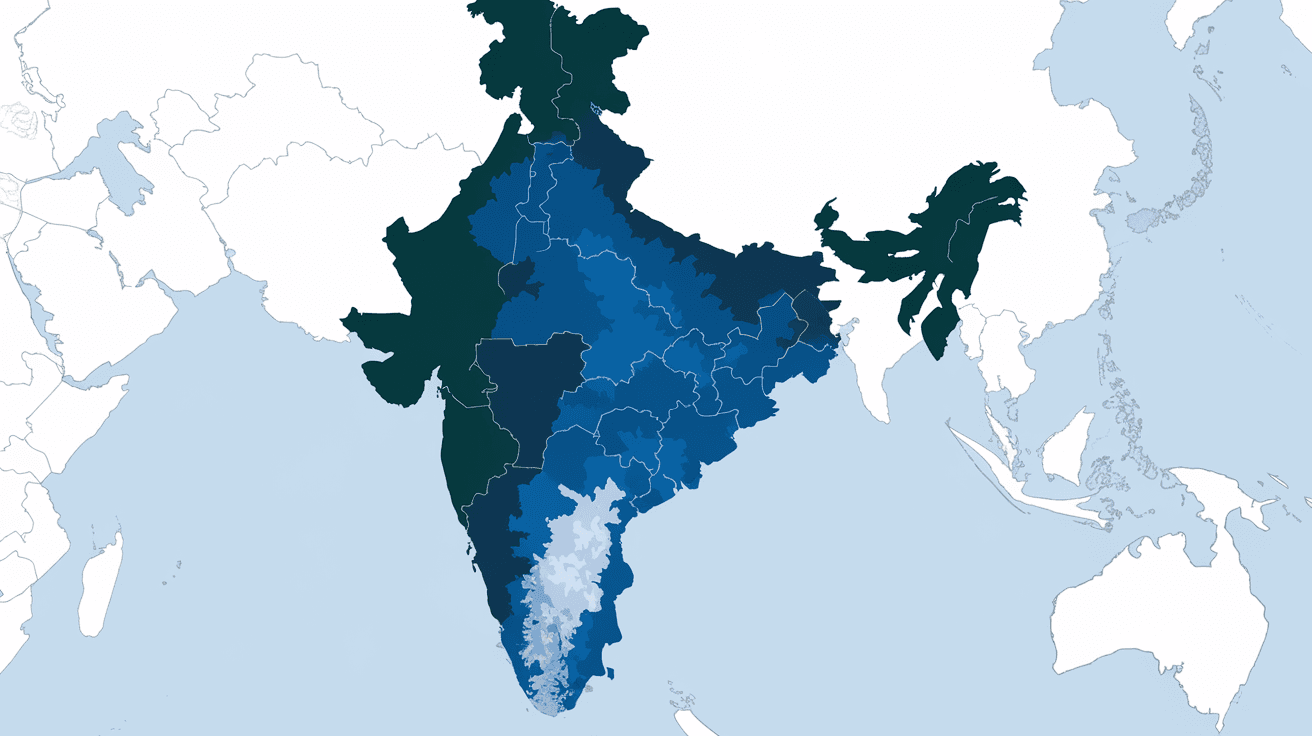
India has a vast land area of about 328.7 million hectares. According to the latest reports from the Ministry of Environment, Forest and Climate Change and the Indian Space Research Organisation (ISRO), around 120 million hectares of land in India is degraded. This means roughly 36% of the total geographical area is affected by some form of degradation.
This data highlights that soil erosion, especially by water, is the biggest cause of land degradation in India.
Several factors contribute to land degradation, often working together. Here are the main causes:
Land degradation has serious consequences for the environment, economy, and society.
The Indian government has launched several programs to restore degraded land and promote sustainable land use.
Advances in technology have improved how India tracks and manages land degradation.
Everyone can contribute to reducing land degradation. Here are some practical steps:
India’s land degradation problem is vast, with around 120 million hectares affected. This poses risks to agriculture, biodiversity, and rural livelihoods. The main causes include soil erosion, deforestation, and unsustainable farming practices.
Fortunately, the government and technology are playing key roles in monitoring and restoring degraded land. Programs like afforestation, soil health improvement, and watershed management are making a difference. You can also help by adopting sustainable practices and supporting conservation efforts.
Understanding the scale and impact of land degradation is the first step toward protecting India’s land resources for future generations.
About 90 million hectares of India’s land is affected by soil erosion, with water erosion being the most widespread form.
The main causes include unsustainable agriculture, deforestation, industrialization, urban expansion, and climate change.
States like Rajasthan, Madhya Pradesh, Maharashtra, and Uttar Pradesh have large areas of degraded land due to arid conditions and intensive farming.
It reduces soil fertility, lowers crop yields, increases costs for soil restoration, and threatens farmers’ incomes.
Satellite remote sensing, GIS mapping, and soil testing kits are key technologies used to monitor and manage degraded land.