

How Many Villages Are There in India Approximately
F
Discover verified facts, data, and insights about India’s states, culture, economy, education, and more — all in one place at FactBharat.
Search for a command to run...
Discover verified facts, data, and insights about India’s states, culture, economy, education, and more — all in one place at FactBharat.
No comments yet. Be the first to comment.
Moving to the USA from India is a dream for many. Whether you want to study, work, or live with family, the process can seem complex. But with the right information, you can plan your move confidently. I’ll guide you through the key steps and options...
Opening a college in India is a dream for many educators and entrepreneurs who want to contribute to the country’s education sector. If you are one of those who want to start a college, you need to understand the process clearly. It involves several ...
Opening a hospital in India is a significant and rewarding venture. If you’ve ever wondered how to start one, you’re in the right place. Whether you’re a healthcare professional, entrepreneur, or investor, understanding the process is crucial. You’ll...
Opening a medical store in India can be a rewarding business opportunity. You get to serve your community by providing essential medicines and healthcare products. If you are thinking about starting a medical store, you might wonder where to begin an...
Opening a restaurant in India can be an exciting and rewarding venture. Whether you dream of serving traditional Indian dishes or international cuisine, the process involves careful planning and understanding of local regulations. If you’re ready to ...
FactBharat | Insights About India
2558 posts
Discover verified facts, data, and insights about India’s states, culture, economy, education, and more — all in one place at FactBharat.
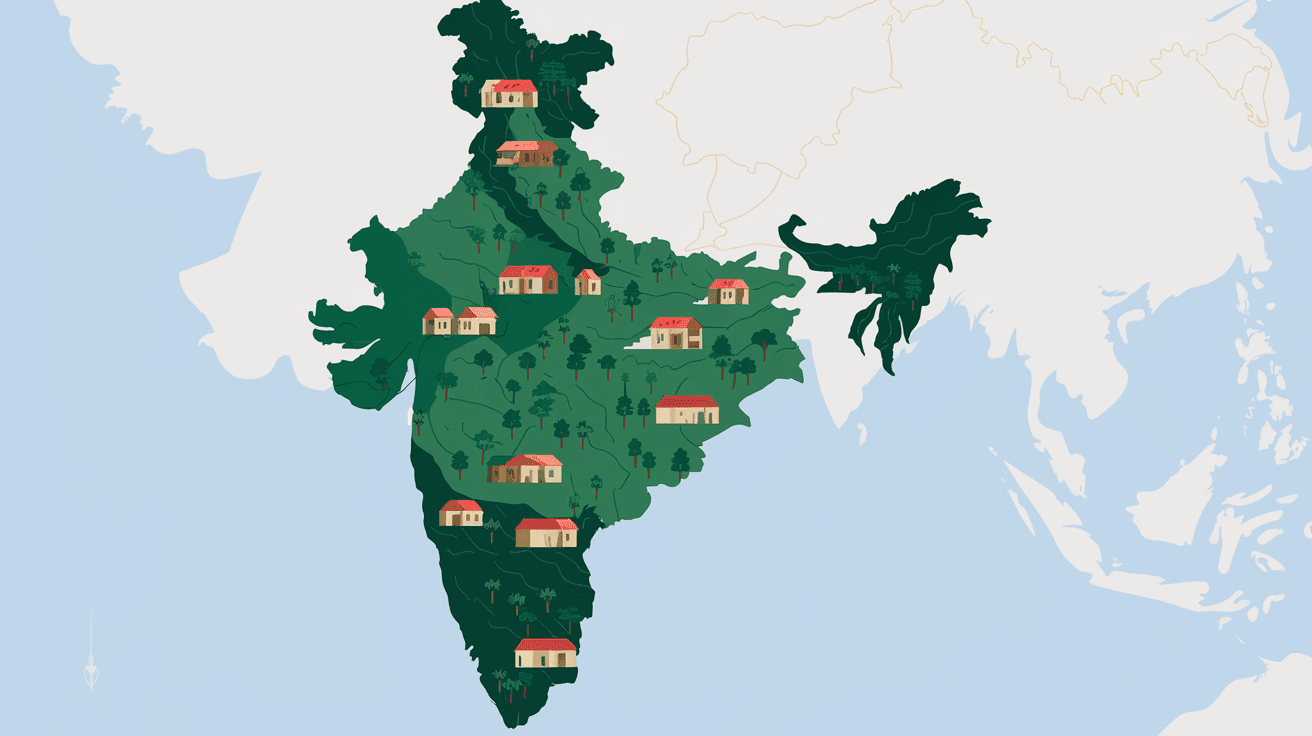
India is known for its vast and diverse rural landscape. When you think about the country, you might picture bustling cities, but the heart of India lies in its villages. These villages are home to millions of people and hold a rich cultural heritage.
If you’ve ever wondered how many villages there are in India approximately, you’re not alone. Understanding this number helps us appreciate the scale of rural life and the challenges and opportunities it presents. Let’s explore the approximate count of villages in India and what it means for the country.
India has one of the largest rural populations in the world. According to the latest government data and census reports, India has approximately 640,000 to 650,000 villages. This number can vary slightly depending on the source and the year of the data.
This vast number reflects India’s predominantly rural character, where agriculture and traditional lifestyles still play a major role.
The number of villages is not evenly spread across India. Some states have more villages due to their size and population density, while others have fewer.
Understanding what counts as a village helps clarify the numbers.
The Census of India defines a village as a revenue village with defined boundaries and administrative recognition. Some villages may be grouped under a single Gram Panchayat.
Villages are not just numbers; they are the backbone of India’s economy and culture.
Despite their importance, villages face many challenges.
The Indian government has launched several programs to improve village life:
Villages in India are evolving rapidly due to modernization and technology.
So, how many villages are there in India approximately? The answer is around 640,000 to 650,000 villages spread across the country. These villages form the core of India’s rural landscape and play a vital role in the nation’s economy, culture, and society.
Understanding the number and distribution of villages helps us appreciate the scale of rural India. While villages face challenges, ongoing development efforts and modernization are shaping a new rural future. Whether you live in a city or a village, the pulse of India beats strongly in its villages.
India has approximately 640,000 to 650,000 villages, based on the latest census and government data.
Uttar Pradesh has the highest number of villages, with over 97,000 villages.
A village is a rural habitation recognized by the government, usually with a Gram Panchayat and defined boundaries.
Smaller states, urbanization, and geographic factors lead to fewer villages in some states like Goa and Delhi.
Programs like PMGSY, Swachh Bharat Mission, Digital India, and MGNREGA aim to improve rural infrastructure and livelihoods.