

How Many Venomous Snakes Are in India
F
Discover verified facts, data, and insights about India’s states, culture, economy, education, and more — all in one place at FactBharat.
Search for a command to run...
Discover verified facts, data, and insights about India’s states, culture, economy, education, and more — all in one place at FactBharat.
No comments yet. Be the first to comment.
Moving to the USA from India is a dream for many. Whether you want to study, work, or live with family, the process can seem complex. But with the right information, you can plan your move confidently. I’ll guide you through the key steps and options...
Opening a college in India is a dream for many educators and entrepreneurs who want to contribute to the country’s education sector. If you are one of those who want to start a college, you need to understand the process clearly. It involves several ...
Opening a hospital in India is a significant and rewarding venture. If you’ve ever wondered how to start one, you’re in the right place. Whether you’re a healthcare professional, entrepreneur, or investor, understanding the process is crucial. You’ll...
Opening a medical store in India can be a rewarding business opportunity. You get to serve your community by providing essential medicines and healthcare products. If you are thinking about starting a medical store, you might wonder where to begin an...
Opening a restaurant in India can be an exciting and rewarding venture. Whether you dream of serving traditional Indian dishes or international cuisine, the process involves careful planning and understanding of local regulations. If you’re ready to ...
FactBharat | Insights About India
2558 posts
Discover verified facts, data, and insights about India’s states, culture, economy, education, and more — all in one place at FactBharat.
India is home to a rich variety of snakes, many of which are venomous. If you’ve ever wondered how many venomous snakes live in India, you’re not alone. Understanding these snakes is important for your safety and for appreciating the country’s diverse wildlife. In this article, I’ll guide you through the number of venomous snakes in India, their types, and what you should know to stay safe.
You might be surprised to learn that India has some of the most dangerous snakes in the world. But don’t worry—I’ll also share tips on how to avoid snakebites and what to do if you encounter one. Let’s dive into the fascinating world of India’s venomous snakes.
India has around 60 species of venomous snakes. Out of these, about 20 species are considered medically significant, meaning their bites can cause serious health problems or even death if untreated. The rest are venomous but less dangerous to humans.
Here’s a quick breakdown:
This diversity is due to India’s varied climate and geography, which provide habitats for many snake species. From the dense forests of the Western Ghats to the dry deserts of Rajasthan, venomous snakes have adapted to different environments.
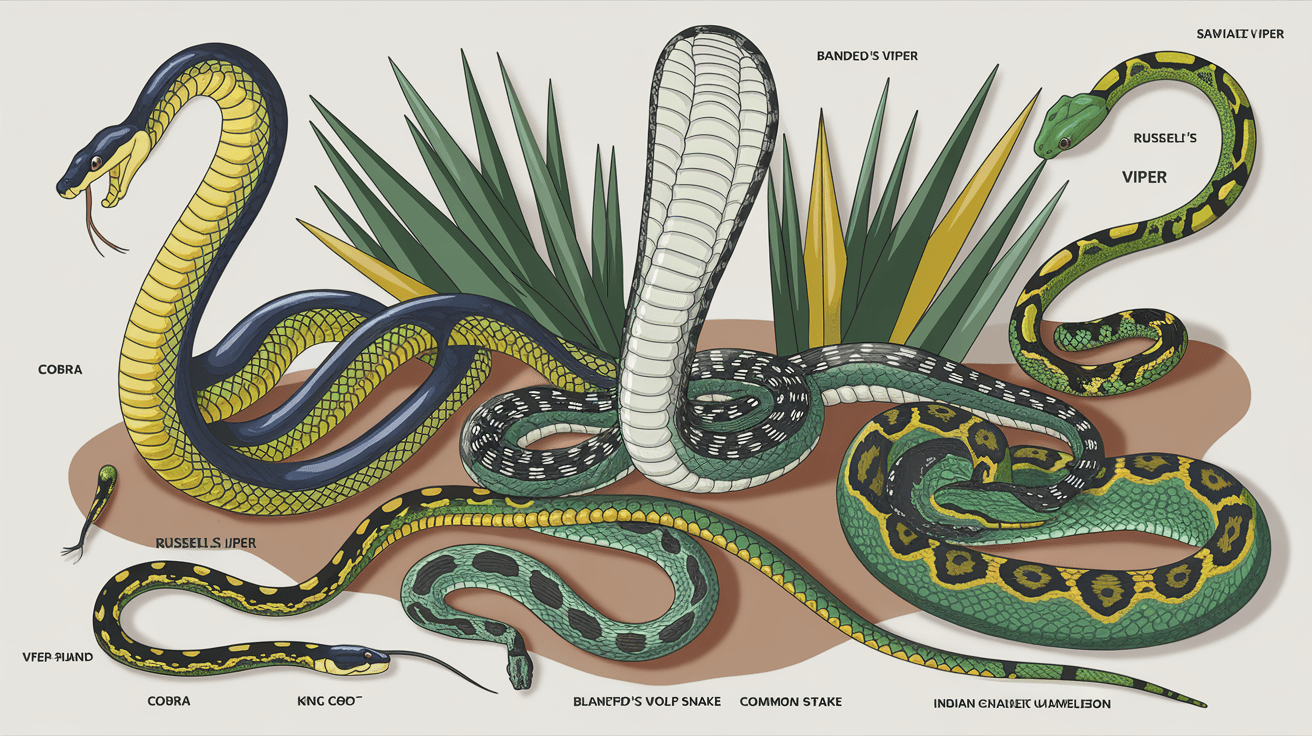
When people talk about venomous snakes in India, they often mention the "Big Four." These four snakes cause the most snakebite deaths in the country. Knowing about them can help you identify and avoid them.
These four snakes are responsible for the majority of snakebite fatalities in India. They are widespread and often come into contact with humans, especially in rural areas.
Besides the Big Four, India has several other venomous snakes worth knowing about. Some are less dangerous but still important to recognize.
These snakes add to the diversity of venomous species in India and highlight the need for awareness in different regions.
Venomous snakes play a crucial role in India’s ecosystem. They help control populations of rodents and pests, which can damage crops and spread diseases. Without snakes, the balance of nature would be disturbed.
Moreover, snake venom is valuable for medical research. Scientists use venom to develop medicines for heart disease, blood disorders, and even cancer. So, while venomous snakes can be dangerous, they also offer benefits to humans.
If you live in or visit areas where venomous snakes are common, it’s important to know how to stay safe. Here are some practical tips:
Encountering a venomous snake can be scary, but staying calm is key. Here’s what you should do:
Remember, snakebite treatment has improved greatly in India, with antivenoms available for the Big Four and other species.
Snakebites are a serious health issue in India, especially in rural areas. The World Health Organization estimates that India accounts for a large percentage of global snakebite deaths.
Efforts by the government and NGOs focus on educating people, improving healthcare access, and developing better antivenoms.
India is home to about 60 venomous snake species, with around 20 posing significant risks to humans. The Big Four—Indian cobra, common krait, Russell’s viper, and saw-scaled viper—are the most dangerous and responsible for most snakebite deaths. Other venomous snakes like the king cobra and pit vipers add to the country’s rich snake diversity.
Understanding these snakes and how to stay safe around them is essential, especially if you live in or visit rural or forested areas. Remember, snakes are important for the environment and medical research, so respecting them while taking precautions is the best approach. Stay informed, stay safe, and appreciate the fascinating world of India’s venomous snakes.
India has about 60 venomous snake species, with around 20 considered medically important due to their dangerous bites.
The Big Four are the Indian cobra, common krait, Russell’s viper, and saw-scaled viper. They cause most snakebite deaths in India.
No, not all venomous snakes are deadly. Some have venom that causes mild symptoms, while others can be fatal without treatment.
Wear protective footwear, avoid tall grass, use a flashlight at night, keep your surroundings clean, and never try to handle snakes.
Stay calm, immobilize the bitten limb, avoid tourniquets, and seek immediate medical help for antivenom treatment.