

How Many Varieties of Basmati Are Grown in India
F
Discover verified facts, data, and insights about India’s states, culture, economy, education, and more — all in one place at FactBharat.
Search for a command to run...
Discover verified facts, data, and insights about India’s states, culture, economy, education, and more — all in one place at FactBharat.
No comments yet. Be the first to comment.
Moving to the USA from India is a dream for many. Whether you want to study, work, or live with family, the process can seem complex. But with the right information, you can plan your move confidently. I’ll guide you through the key steps and options...
Opening a college in India is a dream for many educators and entrepreneurs who want to contribute to the country’s education sector. If you are one of those who want to start a college, you need to understand the process clearly. It involves several ...
Opening a hospital in India is a significant and rewarding venture. If you’ve ever wondered how to start one, you’re in the right place. Whether you’re a healthcare professional, entrepreneur, or investor, understanding the process is crucial. You’ll...
Opening a medical store in India can be a rewarding business opportunity. You get to serve your community by providing essential medicines and healthcare products. If you are thinking about starting a medical store, you might wonder where to begin an...
Opening a restaurant in India can be an exciting and rewarding venture. Whether you dream of serving traditional Indian dishes or international cuisine, the process involves careful planning and understanding of local regulations. If you’re ready to ...
FactBharat | Insights About India
2558 posts
Discover verified facts, data, and insights about India’s states, culture, economy, education, and more — all in one place at FactBharat.
Basmati rice is a name that instantly brings to mind fragrant, long-grain rice that enhances any meal. If you love cooking or eating Indian cuisine, you probably wonder how many varieties of Basmati rice are grown in India. You’re not alone. India is the largest producer of Basmati rice, and it grows several varieties, each with its own aroma, grain length, and cooking qualities.
In this article, I’ll take you through the main varieties of Basmati rice cultivated in India. We’ll explore what makes each variety special and why India’s climate and soil are perfect for growing this prized rice. By the end, you’ll have a clear understanding of the diversity within Basmati rice and how it shapes Indian cuisine and exports.
Before diving into the varieties, it’s good to know what Basmati rice is. Basmati is a type of long-grain rice known for its unique aroma and fluffy texture when cooked. The word “Basmati” means “fragrant” in Hindi, which perfectly describes this rice’s signature scent.
Basmati rice is mainly grown in the northern parts of India, especially in the states of Punjab, Haryana, Uttarakhand, Himachal Pradesh, and parts of Uttar Pradesh. The cool climate, fertile soil, and ample water supply in these regions create the ideal environment for Basmati rice cultivation.
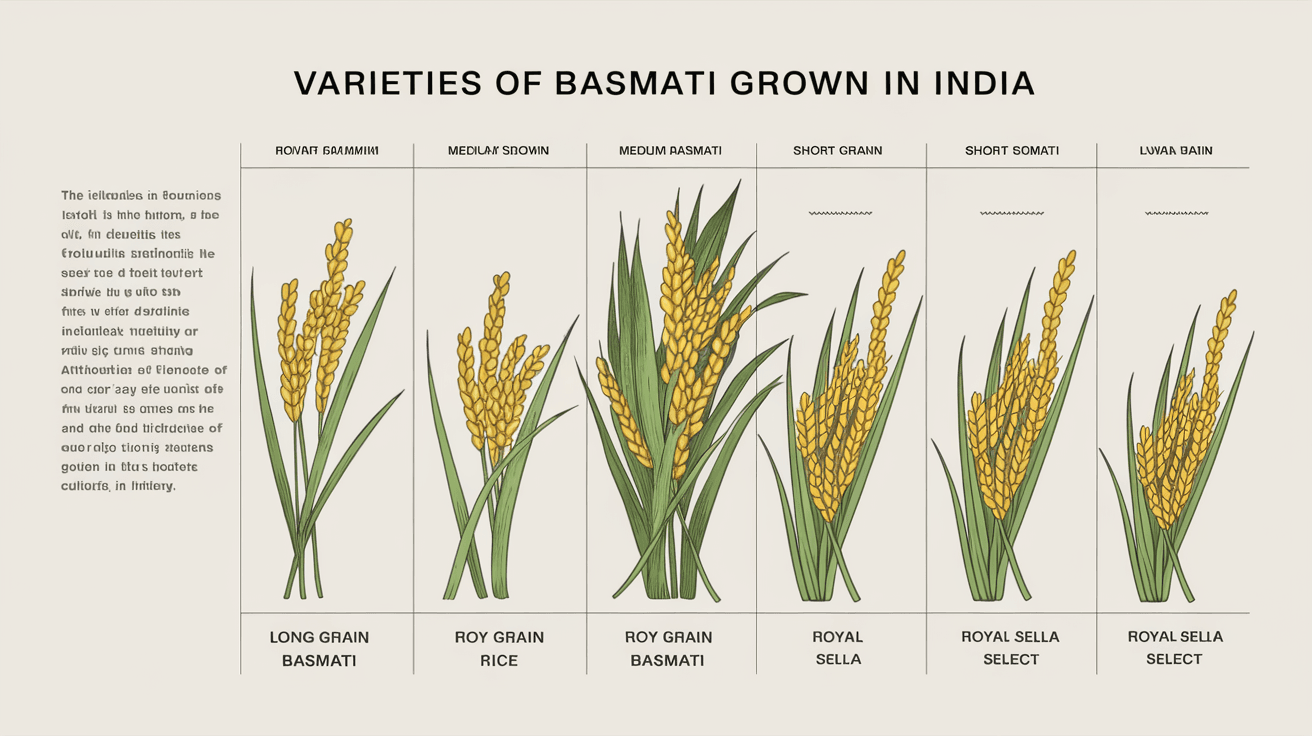
India grows more than 30 varieties of Basmati rice, but only a few are widely cultivated and commercially significant. These varieties differ in grain length, aroma, yield, and resistance to pests and diseases. Here are some of the most popular and important varieties:
These are the original, naturally grown varieties that have been cultivated for centuries.
These varieties have been developed through scientific breeding to improve yield, disease resistance, and grain quality.
Some Basmati varieties are specific to certain regions and have unique characteristics.
India’s diverse climate and soil conditions allow farmers to cultivate many Basmati varieties. Each variety suits different tastes and cooking styles. Some are better for biryanis, while others are perfect for everyday meals.
The Indian government and agricultural research institutes have also worked hard to develop new varieties. Their goal is to increase yield, improve resistance to pests, and maintain the unique aroma and grain quality that Basmati rice is known for.
When you look at Basmati rice varieties, several factors set them apart:
The Pusa Basmati varieties, developed by the Indian Agricultural Research Institute (IARI) in New Delhi, have revolutionized Basmati cultivation. Among them, Pusa Basmati 1121 stands out as a game-changer.
Farmers across Punjab, Haryana, and western Uttar Pradesh have widely adopted Pusa Basmati 1121, boosting production and export revenues.
Different Basmati varieties bring unique flavors and textures to Indian dishes. For example:
This diversity allows Indian cooks to choose the perfect Basmati rice for their recipes.
India exports over 4 million tons of Basmati rice annually, making it a major player in the global rice market. The variety of Basmati rice grown affects export quality and demand.
The Indian government supports Basmati farmers with subsidies and quality control measures to maintain the rice’s global reputation.
Despite its success, Basmati cultivation faces challenges:
Research continues to develop varieties that can withstand these challenges while preserving Basmati’s unique traits.
If you want to buy Basmati rice, knowing the variety helps you pick the best one for your cooking.
Check the packaging for variety names and origin to ensure authenticity.
India grows over 30 varieties of Basmati rice, but only a handful are widely cultivated and recognized. From traditional types like Basmati 370 to modern hybrids like Pusa Basmati 1121, each variety offers unique aroma, grain length, and cooking qualities. This diversity is a result of India’s favorable climate, soil, and dedicated agricultural research.
Understanding these varieties helps you appreciate the rich heritage behind Basmati rice and make better choices when cooking or buying. Whether you want fluffy biryani or everyday rice, India’s Basmati varieties have something special for every taste and occasion.
India grows more than 30 varieties of Basmati rice, but around 10 are widely cultivated and commercially important.
Pusa Basmati 1121 is the most popular due to its extra-long grains, strong aroma, and high yield.
Punjab, Haryana, Uttarakhand, Himachal Pradesh, and parts of Uttar Pradesh are the main Basmati-growing states.
Basmati rice is known for its unique aroma, long slender grains, and fluffy texture when cooked.
Yes, hybrids like Pusa Basmati 1509 and CSR 30 have been developed for better yield and disease resistance.