

How Many Universities Are There in India
F
Discover verified facts, data, and insights about India’s states, culture, economy, education, and more — all in one place at FactBharat.
Search for a command to run...
Discover verified facts, data, and insights about India’s states, culture, economy, education, and more — all in one place at FactBharat.
No comments yet. Be the first to comment.
Moving to the USA from India is a dream for many. Whether you want to study, work, or live with family, the process can seem complex. But with the right information, you can plan your move confidently. I’ll guide you through the key steps and options...
Opening a college in India is a dream for many educators and entrepreneurs who want to contribute to the country’s education sector. If you are one of those who want to start a college, you need to understand the process clearly. It involves several ...
Opening a hospital in India is a significant and rewarding venture. If you’ve ever wondered how to start one, you’re in the right place. Whether you’re a healthcare professional, entrepreneur, or investor, understanding the process is crucial. You’ll...
Opening a medical store in India can be a rewarding business opportunity. You get to serve your community by providing essential medicines and healthcare products. If you are thinking about starting a medical store, you might wonder where to begin an...
Opening a restaurant in India can be an exciting and rewarding venture. Whether you dream of serving traditional Indian dishes or international cuisine, the process involves careful planning and understanding of local regulations. If you’re ready to ...
FactBharat | Insights About India
2558 posts
Discover verified facts, data, and insights about India’s states, culture, economy, education, and more — all in one place at FactBharat.
India has one of the largest higher education systems in the world. If you’re curious about how many universities are there in India, you’re not alone. With a rapidly growing population and a strong focus on education, the country has developed a vast network of universities to meet the demand for quality higher education.
In this article, I’ll walk you through the current number of universities in India, the different types of universities, and how they are spread across the country. Whether you’re a student, parent, or just interested in education, this guide will give you a clear picture of India’s university landscape.
India has a massive higher education system that includes thousands of institutions. According to the latest data from the University Grants Commission (UGC), India has over 1,100 universities as of 2025. This number reflects the rapid expansion of higher education in the country over the past few decades.
The universities in India are categorized into several types based on their governance and focus areas. These include central universities, state universities, deemed universities, and private universities. Each type plays a unique role in shaping the education system.
This diverse mix ensures that students have a wide range of options depending on their preferences and career goals.
Understanding the different types of universities helps you see how India’s higher education system is structured. Each type has its own characteristics and governance.
Central universities are funded directly by the Government of India. They are known for their high academic standards and research facilities. Some well-known central universities include:
These universities often have a national reputation and attract students from all over the country.
State universities are established by state legislatures and funded primarily by state governments. They serve the local population and often have multiple affiliated colleges. Examples include:
State universities are crucial in providing access to higher education in various regions.
Deemed universities are institutions recognized by the UGC for their high standards in specific areas. They enjoy academic autonomy and can design their own courses. Examples include:
These universities often focus on specialized fields and research.
Private universities have grown significantly in India due to increasing demand for higher education. They are funded by private trusts or companies and offer a variety of courses. Some private universities include:
Private universities often emphasize modern infrastructure and industry connections.
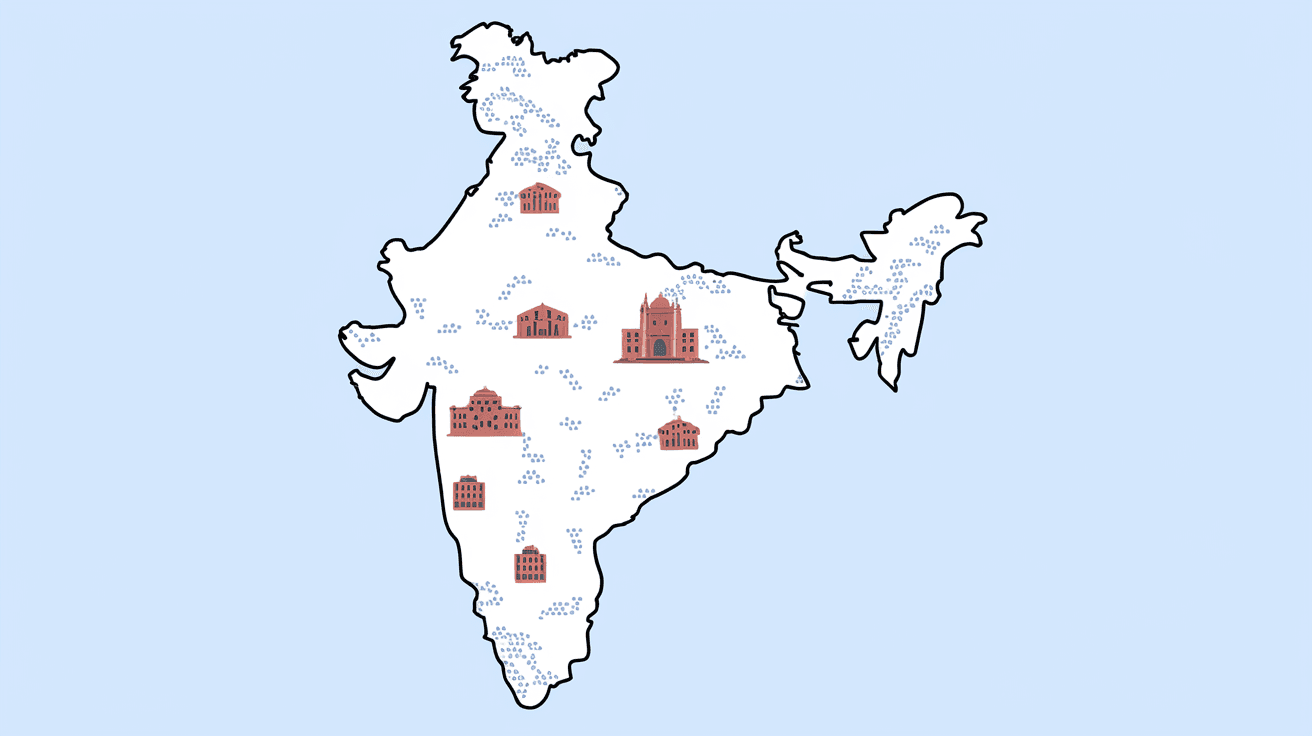
Universities in India are spread unevenly across states. Some states have a high concentration of universities, while others have fewer institutions.
This uneven distribution reflects economic and demographic factors, as well as government policies.
The University Grants Commission (UGC) is the main regulatory body for universities in India. It sets standards, grants recognition, and monitors quality. Other regulatory bodies include:
These bodies ensure that universities maintain academic standards and provide quality education.
India’s university system has grown rapidly in recent years. Some key trends include:
These trends show how India is adapting its higher education system to global standards.
Despite the growth, Indian universities face several challenges:
Addressing these challenges is crucial for India to fully realize its educational potential.
Now you know that India has over 1,100 universities, spread across central, state, deemed, and private categories. This vast network reflects the country’s commitment to expanding higher education. Each type of university serves different needs, from research to professional training.
While India’s university system is large and diverse, it continues to evolve with new trends and challenges. Whether you’re planning to study in India or just curious, understanding this landscape helps you appreciate the scale and complexity of higher education in the country.
India has over 1,100 universities, including central, state, deemed, and private universities.
Central universities are funded by the central government, while state universities are established and funded by state governments.
Deemed universities are institutions recognized for their high standards and given academic autonomy by the UGC.
Yes, private universities are recognized by the UGC and must meet regulatory standards.
Uttar Pradesh has the highest number of universities, with over 80 institutions.