

How Many Types of Trees Are Found in India
F
Discover verified facts, data, and insights about India’s states, culture, economy, education, and more — all in one place at FactBharat.
Search for a command to run...
Discover verified facts, data, and insights about India’s states, culture, economy, education, and more — all in one place at FactBharat.
No comments yet. Be the first to comment.
Moving to the USA from India is a dream for many. Whether you want to study, work, or live with family, the process can seem complex. But with the right information, you can plan your move confidently. I’ll guide you through the key steps and options...
Opening a college in India is a dream for many educators and entrepreneurs who want to contribute to the country’s education sector. If you are one of those who want to start a college, you need to understand the process clearly. It involves several ...
Opening a hospital in India is a significant and rewarding venture. If you’ve ever wondered how to start one, you’re in the right place. Whether you’re a healthcare professional, entrepreneur, or investor, understanding the process is crucial. You’ll...
Opening a medical store in India can be a rewarding business opportunity. You get to serve your community by providing essential medicines and healthcare products. If you are thinking about starting a medical store, you might wonder where to begin an...
Opening a restaurant in India can be an exciting and rewarding venture. Whether you dream of serving traditional Indian dishes or international cuisine, the process involves careful planning and understanding of local regulations. If you’re ready to ...
FactBharat | Insights About India
2558 posts
Discover verified facts, data, and insights about India’s states, culture, economy, education, and more — all in one place at FactBharat.
India is home to a vast variety of trees, making it one of the richest countries in terms of plant diversity. When you explore the forests and landscapes across the country, you’ll find everything from towering tropical trees to hardy desert species. Understanding how many types of trees are found in India helps you appreciate the country’s rich natural heritage and the role these trees play in our environment.
In this article, I’ll guide you through the main types of trees found in India. We’ll look at their classifications, where they grow, and why they matter. Whether you’re a nature lover, a student, or just curious, this guide will give you a clear picture of India’s tree diversity.
India has a wide range of climatic zones, from tropical rainforests to dry deserts. This variety creates the perfect conditions for many types of trees to thrive. According to recent botanical studies, India hosts over 15,000 species of plants, with trees making up a significant portion.
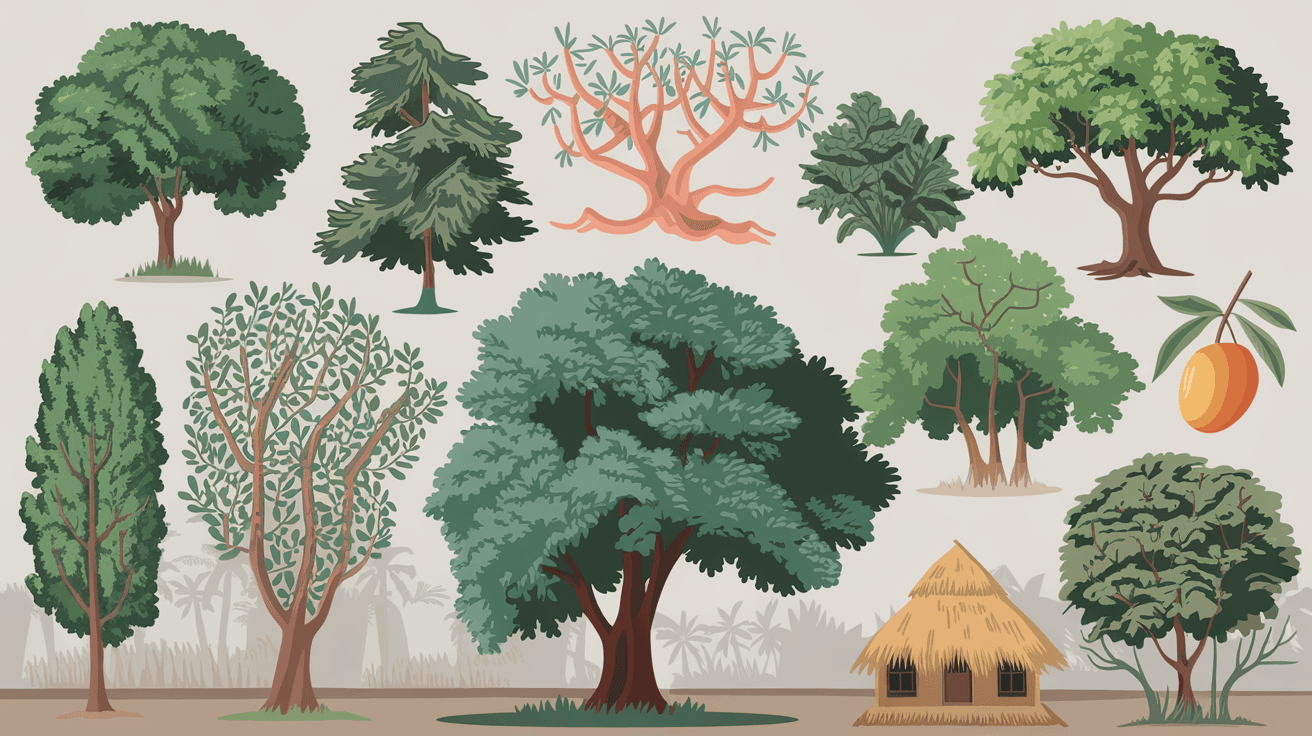
The trees in India can be broadly classified into three main types based on their leaf habits:
Each type plays a unique role in the ecosystem and supports different wildlife species.
Evergreen trees are common in regions with high rainfall and moderate temperatures. You will find them mostly in the Western Ghats, Northeastern states, and the Andaman and Nicobar Islands.
Evergreen forests are crucial for maintaining biodiversity and regulating the climate.
Deciduous trees are the most common type in India. They shed their leaves during dry or cold seasons to conserve water and energy.
Deciduous trees are important for soil conservation and provide seasonal food and shelter for wildlife.
Coniferous trees are mostly found in the Himalayan region where the climate is cold and snowy. These trees have needle-like leaves and produce cones instead of flowers.
Coniferous forests help prevent soil erosion and provide timber and resin.
India also has unique tree types that don’t fit neatly into the above categories but are vital to local ecosystems.
Trees in India are more than just plants; they are the backbone of the environment. Here’s why they matter:
India’s government and environmental groups are working hard to protect these trees through afforestation and conservation programs.
If you want to explore and identify trees, here are some tips:
Spending time in nature and observing trees closely can be a rewarding experience.
India’s tree diversity is truly remarkable, with thousands of species spread across various climatic zones. From evergreen forests in the Western Ghats to coniferous trees in the Himalayas, each type plays a vital role in the environment. Understanding how many types of trees are found in India helps you appreciate the country’s natural wealth and the need to protect it.
Whether you are walking through a forest or planting a tree in your garden, knowing about these trees connects you to nature in a deeper way. Trees are not just part of the landscape; they are life-givers, protectors, and symbols of India’s rich ecological heritage.
India has over 15,000 plant species, with thousands of tree species spread across different regions and climates.
The main types are evergreen, deciduous, and coniferous trees, each adapted to specific climates and environments.
Coniferous trees grow mainly in the Himalayan region, where the climate is cold and snowy.
Mangroves protect coastal areas from erosion, support marine life, and act as natural barriers against storms.
Deciduous trees help conserve water during dry seasons and provide seasonal food and shelter for wildlife.