

How Many Types of Soil Are Found in India
F
Discover verified facts, data, and insights about India’s states, culture, economy, education, and more — all in one place at FactBharat.
Search for a command to run...
Discover verified facts, data, and insights about India’s states, culture, economy, education, and more — all in one place at FactBharat.
No comments yet. Be the first to comment.
Moving to the USA from India is a dream for many. Whether you want to study, work, or live with family, the process can seem complex. But with the right information, you can plan your move confidently. I’ll guide you through the key steps and options...
Opening a college in India is a dream for many educators and entrepreneurs who want to contribute to the country’s education sector. If you are one of those who want to start a college, you need to understand the process clearly. It involves several ...
Opening a hospital in India is a significant and rewarding venture. If you’ve ever wondered how to start one, you’re in the right place. Whether you’re a healthcare professional, entrepreneur, or investor, understanding the process is crucial. You’ll...
Opening a medical store in India can be a rewarding business opportunity. You get to serve your community by providing essential medicines and healthcare products. If you are thinking about starting a medical store, you might wonder where to begin an...
Opening a restaurant in India can be an exciting and rewarding venture. Whether you dream of serving traditional Indian dishes or international cuisine, the process involves careful planning and understanding of local regulations. If you’re ready to ...
FactBharat | Insights About India
2558 posts
Discover verified facts, data, and insights about India’s states, culture, economy, education, and more — all in one place at FactBharat.
India is a vast country with diverse landscapes, climates, and vegetation. This diversity also reflects in the types of soil found across the nation. If you are curious about how many types of soil India has and what makes each type unique, you are in the right place. Understanding soil types helps you appreciate the country's agricultural potential and environmental challenges.
In this article, I will guide you through the major soil types found in India, their characteristics, where they are located, and why they matter. Whether you are a student, farmer, or just curious, this overview will give you a clear picture of India's soil diversity.
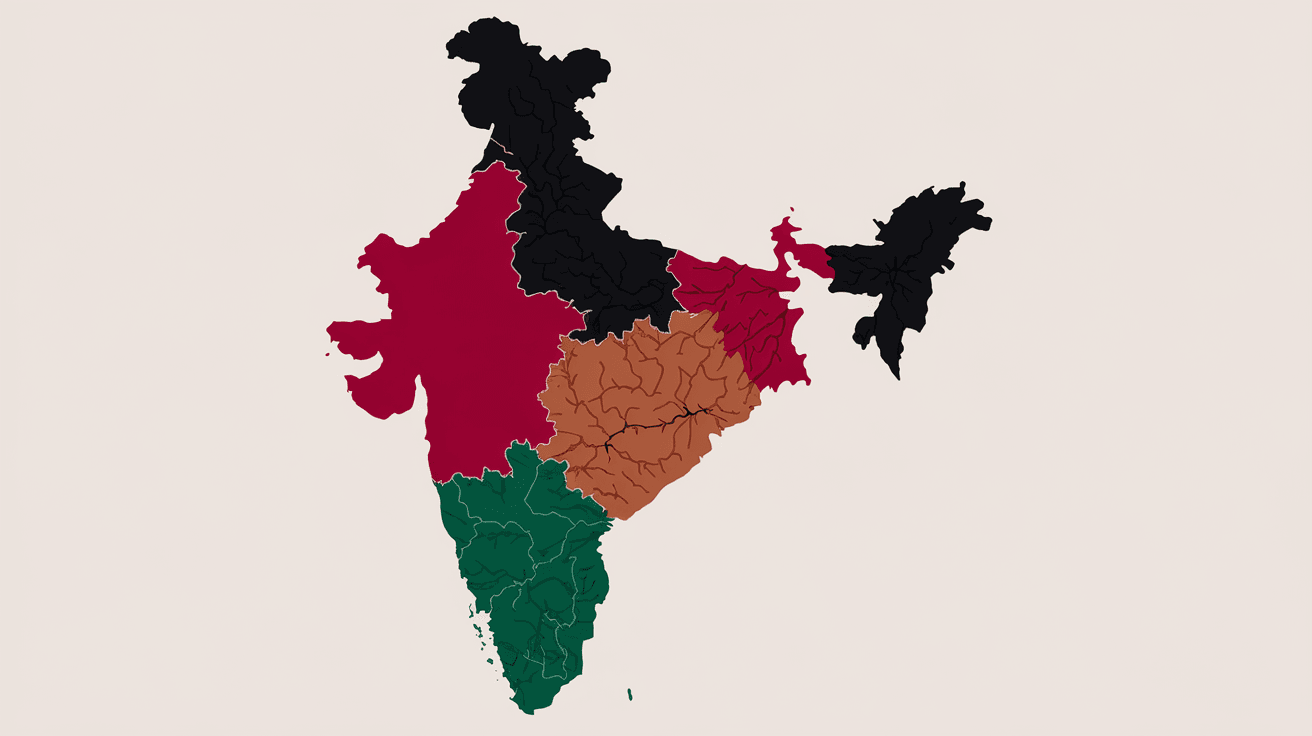
India has several distinct soil types, each formed due to different factors like climate, parent rock, vegetation, and topography. The main types of soil in India are:
Let’s explore each type in detail.
Alluvial soil is the most widespread soil type in India. It covers about 40% of the country's total land area. This soil is mainly found in the northern plains and river valleys, including the Indo-Gangetic plain and parts of Assam.
Characteristics:
Distribution:
Alluvial soil supports intensive agriculture due to its fertility and good water retention.
Black soil, also known as Regur soil or cotton soil, is famous for its ability to retain moisture. It is mainly found in the Deccan Plateau region.
Characteristics:
Distribution:
Black soil is vital for growing cotton, hence the name "cotton soil." It also supports crops like wheat, pulses, and sugarcane.
Red soil gets its color from iron oxide content. It is found in areas with low rainfall and high temperature.
Characteristics:
Distribution:
Red soil is suitable for crops like millets, pulses, and groundnuts but needs proper management to improve fertility.
Laterite soil forms in regions with high temperature and heavy rainfall. It is rich in iron and aluminum but poor in nitrogen and organic matter.
Characteristics:
Distribution:
Laterite soil is used for growing tea, coffee, rubber, and coconut.
Arid soil is found in dry and desert regions with very low rainfall. It is sandy and saline in nature.
Characteristics:
Distribution:
Arid soil supports drought-resistant crops like barley, millet, and pulses.
Forest soil is found in forested areas, especially in hilly and mountainous regions. It is rich in organic matter due to decaying leaves and plants.
Characteristics:
Distribution:
Forest soil supports diverse vegetation and crops like tea, coffee, and spices.
Mountain soil is found in the Himalayan and other mountainous regions. It varies widely depending on altitude, slope, and climate.
Characteristics:
Distribution:
Mountain soil supports horticulture, forestry, and some terrace farming.
Soil formation in India depends on several natural factors:
These factors combine uniquely in different regions, creating the diverse soil types we see today.
Understanding soil types is crucial for farming success. Each soil type supports specific crops and requires different management practices.
| Soil Type | Suitable Crops | Key Management Tips |
| Alluvial | Wheat, rice, sugarcane, cotton | Regular irrigation and fertilization |
| Black | Cotton, wheat, pulses | Moisture conservation, crop rotation |
| Red | Millets, pulses, groundnuts | Fertilizer application, organic matter addition |
| Laterite | Tea, coffee, rubber, coconut | Use of fertilizers, erosion control |
| Arid | Barley, millet, pulses | Irrigation, salt removal techniques |
| Forest | Tea, spices, coffee | Soil conservation, organic farming |
| Mountain | Horticulture, terrace crops | Erosion control, organic matter addition |
By matching crops to soil types, farmers can improve yields and maintain soil health.
Despite the diversity, Indian soils face several challenges:
Addressing these issues requires sustainable farming, soil conservation, and government support.
India has implemented various measures to protect and improve soil quality:
These efforts aim to maintain soil fertility and ensure long-term agricultural productivity.
India’s soil diversity is a reflection of its varied climate, geology, and vegetation. From the fertile alluvial plains to the dry arid deserts, each soil type plays a vital role in supporting the country’s agriculture and ecology. Knowing how many types of soil are found in India helps you understand the challenges and opportunities in farming and land use.
By learning about the characteristics and distribution of these soils, you can appreciate the complexity of India's natural resources. Whether you are involved in agriculture, environmental studies, or just curious, this knowledge is essential for making informed decisions about land management and conservation.
India has seven major soil types: Alluvial, Black, Red, Laterite, Arid, Forest, and Mountain soils.
Alluvial soil is considered the best for agriculture due to its fertility and water retention.
Black soil is mainly found in the Deccan Plateau, covering states like Maharashtra, Madhya Pradesh, and Gujarat.
Challenges include soil erosion, salinity, nutrient depletion, waterlogging, and pollution.
Climate influences soil formation by affecting weathering rates, organic matter decomposition, and moisture availability.