

How Many Types of Music Are There in India?
F
Discover verified facts, data, and insights about India’s states, culture, economy, education, and more — all in one place at FactBharat.
Search for a command to run...
Discover verified facts, data, and insights about India’s states, culture, economy, education, and more — all in one place at FactBharat.
No comments yet. Be the first to comment.
Moving to the USA from India is a dream for many. Whether you want to study, work, or live with family, the process can seem complex. But with the right information, you can plan your move confidently. I’ll guide you through the key steps and options...
Opening a college in India is a dream for many educators and entrepreneurs who want to contribute to the country’s education sector. If you are one of those who want to start a college, you need to understand the process clearly. It involves several ...
Opening a hospital in India is a significant and rewarding venture. If you’ve ever wondered how to start one, you’re in the right place. Whether you’re a healthcare professional, entrepreneur, or investor, understanding the process is crucial. You’ll...
Opening a medical store in India can be a rewarding business opportunity. You get to serve your community by providing essential medicines and healthcare products. If you are thinking about starting a medical store, you might wonder where to begin an...
Opening a restaurant in India can be an exciting and rewarding venture. Whether you dream of serving traditional Indian dishes or international cuisine, the process involves careful planning and understanding of local regulations. If you’re ready to ...
FactBharat | Insights About India
2558 posts
Discover verified facts, data, and insights about India’s states, culture, economy, education, and more — all in one place at FactBharat.
India is a land of incredible diversity, and its music reflects this beautifully. When you think about Indian music, you might picture classical ragas or Bollywood songs. But there’s so much more to explore. You’ll find a wide variety of music styles across different regions, languages, and communities.
In this article, I’ll take you through the main types of music in India. We’ll look at classical, folk, devotional, and modern music forms. By the end, you’ll have a clear understanding of how rich and varied Indian music truly is.
Indian classical music is one of the oldest and most sophisticated music traditions in the world. It mainly divides into two types: Hindustani and Carnatic music.
Both styles use ragas and talas (rhythmic cycles) but differ in presentation and instruments. Classical music often involves vocal performances, with artists trained for years to master the art.
Folk music is the soul of India’s rural and tribal communities. It varies widely across states and reflects local traditions, festivals, and daily life.
Folk music often uses local languages and dialects. It’s passed down orally and remains a vital part of community celebrations.
Devotional music in India is deeply tied to religion and spirituality. It includes bhajans, kirtans, and chants that praise gods and goddesses.
Devotional music helps people express faith and find peace. It often uses traditional instruments like the harmonium, tabla, and manjira.
Bollywood music is the most famous modern music genre in India. It combines Indian classical and folk elements with Western pop, rock, and electronic music.
Modern Indian music also includes genres like hip-hop, rock, and electronic dance music (EDM), blending global trends with Indian sounds.
India’s tribal communities have their own distinct music traditions. These are often linked to nature, rituals, and storytelling.
Tribal music is less commercial but crucial for preserving India’s cultural diversity.
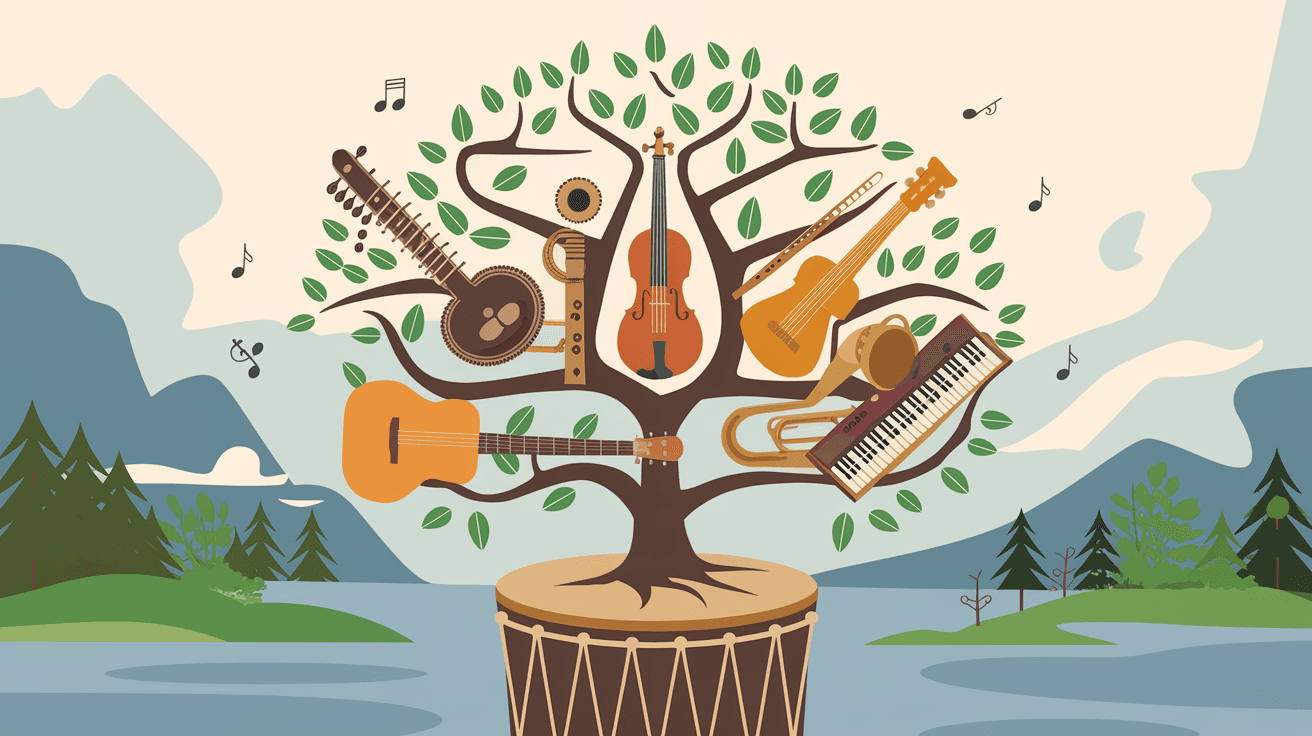
Indian music is famous for its unique instruments, many of which are used across different music types.
Instrumental music can be classical, folk, or even modern, showcasing the versatility of Indian instruments.
In recent years, Indian musicians have been blending traditional music with global styles to create fusion music.
This fusion music appeals to younger audiences and helps Indian music evolve on the world stage.
| Type | Region/Origin | Key Features | Common Instruments |
| Hindustani Classical | North India | Improvisation, ragas, slow tempo | Sitar, Tabla, Harmonium |
| Carnatic Classical | South India | Structured, devotional compositions | Veena, Mridangam, Violin |
| Folk Music | Across India | Local stories, festivals, dances | Dholak, Sarangi, Flute |
| Devotional Music | Pan-India | Religious songs, chants | Harmonium, Tabla, Manjira |
| Bollywood & Pop | Pan-India | Film songs, pop, dance | Synthesizers, Guitar, Drums |
| Tribal Music | Tribal regions | Rituals, nature, storytelling | Drums, Flutes, Local instruments |
| Fusion & Experimental | Urban & Global | Mix of Indian and global styles | Varied |
Indian music is a vast and colorful world. From the classical ragas of the north and south to the lively folk songs of villages, each type tells a unique story. Devotional music connects millions to their faith, while Bollywood and fusion music keep the culture fresh and exciting.
When you explore Indian music, you discover not just sounds but the heart of India’s diverse people and traditions. Whether you enjoy the calm of classical or the energy of folk and film music, there’s something in Indian music for everyone.
India has two main types of classical music: Hindustani from the north and Carnatic from the south. Both use ragas and talas but differ in style and instruments.
Folk music is common in rural areas and varies by region, while tribal music belongs to indigenous communities with unique rituals and instruments.
Popular instruments include the sitar, tabla, veena, mridangam, flute, and harmonium, each linked to specific classical styles.
Bollywood blends Indian classical and folk with Western pop and electronic music, making it the most popular and widely heard music genre in India.
Fusion music mixes traditional Indian music with global genres like jazz, rock, and EDM, creating new sounds that appeal to modern audiences.