

How Many Types of Forests Are There in India
F
Discover verified facts, data, and insights about India’s states, culture, economy, education, and more — all in one place at FactBharat.
Search for a command to run...
Discover verified facts, data, and insights about India’s states, culture, economy, education, and more — all in one place at FactBharat.
No comments yet. Be the first to comment.
Moving to the USA from India is a dream for many. Whether you want to study, work, or live with family, the process can seem complex. But with the right information, you can plan your move confidently. I’ll guide you through the key steps and options...
Opening a college in India is a dream for many educators and entrepreneurs who want to contribute to the country’s education sector. If you are one of those who want to start a college, you need to understand the process clearly. It involves several ...
Opening a hospital in India is a significant and rewarding venture. If you’ve ever wondered how to start one, you’re in the right place. Whether you’re a healthcare professional, entrepreneur, or investor, understanding the process is crucial. You’ll...
Opening a medical store in India can be a rewarding business opportunity. You get to serve your community by providing essential medicines and healthcare products. If you are thinking about starting a medical store, you might wonder where to begin an...
Opening a restaurant in India can be an exciting and rewarding venture. Whether you dream of serving traditional Indian dishes or international cuisine, the process involves careful planning and understanding of local regulations. If you’re ready to ...
FactBharat | Insights About India
2558 posts
Discover verified facts, data, and insights about India’s states, culture, economy, education, and more — all in one place at FactBharat.
India is home to a rich variety of forests that cover about 21% of its total land area. These forests are vital for the country's ecology, economy, and culture. If you’ve ever wondered how many types of forests exist in India, you’re in the right place. We’ll explore the different forest types, their unique features, and where you can find them.
Understanding the types of forests in India helps you appreciate the country's biodiversity and the role forests play in climate regulation and wildlife conservation. Whether you’re a student, nature lover, or just curious, this guide will give you a clear picture of India’s forest diversity.
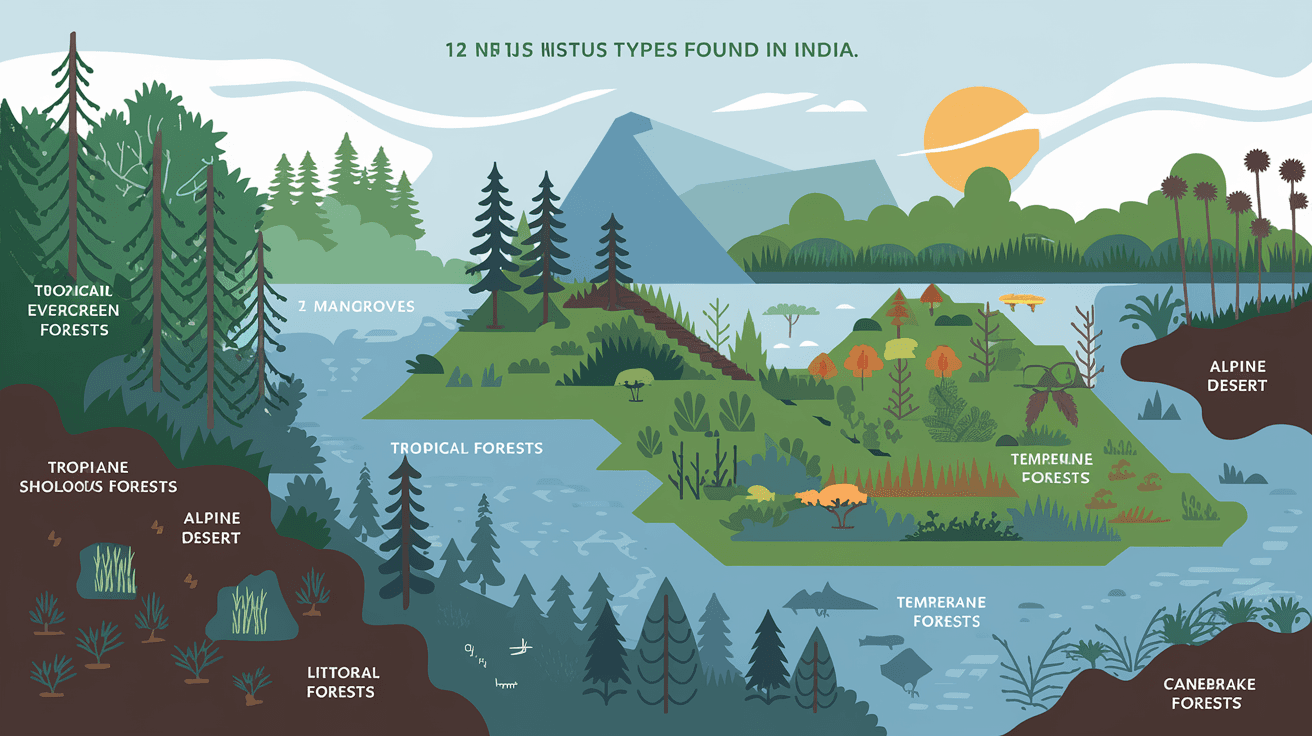
India’s forests are classified based on climate, altitude, and rainfall. The Forest Survey of India and ecologists generally recognize five major types of forests:
Each type has distinct characteristics and supports different kinds of plants and animals. Let’s dive deeper into each one.
Tropical Evergreen Forests are found in regions with heavy rainfall, usually above 200 cm annually. These forests remain green throughout the year because the trees do not shed their leaves seasonally.
These forests are crucial for maintaining ecological balance and are home to many endangered species like the Lion-tailed macaque and the Great Hornbill.
Also called monsoon forests, Tropical Deciduous Forests are the most widespread forest type in India. They thrive in areas with moderate rainfall between 70 to 200 cm.
These forests are important for timber and non-timber forest products. They also support many tribal communities who depend on them for livelihood.
Thorn Forests are found in areas with low rainfall, usually less than 70 cm annually. These forests are adapted to dry conditions and have thorny plants and bushes.
These forests are important for grazing animals and act as a buffer against desertification in arid regions.
Montane Forests grow in mountainous regions and vary with altitude. They are also called Hill Forests and include several subtypes.
These forests are vital for water conservation and are home to unique wildlife like the snow leopard and Himalayan monal.
Mangrove Forests are found along the coastlines where saltwater meets freshwater. These forests are adapted to saline and tidal conditions.
Mangroves are crucial for protecting coastal communities and supporting fisheries.
India’s diverse forest types support a wide range of ecosystems and species. Here’s why this diversity matters:
Despite their importance, Indian forests face several threats:
Efforts by the government and NGOs focus on conservation, afforestation, and sustainable forest management to protect these vital ecosystems.
You don’t have to be a forest ranger to make a difference. Here are some ways you can contribute:
Every small action counts toward preserving India’s forest heritage.
India’s forests are incredibly diverse, ranging from dense tropical evergreens to dry thorn forests and coastal mangroves. Each type plays a unique role in supporting wildlife, regulating climate, and sustaining human life. Knowing about these forests helps us appreciate their value and the urgent need to protect them.
By understanding the different forest types and their challenges, you can become more aware of how to contribute to their conservation. Together, we can ensure that India’s forests continue to thrive for generations to come.
India has five main types of forests: Tropical Evergreen, Tropical Deciduous, Thorn Forests and Scrubs, Montane Forests, and Mangrove Forests.
Tropical evergreen forests are mainly found in the Western Ghats, Northeastern states, and the Andaman and Nicobar Islands where rainfall is heavy.
Mangrove forests grow in coastal saline water and have special roots that help them survive in waterlogged, salty soil, protecting coastlines from erosion.
Thorn forests adapt to dry conditions and help prevent desertification. They provide grazing land for animals and support unique drought-resistant plants.
Indian forests face threats like deforestation, illegal logging, climate change, forest fires, and habitat loss, which endanger biodiversity and ecosystem health.