

How Many Types of Driving Licence in India
F
Discover verified facts, data, and insights about India’s states, culture, economy, education, and more — all in one place at FactBharat.
Search for a command to run...
Discover verified facts, data, and insights about India’s states, culture, economy, education, and more — all in one place at FactBharat.
No comments yet. Be the first to comment.
Moving to the USA from India is a dream for many. Whether you want to study, work, or live with family, the process can seem complex. But with the right information, you can plan your move confidently. I’ll guide you through the key steps and options...
Opening a college in India is a dream for many educators and entrepreneurs who want to contribute to the country’s education sector. If you are one of those who want to start a college, you need to understand the process clearly. It involves several ...
Opening a hospital in India is a significant and rewarding venture. If you’ve ever wondered how to start one, you’re in the right place. Whether you’re a healthcare professional, entrepreneur, or investor, understanding the process is crucial. You’ll...
Opening a medical store in India can be a rewarding business opportunity. You get to serve your community by providing essential medicines and healthcare products. If you are thinking about starting a medical store, you might wonder where to begin an...
Opening a restaurant in India can be an exciting and rewarding venture. Whether you dream of serving traditional Indian dishes or international cuisine, the process involves careful planning and understanding of local regulations. If you’re ready to ...
FactBharat | Insights About India
2558 posts
Discover verified facts, data, and insights about India’s states, culture, economy, education, and more — all in one place at FactBharat.
Driving in India requires the right kind of licence, but with so many types available, it can get confusing. Whether you’re a new driver or planning to upgrade your licence, understanding the different categories is important. Your licence type depends on the vehicle you want to drive and the purpose of driving.
In this article, I’ll guide you through the various types of driving licences in India. You’ll learn what each licence covers, who needs it, and how to apply. This will help you choose the right licence and stay legal on the road.
A driving licence in India is an official document that permits you to operate a motor vehicle on public roads. It acts as proof that you have passed the necessary tests and are qualified to drive safely. The Ministry of Road Transport and Highways (MoRTH) regulates licences, and each state issues them through Regional Transport Offices (RTOs).
Your driving licence shows your name, photo, address, and the types of vehicles you are allowed to drive. It’s mandatory to carry this licence whenever you drive. Driving without a valid licence can lead to fines or legal trouble.
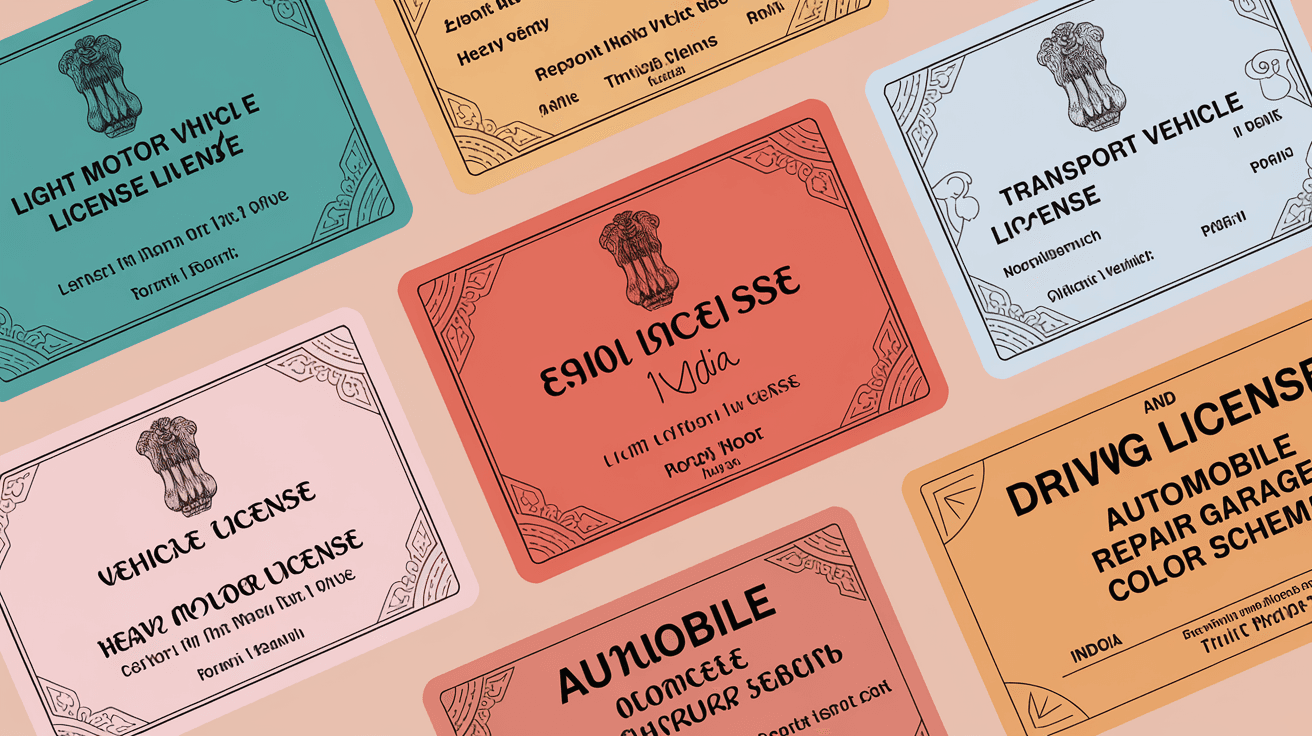
India has several types of driving licences. Each type corresponds to a specific vehicle category or purpose. Here’s a detailed look at the main types:
Before you get a full licence, you must apply for a learner’s licence. This allows you to practice driving under supervision. It’s valid for six months and is the first step in the licensing process.
After holding a learner’s licence and passing the driving test, you can apply for a permanent driving licence. This licence lets you drive independently.
The permanent licence is divided into categories depending on the vehicle you want to drive. Here are the main categories:
| Licence Type | Vehicle Covered | Description |
| MC 50CC | Motorcycles below 50cc | For small motorcycles or scooters |
| MC EX50CC | Motorcycles above 50cc | For larger motorcycles |
| LMV | Light Motor Vehicles | Cars, jeeps, small trucks |
| HMV | Heavy Motor Vehicles | Trucks, buses, heavy vehicles |
| HPMV | Heavy Passenger Motor Vehicles | Buses and passenger vehicles |
| TRANSPORT | Commercial vehicles | Vehicles used for commercial purposes |
Apart from the standard categories, there are special licences for specific needs:
The application process varies slightly depending on the licence type:
If you want to drive a different type of vehicle, you can apply to add that category to your existing licence. This requires passing the relevant driving test for that vehicle.
Each licence type ensures that drivers have the right skills for the vehicle they operate. For example, driving a heavy truck requires more knowledge and skill than riding a scooter. The licence system helps keep roads safer by matching driver ability with vehicle type.
The minimum age is 16 for motorcycles below 50cc and 18 for other vehicles like cars and larger motorcycles.
No, you need a commercial or transport vehicle licence to drive vehicles used for business or carrying passengers.
Typically, a permanent licence is valid for 20 years or until you turn 50. After that, you must renew it.
No, foreign nationals must have an IDP to drive in India, but Indian licences are not valid abroad without an IDP.
Yes, most states offer online application and appointment booking for learner’s and permanent licences.
Understanding the types of driving licences in India helps you choose the right one for your needs. Whether you want to ride a scooter, drive a car, or operate a commercial vehicle, there is a licence category for you. Always start with a learner’s licence, practice safely, and then upgrade to a permanent licence.
Remember, driving legally protects you and others on the road. Keep your licence updated and follow traffic rules. This way, you can enjoy the freedom of driving without worries.
There are several types, mainly learner’s licence, permanent licence, and categories based on vehicle type like motorcycles, light motor vehicles, and heavy vehicles.
LMV (Light Motor Vehicle) licence is for cars and small vehicles, while HMV (Heavy Motor Vehicle) licence is for trucks, buses, and larger vehicles.
No, you need a motorcycle licence (MC 50CC or MC EX50CC) to legally ride a two-wheeler.
You can renew your licence online or at the RTO by submitting an application, paying the fee, and providing necessary documents.
Yes, you must hold a learner’s licence for at least 30 days before applying for a permanent driving licence.