

How Many Types of Crops in India
F
Discover verified facts, data, and insights about India’s states, culture, economy, education, and more — all in one place at FactBharat.
Search for a command to run...
Discover verified facts, data, and insights about India’s states, culture, economy, education, and more — all in one place at FactBharat.
No comments yet. Be the first to comment.
Moving to the USA from India is a dream for many. Whether you want to study, work, or live with family, the process can seem complex. But with the right information, you can plan your move confidently. I’ll guide you through the key steps and options...
Opening a college in India is a dream for many educators and entrepreneurs who want to contribute to the country’s education sector. If you are one of those who want to start a college, you need to understand the process clearly. It involves several ...
Opening a hospital in India is a significant and rewarding venture. If you’ve ever wondered how to start one, you’re in the right place. Whether you’re a healthcare professional, entrepreneur, or investor, understanding the process is crucial. You’ll...
Opening a medical store in India can be a rewarding business opportunity. You get to serve your community by providing essential medicines and healthcare products. If you are thinking about starting a medical store, you might wonder where to begin an...
Opening a restaurant in India can be an exciting and rewarding venture. Whether you dream of serving traditional Indian dishes or international cuisine, the process involves careful planning and understanding of local regulations. If you’re ready to ...
FactBharat | Insights About India
2558 posts
Discover verified facts, data, and insights about India’s states, culture, economy, education, and more — all in one place at FactBharat.
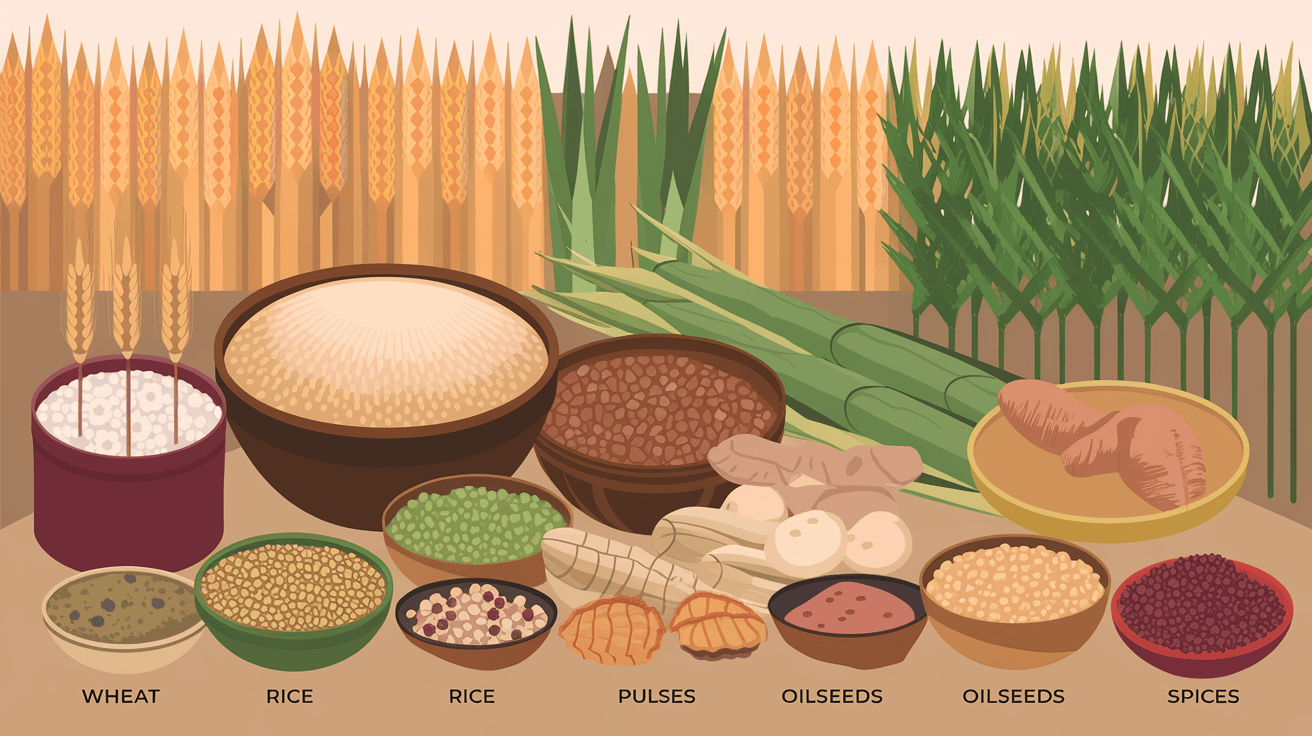
India is one of the world's largest agricultural producers, and its farming landscape is incredibly diverse. When you ask, "How many types of crops are grown in India?" the answer is not just a number but a reflection of the country's varied climate, soil, and cultural practices. You’ll find everything from staple food grains to cash crops and plantation crops spread across different regions.
In this article, I’ll take you through the main types of crops grown in India, explaining their categories and significance. Whether you’re curious about what farmers grow or want to understand India’s agricultural diversity, this guide will give you a clear picture.
India’s crops are broadly classified into three main categories based on their use and cultivation patterns:
Let’s explore each category in detail.
Food crops form the backbone of India’s agriculture. They provide the staple diet for millions and include cereals, pulses, fruits, and vegetables.
Cereals are the most important food crops in India. They provide the majority of calories in the Indian diet.
Pulses are vital for protein intake in India. They also enrich the soil by fixing nitrogen.
India grows a wide variety of fruits and vegetables due to its diverse climate zones.
Commercial crops are grown mainly for sale rather than personal consumption. These crops contribute significantly to India’s economy.
Oilseeds are crucial for edible oil production.
Sugarcane is a major commercial crop grown mainly in Uttar Pradesh, Maharashtra, and Karnataka.
Cotton is a key fiber crop grown in states like Maharashtra, Gujarat, and Punjab.
Jute is grown mainly in West Bengal, Bihar, and Assam.
Plantation crops are grown on large estates and require specific climatic conditions, usually tropical or subtropical.
Tea plantations are mainly found in Assam, West Bengal (Darjeeling), and Kerala.
Coffee is grown in the hilly regions of Karnataka, Kerala, and Tamil Nadu.
Rubber plantations are concentrated in Kerala, Tamil Nadu, and the northeastern states.
India is famous for its spices, many of which are plantation crops.
India’s vast crop diversity is influenced by several factors:
Crops in India are also classified based on the growing season:
Crop diversity is vital for India’s food security and economy.
Despite its diversity, Indian agriculture faces challenges:
Addressing these issues is crucial to sustaining India’s crop diversity.
The Indian government has launched several programs to support farmers and crop diversity:
These initiatives help stabilize production and encourage sustainable farming.
India’s agriculture is a rich tapestry of diverse crops shaped by its climate, soil, and culture. From staple food grains like rice and wheat to commercial crops like cotton and sugarcane, and plantation crops such as tea and coffee, the variety is immense. Understanding the types of crops grown in India helps appreciate the country’s food security and economic strength.
As you can see, the number of crop types in India is vast, reflecting the country’s agricultural wealth. This diversity not only feeds millions but also supports livelihoods and exports. By addressing challenges and promoting sustainable practices, India can continue to thrive as an agricultural powerhouse.
India grows thousands of crop varieties, broadly classified into food crops, commercial crops, and plantation crops. Each category includes multiple types like cereals, pulses, oilseeds, and spices.
The main food crops include cereals like rice, wheat, and millets, pulses such as tur and moong, and a variety of fruits and vegetables.
Important commercial crops are cotton, sugarcane, oilseeds (like groundnut and mustard), and jute, which contribute significantly to the economy.
Plantation crops are grown on large estates and include tea, coffee, rubber, and spices like cardamom and black pepper.
India’s varied climate zones—from tropical to temperate—allow different crops to thrive in different regions, contributing to the country’s rich crop diversity.