

How Many Types of Army in India
F
Discover verified facts, data, and insights about India’s states, culture, economy, education, and more — all in one place at FactBharat.
Search for a command to run...
Discover verified facts, data, and insights about India’s states, culture, economy, education, and more — all in one place at FactBharat.
No comments yet. Be the first to comment.
Moving to the USA from India is a dream for many. Whether you want to study, work, or live with family, the process can seem complex. But with the right information, you can plan your move confidently. I’ll guide you through the key steps and options...
Opening a college in India is a dream for many educators and entrepreneurs who want to contribute to the country’s education sector. If you are one of those who want to start a college, you need to understand the process clearly. It involves several ...
Opening a hospital in India is a significant and rewarding venture. If you’ve ever wondered how to start one, you’re in the right place. Whether you’re a healthcare professional, entrepreneur, or investor, understanding the process is crucial. You’ll...
Opening a medical store in India can be a rewarding business opportunity. You get to serve your community by providing essential medicines and healthcare products. If you are thinking about starting a medical store, you might wonder where to begin an...
Opening a restaurant in India can be an exciting and rewarding venture. Whether you dream of serving traditional Indian dishes or international cuisine, the process involves careful planning and understanding of local regulations. If you’re ready to ...
FactBharat | Insights About India
2558 posts
Discover verified facts, data, and insights about India’s states, culture, economy, education, and more — all in one place at FactBharat.
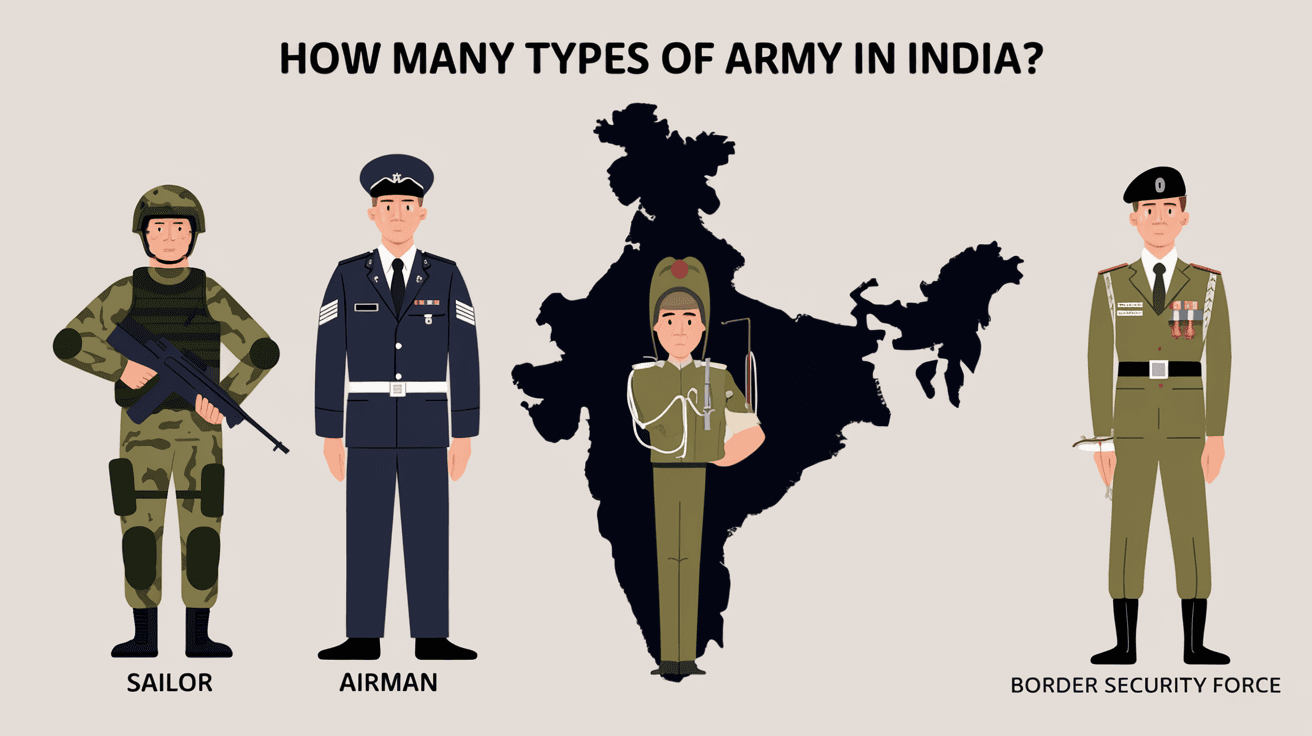
India has one of the largest and most diverse military forces in the world. When you think about the "army" in India, you might picture just one branch. But actually, India’s defense system includes several types of armed forces, each with its own special role. Understanding these different types helps you see how India protects its borders and maintains peace.
In this article, I will walk you through the main types of army forces in India. We’ll explore their functions, organization, and how they work together to keep the country safe. Whether you’re curious about the Indian Army, Navy, Air Force, or paramilitary forces, this guide will give you a clear picture.
The Indian Army is the largest branch of the Indian Armed Forces. It is primarily responsible for land-based military operations. When you hear "army," this is usually what people mean.
The Indian Army’s main tasks include defending the country’s borders, fighting wars, and assisting in disaster relief. It is well-equipped with infantry, artillery, tanks, and special forces units.
The Indian Army operates in various terrains, from deserts to mountains. It plays a vital role in maintaining internal security, especially in regions facing insurgency.
India’s Navy is the maritime branch of the armed forces. It protects India’s vast coastline and maritime interests. The Navy ensures the security of sea lanes and deters threats from the ocean.
The Indian Navy has grown significantly in recent years, acquiring advanced warships, submarines, and aircraft carriers.
The Navy also works closely with other countries through joint exercises and peacekeeping missions, enhancing India’s global maritime presence.
The Indian Air Force (IAF) is responsible for air defense and aerial warfare. It plays a crucial role in protecting Indian airspace and supporting ground and naval forces.
The IAF operates a mix of fighter jets, transport aircraft, helicopters, and drones. It is known for its advanced technology and skilled pilots.
The IAF’s quick response capability is vital during conflicts and natural disasters, providing air support and evacuation.
India also has several paramilitary forces that support the army and maintain internal security. These forces are under the Ministry of Home Affairs but often work alongside the army during emergencies.
These forces are trained for specific roles like border guarding, anti-terrorism, and crowd control. They play a crucial role in maintaining peace within the country.
Beyond the main branches, India has specialized units within its armed forces. These units handle unique tasks requiring advanced skills.
These forces often operate in high-risk environments and carry out missions that regular troops cannot.
India’s defense system is a complex network where each type of army force complements the others. Coordination between the army, navy, air force, and paramilitary units is essential for effective defense.
This teamwork ensures India can respond quickly and efficiently to any threat or emergency.
Apart from the regular army, India has the Territorial Army. It is a part-time voluntary force that supports the regular army during emergencies.
The Territorial Army helps increase the country’s defense capacity without the cost of a large standing force.
Now you know that India’s army is not just one single force but a combination of several types of armed forces. The Indian Army, Navy, and Air Force form the core of the defense system, each with unique roles. Paramilitary forces and specialized units add extra layers of security and support.
Together, these forces protect India’s borders, maintain internal peace, and contribute to global peacekeeping. Understanding these different types helps you appreciate the complexity and strength of India’s military. Whether you’re interested in defense careers or just curious, knowing about these forces gives you a clearer picture of how India stays safe.
India has three main types of army forces: the Indian Army (land), Indian Navy (sea), and Indian Air Force (air). Additionally, there are paramilitary forces and specialized units supporting national security.
Paramilitary forces in India assist with border security, internal law and order, counter-insurgency, and anti-terrorism. They work alongside the army during emergencies and maintain peace within the country.
The Territorial Army is a part-time voluntary force that supports the regular army during emergencies. Civilians join and receive military training, helping increase defense capacity without a full-time commitment.
Special operations are handled by elite units like the Para Special Forces (Army), Garud Commandos (Air Force), and MARCOS (Navy). These units perform covert and high-risk missions.
India has joint commands and conducts regular joint exercises to ensure coordination among the army, navy, air force, and paramilitary forces. This teamwork improves response during conflicts and disasters.