

How Many Triveni Sangam Are There in India
F
Discover verified facts, data, and insights about India’s states, culture, economy, education, and more — all in one place at FactBharat.
Search for a command to run...
Discover verified facts, data, and insights about India’s states, culture, economy, education, and more — all in one place at FactBharat.
No comments yet. Be the first to comment.
Moving to the USA from India is a dream for many. Whether you want to study, work, or live with family, the process can seem complex. But with the right information, you can plan your move confidently. I’ll guide you through the key steps and options...
Opening a college in India is a dream for many educators and entrepreneurs who want to contribute to the country’s education sector. If you are one of those who want to start a college, you need to understand the process clearly. It involves several ...
Opening a hospital in India is a significant and rewarding venture. If you’ve ever wondered how to start one, you’re in the right place. Whether you’re a healthcare professional, entrepreneur, or investor, understanding the process is crucial. You’ll...
Opening a medical store in India can be a rewarding business opportunity. You get to serve your community by providing essential medicines and healthcare products. If you are thinking about starting a medical store, you might wonder where to begin an...
Opening a restaurant in India can be an exciting and rewarding venture. Whether you dream of serving traditional Indian dishes or international cuisine, the process involves careful planning and understanding of local regulations. If you’re ready to ...
FactBharat | Insights About India
2558 posts
Discover verified facts, data, and insights about India’s states, culture, economy, education, and more — all in one place at FactBharat.
When you hear the term "Triveni Sangam," you might immediately think of the famous confluence of rivers in Prayagraj. But did you know there are multiple Triveni Sangams across India? These sacred spots where three rivers meet hold deep spiritual and cultural importance for millions of people.
In this article, I will guide you through the different Triveni Sangams found in India. You’ll learn about their locations, the rivers involved, and why these confluences are so revered. Whether you’re planning a pilgrimage or just curious about Indian geography and culture, this guide will give you clear and interesting insights.
A Triveni Sangam is a place where three rivers meet. The word "Triveni" means "three streams," and "Sangam" means "confluence." These spots are often considered holy in Hinduism because water is a symbol of purity and life.
Understanding this helps you appreciate why these places are so important culturally and religiously.
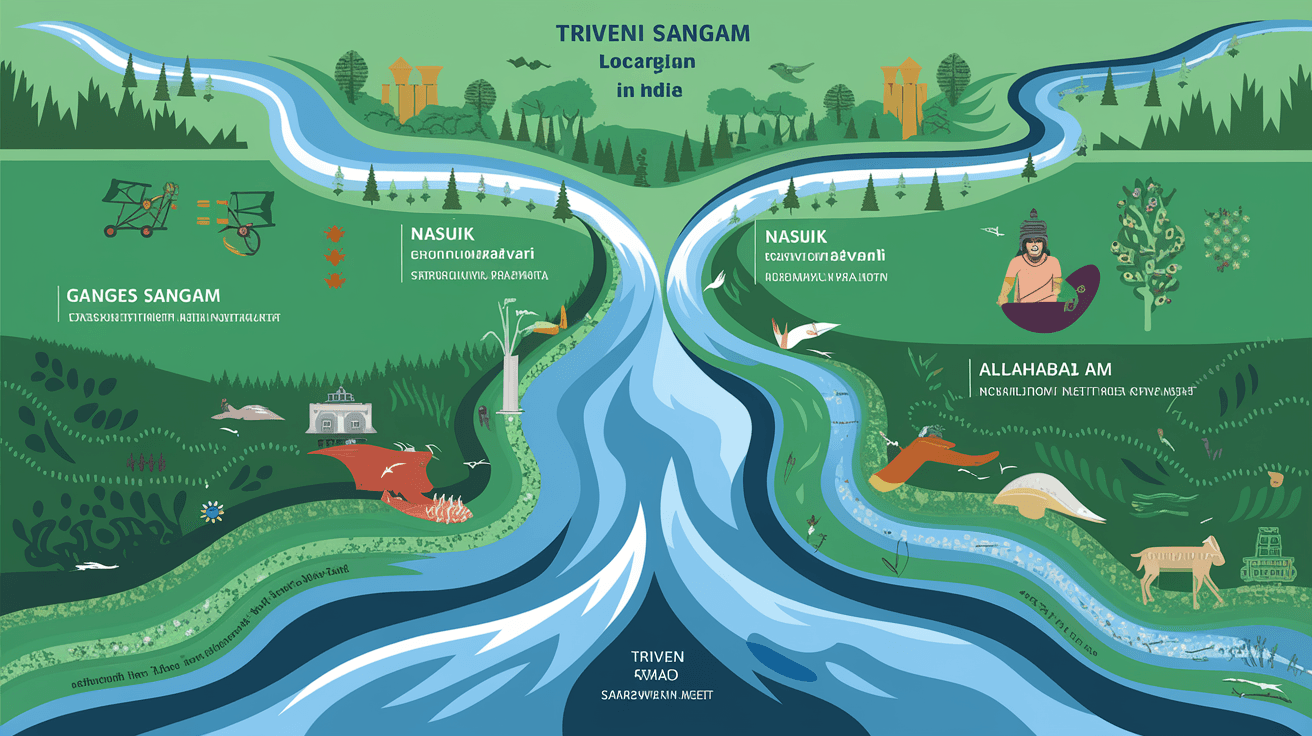
The most well-known Triveni Sangam is in Prayagraj (formerly Allahabad), Uttar Pradesh. This is where the Ganges, Yamuna, and the mythical Saraswati rivers meet.
This confluence is the site of the Kumbh Mela, one of the largest religious gatherings in the world, held every 12 years. Millions come here to bathe in the waters, believing it will wash away their sins.
While Prayagraj is the most famous, there are several other Triveni Sangams across India. Each has its own unique rivers and significance.
Nashik is another important pilgrimage city with a Triveni Sangam where the Godavari, Kapila, and a mythical Saraswati river meet.
Nashik also hosts the Kumbh Mela every 12 years, making it a major spiritual hub.
Ujjain is famous for the confluence of the Shipra, Kshipra, and a mythical Saraswati river.
Ujjain is another Kumbh Mela site and is known for its ancient temples and spiritual heritage.
Haridwar is where the Ganges meets two other rivers, though not always considered a classic Triveni Sangam with three visible rivers.
While the physical rivers may not all be visible, the spiritual significance remains strong.
In the southern state of Karnataka, Bhagamandala is a sacred Triveni Sangam where the rivers Cauvery, Kannike, and Sujyoti meet.
This spot is important for local religious ceremonies and attracts many pilgrims.
Triveni Sangams are more than just geographical features. They hold deep religious, cultural, and ecological significance.
Visiting a Triveni Sangam can be a spiritual experience and a way to connect with India's rich heritage.
If you want to visit these sacred confluences, here are some tips:
Visiting these sites can be a memorable journey into India’s spiritual heart.
| Location | Rivers Involved | State | Special Notes |
| Prayagraj | Ganges, Yamuna, Saraswati | Uttar Pradesh | Site of Kumbh Mela |
| Nashik | Godavari, Kapila, Saraswati | Maharashtra | Kumbh Mela location |
| Ujjain | Shipra, Kshipra, Saraswati | Madhya Pradesh | Ancient spiritual city |
| Haridwar | Ganges, Yamuna, Saraswati | Uttarakhand | Gateway to Himalayas |
| Bhagamandala | Cauvery, Kannike, Sujyoti | Karnataka | Important southern site |
Now you know that India has several Triveni Sangams, not just the famous one in Prayagraj. Each confluence has its own rivers, stories, and spiritual importance. These sacred spots are central to Hindu culture and attract millions of pilgrims every year.
Whether you want to explore India’s geography or deepen your spiritual journey, visiting a Triveni Sangam can be a meaningful experience. Remember to respect the traditions and enjoy the natural beauty of these unique river confluences.
There are at least five well-known Triveni Sangams in India, including Prayagraj, Nashik, Ujjain, Haridwar, and Bhagamandala. Each has its own unique rivers and spiritual significance.
The Prayagraj Triveni Sangam is where the Ganges, Yamuna, and the mythical Saraswati rivers meet. The Saraswati is believed to flow underground and is not visible.
The Saraswati river is considered mythical because it is believed to have dried up or flows underground. It is often described in ancient texts but is not visible at the confluences.
Visiting all major Triveni Sangams in one trip is possible but requires good planning due to their spread across India. Each site offers a unique cultural and spiritual experience.
Bathing in a Triveni Sangam is believed to purify the soul, wash away sins, and bring spiritual blessings. This practice is a key part of many Hindu rituals and festivals.