

How Many Total Rivers in India
F
Discover verified facts, data, and insights about India’s states, culture, economy, education, and more — all in one place at FactBharat.
Search for a command to run...
Discover verified facts, data, and insights about India’s states, culture, economy, education, and more — all in one place at FactBharat.
No comments yet. Be the first to comment.
Moving to the USA from India is a dream for many. Whether you want to study, work, or live with family, the process can seem complex. But with the right information, you can plan your move confidently. I’ll guide you through the key steps and options...
Opening a college in India is a dream for many educators and entrepreneurs who want to contribute to the country’s education sector. If you are one of those who want to start a college, you need to understand the process clearly. It involves several ...
Opening a hospital in India is a significant and rewarding venture. If you’ve ever wondered how to start one, you’re in the right place. Whether you’re a healthcare professional, entrepreneur, or investor, understanding the process is crucial. You’ll...
Opening a medical store in India can be a rewarding business opportunity. You get to serve your community by providing essential medicines and healthcare products. If you are thinking about starting a medical store, you might wonder where to begin an...
Opening a restaurant in India can be an exciting and rewarding venture. Whether you dream of serving traditional Indian dishes or international cuisine, the process involves careful planning and understanding of local regulations. If you’re ready to ...
FactBharat | Insights About India
2558 posts
Discover verified facts, data, and insights about India’s states, culture, economy, education, and more — all in one place at FactBharat.
India is a land blessed with a vast network of rivers that have shaped its culture, agriculture, and economy for centuries. If you’ve ever wondered how many total rivers flow across this diverse country, you’re not alone. Understanding the number of rivers in India helps you appreciate the country’s rich natural resources and the role these water bodies play in everyday life.
In this article, I’ll take you through the total count of rivers in India, including major and minor ones. We’ll explore the significance of these rivers, their distribution, and how they impact the environment and society. By the end, you’ll have a clear picture of India’s river systems and why they matter so much.
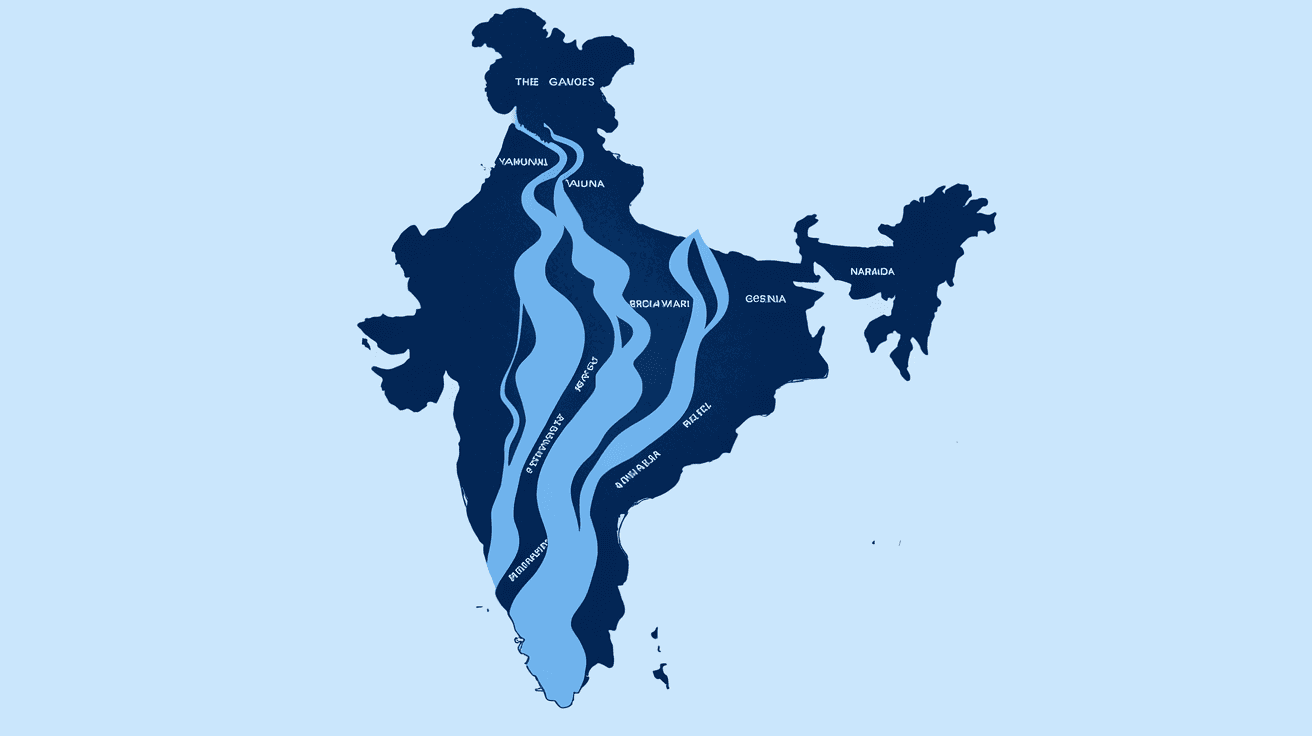
India is home to thousands of rivers, but the exact count depends on how you classify them. Generally, India has about 6,000 rivers and rivulets flowing across its landscape. These include both perennial and seasonal rivers.
The diversity in river types and sizes makes India’s river system one of the most complex in the world.
India’s major rivers are grouped into four main river systems based on their drainage basins:
Each system includes several tributaries and smaller rivers that contribute to the overall water flow.
The Ganges is the most famous river in India, revered for its religious significance and vital for millions of people. It originates from the Gangotri Glacier in the Himalayas and flows through northern India into Bangladesh.
The Indus River originates in Tibet and flows through India and Pakistan. It is crucial for irrigation and hydroelectric power.
Known as the "Dakshina Ganga" or "Ganges of the South," the Godavari is the longest river in peninsular India.
The Brahmaputra flows from Tibet into India and Bangladesh, known for its powerful flow and flooding potential.
Rivers in India can be classified in several ways based on their origin, flow, and drainage.
These rivers originate from the Himalayas and are mostly perennial due to melting glaciers.
These rivers originate from the peninsular plateau and are mostly seasonal.
Some rivers do not reach the sea but drain into inland lakes or deserts.
Rivers are the lifeline of India’s economy, culture, and environment. Here’s why they matter:
Despite their importance, Indian rivers face several challenges:
Efforts are underway to clean and conserve rivers, such as the Namami Gange project aimed at rejuvenating the Ganges.
Rivers have influenced India’s geography by shaping fertile plains and valleys. The Indo-Gangetic Plain, formed by the Ganges and its tributaries, is one of the most fertile and densely populated regions in the world.
Culturally, rivers are central to many festivals, rituals, and traditions. For example:
| River | Origin | Length (km) | Major Tributaries | Importance |
| Ganges | Himalayas | 2,525 | Yamuna, Ghaghara, Son | Agriculture, religion, water |
| Indus | Tibet | 3,180 | Jhelum, Chenab, Ravi | Irrigation, hydroelectricity |
| Godavari | Western Ghats | 1,465 | Purna, Indravati | Farming, power generation |
| Brahmaputra | Tibet | 2,900 | Dibang, Lohit, Subansiri | Agriculture, hydroelectricity |
| Krishna | Western Ghats | 1,400 | Bhima, Tungabhadra | Irrigation, drinking water |
Now you know that India has around 6,000 rivers, ranging from mighty perennial rivers like the Ganges and Brahmaputra to countless smaller streams. These rivers are vital for agriculture, drinking water, energy, and culture. They have shaped India’s landscape and supported its civilization for thousands of years.
However, protecting these rivers is crucial as they face pollution, climate change, and overuse. By understanding the total number of rivers and their importance, you can appreciate the need to conserve and respect these natural treasures. Rivers truly are the lifeblood of India, connecting its past, present, and future.
India has about 14 major rivers, including the Ganges, Indus, Godavari, Brahmaputra, and Krishna, which are vital for the country’s water resources and culture.
The Ganges is the longest river entirely within India, stretching about 2,525 kilometers. The Indus is longer but flows mostly outside India.
No, many rivers in peninsular India are seasonal and flow mainly during the monsoon, while Himalayan rivers are mostly perennial due to glacier melt.
Rivers provide essential water for irrigation, supporting over 60% of India’s population engaged in farming and ensuring food security.
Pollution, over-extraction of water, climate change, and encroachment are major threats affecting the health and flow of Indian rivers.