

How Many Total Districts Are There in India
F
Discover verified facts, data, and insights about India’s states, culture, economy, education, and more — all in one place at FactBharat.
Search for a command to run...
Discover verified facts, data, and insights about India’s states, culture, economy, education, and more — all in one place at FactBharat.
No comments yet. Be the first to comment.
Moving to the USA from India is a dream for many. Whether you want to study, work, or live with family, the process can seem complex. But with the right information, you can plan your move confidently. I’ll guide you through the key steps and options...
Opening a college in India is a dream for many educators and entrepreneurs who want to contribute to the country’s education sector. If you are one of those who want to start a college, you need to understand the process clearly. It involves several ...
Opening a hospital in India is a significant and rewarding venture. If you’ve ever wondered how to start one, you’re in the right place. Whether you’re a healthcare professional, entrepreneur, or investor, understanding the process is crucial. You’ll...
Opening a medical store in India can be a rewarding business opportunity. You get to serve your community by providing essential medicines and healthcare products. If you are thinking about starting a medical store, you might wonder where to begin an...
Opening a restaurant in India can be an exciting and rewarding venture. Whether you dream of serving traditional Indian dishes or international cuisine, the process involves careful planning and understanding of local regulations. If you’re ready to ...
FactBharat | Insights About India
2558 posts
Discover verified facts, data, and insights about India’s states, culture, economy, education, and more — all in one place at FactBharat.
India is a vast country with a complex administrative structure. If you’ve ever wondered how many districts there are in India, you’re not alone. Understanding the number of districts helps you grasp how the country manages its governance and local administration. In this article, I’ll walk you through the current total number of districts, how they are distributed across states and union territories, and why districts matter.
We’ll also explore how districts have evolved over time and what role they play in India’s governance. By the end, you’ll have a clear picture of India’s district-level administration and why it’s essential for the country’s functioning.
A district is an administrative division within a state or union territory in India. It serves as the primary unit for governance, law enforcement, and development activities. Each district is headed by a District Collector or District Magistrate, who oversees administration, revenue collection, and coordination of government schemes.
Districts are further divided into smaller units like tehsils or talukas, which help manage local governance more effectively. The district structure allows the government to implement policies and maintain law and order at a manageable level.
Understanding districts is key to understanding how India’s vast population is governed efficiently.
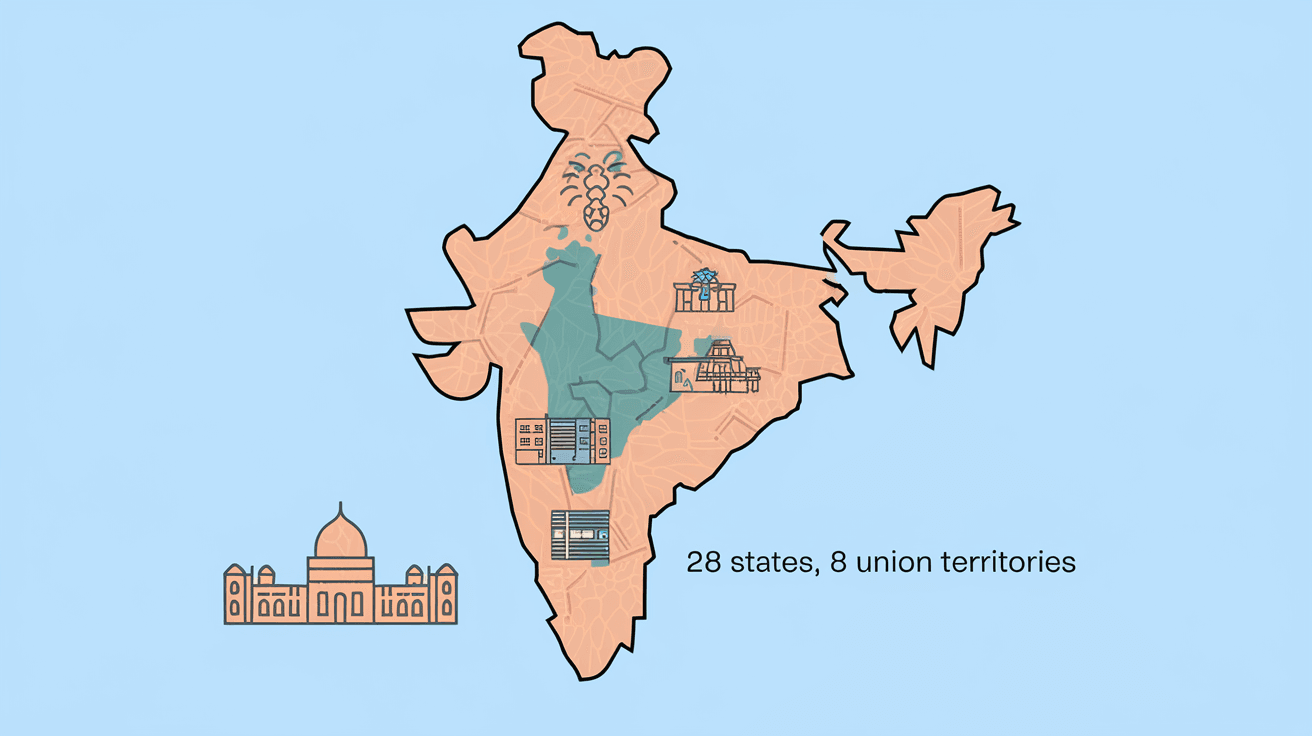
As of 2025, India has a total of 776 districts. This number includes districts spread across 28 states and 8 union territories. The number of districts has increased over the years due to administrative needs, population growth, and demands for better governance.
Here’s a quick breakdown:
| Administrative Unit | Number of Districts |
| States | 736 |
| Union Territories | 40 |
| Total | 776 |
This total reflects recent changes, including the creation of new districts in states like Telangana, Uttar Pradesh, and Maharashtra. States often create new districts to improve administrative efficiency and bring government services closer to people.
The number of districts in India has grown steadily since independence. Initially, there were fewer districts, but as the population expanded and regions developed, the government found it necessary to create more districts.
Reasons for increasing districts include:
For example, Telangana created several new districts after becoming a separate state in 2014 to improve governance. Similarly, Uttar Pradesh, India’s most populous state, has over 75 districts to manage its vast population.
India’s states vary widely in size and population, which affects how many districts they have. Here’s an overview of some states with the highest number of districts:
Smaller states and union territories have fewer districts. For example:
This variation reflects the diversity in India’s geography and population density.
District boundaries and numbers are not fixed. The government can create new districts or reorganize existing ones based on administrative needs. The process usually involves:
This process ensures that districts remain relevant and efficient for governance.
Districts play a crucial role in India’s governance system. They are the frontline units where government policies meet the people. Here’s what districts do:
Because districts are closer to the people, they help make governance more responsive and effective.
India has 8 union territories, which are governed directly by the central government or have special status. These territories also have districts, though fewer in number compared to states.
Here’s a list of union territories and their district counts:
Union territories often have smaller populations and areas, so their district count is lower.
The concept of districts dates back to British colonial rule when the British administration divided India into districts for easier control. After independence, India retained this system but adapted it to suit democratic governance.
Over time, districts have evolved:
This evolution shows how districts remain a dynamic part of India’s administrative framework.
You might wonder why districts matter to you personally. Districts influence many aspects of daily life:
Knowing your district helps you access government services and participate in local governance.
While districts are essential, managing them comes with challenges:
Governments continuously work to address these challenges by creating new districts or improving existing ones.
Looking ahead, India’s district administration is likely to see changes:
These trends aim to make districts more responsive and citizen-friendly.
India’s 776 districts form the backbone of its administrative system. They help manage a huge and diverse population by breaking down governance into manageable units. Whether in big states like Uttar Pradesh or small union territories like Lakshadweep, districts play a vital role in delivering government services and maintaining order.
Understanding how many districts there are and how they function gives you insight into India’s complex but effective governance structure. As India grows and changes, districts will continue to evolve, ensuring that governance remains close to the people.
India currently has 776 districts spread across 28 states and 8 union territories.
Uttar Pradesh has the highest number of districts, with a total of 75.
New districts are created through proposals by state governments, followed by approvals and official notifications.
Yes, union territories have districts, but usually fewer in number due to their smaller size and population.
The number of districts increases to improve administrative efficiency, manage population growth, and bring governance closer to people.