

How Many Times Joint Sitting of Parliament Held in India
F
Discover verified facts, data, and insights about India’s states, culture, economy, education, and more — all in one place at FactBharat.
Search for a command to run...
Discover verified facts, data, and insights about India’s states, culture, economy, education, and more — all in one place at FactBharat.
No comments yet. Be the first to comment.
Moving to the USA from India is a dream for many. Whether you want to study, work, or live with family, the process can seem complex. But with the right information, you can plan your move confidently. I’ll guide you through the key steps and options...
Opening a college in India is a dream for many educators and entrepreneurs who want to contribute to the country’s education sector. If you are one of those who want to start a college, you need to understand the process clearly. It involves several ...
Opening a hospital in India is a significant and rewarding venture. If you’ve ever wondered how to start one, you’re in the right place. Whether you’re a healthcare professional, entrepreneur, or investor, understanding the process is crucial. You’ll...
Opening a medical store in India can be a rewarding business opportunity. You get to serve your community by providing essential medicines and healthcare products. If you are thinking about starting a medical store, you might wonder where to begin an...
Opening a restaurant in India can be an exciting and rewarding venture. Whether you dream of serving traditional Indian dishes or international cuisine, the process involves careful planning and understanding of local regulations. If you’re ready to ...
FactBharat | Insights About India
2558 posts
Discover verified facts, data, and insights about India’s states, culture, economy, education, and more — all in one place at FactBharat.
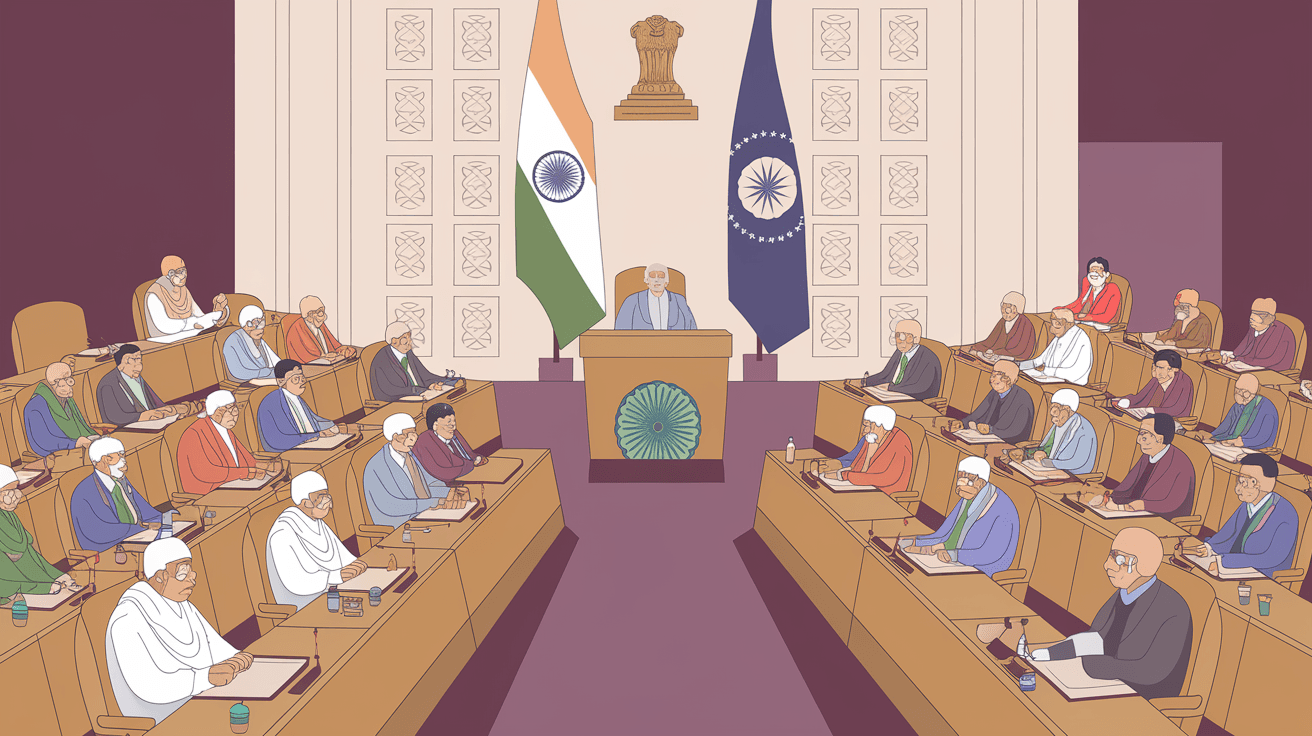
The joint sitting of Parliament in India is a unique and rare event. You might wonder how often this special session happens and why it is called. Understanding this can help you grasp how India’s legislative system resolves deadlocks between the two Houses of Parliament.
In this article, I will explain how many times the joint sitting has been held in India, what triggers it, and why it is important. You will also learn about the procedure and some notable examples. Let’s dive into this interesting aspect of Indian democracy.
A joint sitting of Parliament means both the Lok Sabha (House of the People) and the Rajya Sabha (Council of States) meet together. This happens only in special cases when there is a disagreement between the two Houses on a bill.
Normally, the two Houses work separately. But if they cannot agree on a bill after certain steps, the President of India can summon a joint sitting to resolve the deadlock.
A joint sitting is called under Article 108 of the Indian Constitution. It happens only when:
This process applies only to ordinary bills and money bills, except for money bills which the Rajya Sabha cannot reject.
The main goal is to break the deadlock and ensure that important laws are passed without unnecessary delay. It helps maintain the balance between the two Houses and keeps the legislative process moving.
Since India’s independence, the joint sitting of Parliament has been held only three times. This shows how rare and exceptional this event is.
Here are the three occasions:
The Dowry Prohibition Bill, 1961
This was the first joint sitting. The bill aimed to prohibit the giving or taking of dowry. The Rajya Sabha had rejected the bill, so a joint sitting was called. The bill was passed in the joint sitting and became law.
The Banking Service Commission (Repeal) Bill, 1978
This bill aimed to repeal the Banking Service Commission Act. The Rajya Sabha had rejected it, leading to a joint sitting. The bill was passed during the joint sitting.
The Prevention of Terrorism Bill, 2002
This bill was introduced to strengthen anti-terrorism laws. The Rajya Sabha had rejected it, so a joint sitting was convened. The bill was passed in the joint sitting.
The rarity of joint sittings is because:
When a joint sitting is called, the following steps take place:
Voting is done by voice or division. Since the Lok Sabha has more members (currently 543) than the Rajya Sabha (245), the Lok Sabha’s strength usually decides the outcome.
Only ordinary bills can be taken up in a joint sitting. Money bills and constitutional amendment bills are excluded because:
The joint sitting is a vital mechanism to ensure that Parliament functions smoothly. It prevents a deadlock that could stall important legislation.
The Rajya Sabha acts as a revising chamber, but it cannot indefinitely block bills passed by the Lok Sabha. The joint sitting balances this power by giving the final say to the combined strength of both Houses.
Without joint sittings, Parliament could face long delays. This mechanism helps pass laws efficiently while respecting the views of both Houses.
By involving members from both Houses, joint sittings ensure that laws have wider acceptance. It is a democratic way to resolve conflicts rather than letting one House dominate.
Let’s look at the three bills passed in joint sittings and their significance:
| Bill Name | Year | Purpose | Outcome |
| Dowry Prohibition Bill | 1961 | To prohibit dowry practice | Passed and became law |
| Banking Service Commission Bill | 1978 | To repeal the Banking Service Commission Act | Passed and repealed the act |
| Prevention of Terrorism Bill | 2002 | To strengthen anti-terrorism laws | Passed and became law |
These examples show how joint sittings have helped pass important social and security laws.
Yes, joint sittings can often be avoided through:
This is why joint sittings are rare and used only as a last resort.
You now know that the joint sitting of Parliament in India is a rare but important event. It has been held only three times since independence, showing how Parliament usually resolves issues without it.
The joint sitting helps break deadlocks between the Lok Sabha and Rajya Sabha, ensuring that important bills become laws. It balances power, promotes efficiency, and protects democracy.
Understanding this process gives you insight into how India’s Parliament works to keep the legislative process smooth and effective. Next time you hear about a joint sitting, you’ll know why it matters.
It has been held only three times since independence: in 1961, 1978, and 2002.
The Speaker of the Lok Sabha presides over the joint sitting.
Only ordinary bills can be discussed in a joint sitting. Money bills and constitutional amendments are excluded.
Because the two Houses usually resolve differences through negotiations, and the President calls joint sittings only when necessary.
To resolve deadlocks between the Lok Sabha and Rajya Sabha and ensure important bills are passed efficiently.