

How Many Times Demonetization Happened in India
F
Discover verified facts, data, and insights about India’s states, culture, economy, education, and more — all in one place at FactBharat.
Search for a command to run...
Discover verified facts, data, and insights about India’s states, culture, economy, education, and more — all in one place at FactBharat.
No comments yet. Be the first to comment.
Moving to the USA from India is a dream for many. Whether you want to study, work, or live with family, the process can seem complex. But with the right information, you can plan your move confidently. I’ll guide you through the key steps and options...
Opening a college in India is a dream for many educators and entrepreneurs who want to contribute to the country’s education sector. If you are one of those who want to start a college, you need to understand the process clearly. It involves several ...
Opening a hospital in India is a significant and rewarding venture. If you’ve ever wondered how to start one, you’re in the right place. Whether you’re a healthcare professional, entrepreneur, or investor, understanding the process is crucial. You’ll...
Opening a medical store in India can be a rewarding business opportunity. You get to serve your community by providing essential medicines and healthcare products. If you are thinking about starting a medical store, you might wonder where to begin an...
Opening a restaurant in India can be an exciting and rewarding venture. Whether you dream of serving traditional Indian dishes or international cuisine, the process involves careful planning and understanding of local regulations. If you’re ready to ...
FactBharat | Insights About India
2558 posts
Discover verified facts, data, and insights about India’s states, culture, economy, education, and more — all in one place at FactBharat.
Demonetization is a powerful economic tool that governments use to tackle issues like black money, counterfeit currency, and corruption. If you’ve ever wondered how many times demonetization has happened in India, you’re not alone. India has seen demonetization multiple times since independence, each with its own reasons and effects.
In this article, I’ll walk you through the history of demonetization in India. We’ll explore the key events, why they happened, and what impact they had on the economy and everyday people. By the end, you’ll have a clear understanding of how demonetization shaped India’s financial landscape.
Demonetization means the government declares certain currency notes as no longer legal tender. This means you can’t use those notes for transactions anymore. The goal is often to remove fake currency, reduce black money, or push the economy towards digital payments.
India’s demonetization events have been significant because cash plays a big role in the economy.
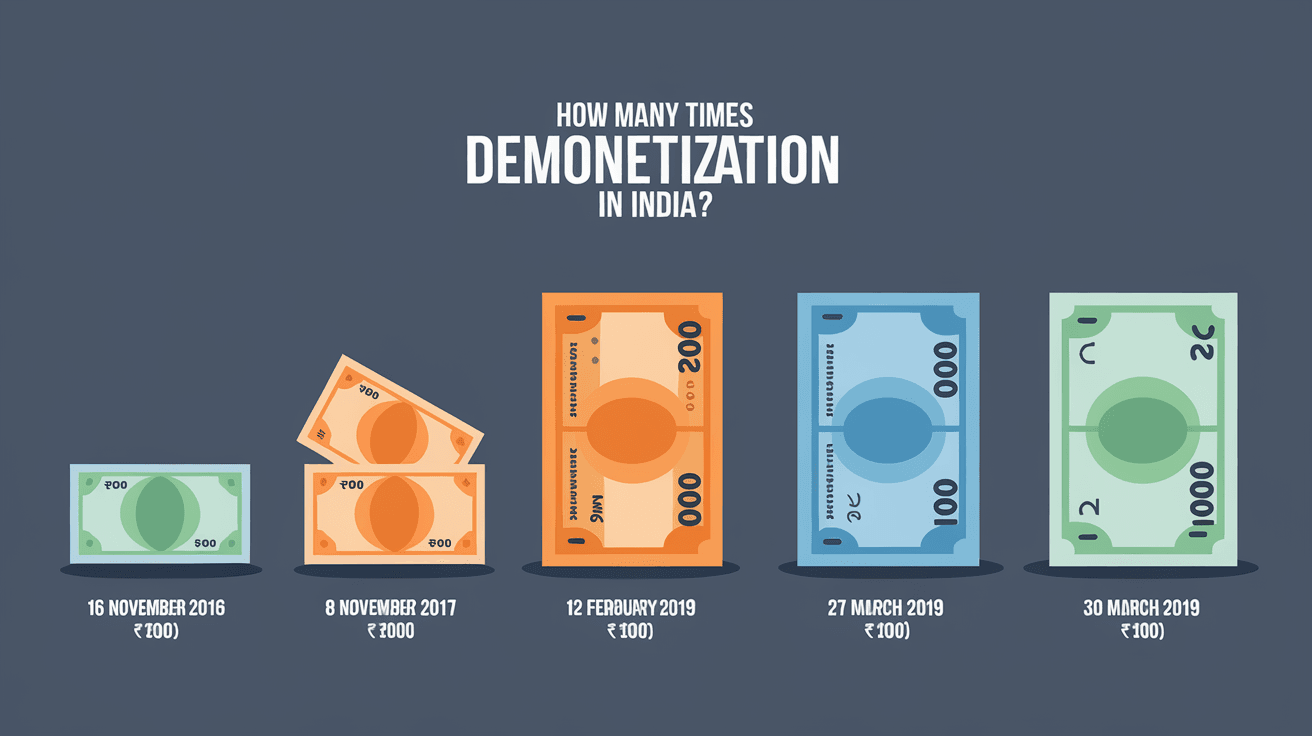
India has officially demonetized currency notes three times since independence. Each event was driven by different economic and political reasons.
Each demonetization event had specific reasons, but some common goals include:
For example, the 2016 demonetization aimed to tackle all these issues at once. It was a bold step to modernize India’s economy.
Demonetization affects the economy in many ways. Here’s what happened during the major demonetization events:
Managing demonetization is a huge challenge. The government and Reserve Bank of India (RBI) took several steps:
Despite challenges, these measures helped stabilize the economy over time.
India’s demonetization experiences offer valuable lessons:
These lessons guide future economic reforms.
Once notes are demonetized, they lose their legal tender status. Here’s what happens:
This process ensures old currency is removed from circulation safely.
If you want to be ready for any future demonetization, consider these tips:
Being prepared can reduce stress during such events.
India has experienced demonetization three times: in 1946, 1978, and 2016. Each event aimed to tackle black money, counterfeit currency, and corruption but had different scales and impacts. The 2016 demonetization was the most significant, affecting almost everyone in the country.
Demonetization is a complex process that disrupts daily life but can push the economy towards transparency and digitalization. Understanding its history helps you appreciate the challenges and benefits involved. Whether you’re a student, professional, or business owner, knowing about demonetization prepares you for future economic changes.
India has demonetized currency notes three times: in 1946, 1978, and 2016.
The ₹500 and ₹1,000 notes were demonetized, which made up about 86% of the cash in circulation.
To fight black money, counterfeit currency, corruption, and to promote digital payments.
Typically, the government sets a deadline of a few weeks to a few months for exchanging old notes.
It significantly boosted digital payments, increasing the use of mobile wallets and UPI platforms.