

How Many Thermal Power Plants Are There in India?
F
Discover verified facts, data, and insights about India’s states, culture, economy, education, and more — all in one place at FactBharat.
Search for a command to run...
Discover verified facts, data, and insights about India’s states, culture, economy, education, and more — all in one place at FactBharat.
No comments yet. Be the first to comment.
Moving to the USA from India is a dream for many. Whether you want to study, work, or live with family, the process can seem complex. But with the right information, you can plan your move confidently. I’ll guide you through the key steps and options...
Opening a college in India is a dream for many educators and entrepreneurs who want to contribute to the country’s education sector. If you are one of those who want to start a college, you need to understand the process clearly. It involves several ...
Opening a hospital in India is a significant and rewarding venture. If you’ve ever wondered how to start one, you’re in the right place. Whether you’re a healthcare professional, entrepreneur, or investor, understanding the process is crucial. You’ll...
Opening a medical store in India can be a rewarding business opportunity. You get to serve your community by providing essential medicines and healthcare products. If you are thinking about starting a medical store, you might wonder where to begin an...
Opening a restaurant in India can be an exciting and rewarding venture. Whether you dream of serving traditional Indian dishes or international cuisine, the process involves careful planning and understanding of local regulations. If you’re ready to ...
FactBharat | Insights About India
2558 posts
Discover verified facts, data, and insights about India’s states, culture, economy, education, and more — all in one place at FactBharat.
If you’re curious about India’s energy landscape, understanding thermal power plants is a great place to start. Thermal power plants generate electricity by converting heat energy, mostly from coal, natural gas, or oil. They form a major part of India’s power generation mix.
In this article, I’ll walk you through how many thermal power plants India has, their types, and why they are so important. You’ll also learn about their capacity and the challenges they face in today’s energy scenario.
Thermal power plants produce electricity by using heat energy. This heat usually comes from burning fossil fuels like coal, natural gas, or oil. The heat turns water into steam, which spins turbines connected to generators.
Here’s a simple breakdown:
Thermal power plants are widely used because they can produce large amounts of electricity continuously.
India has a vast network of thermal power plants. According to the latest data from the Central Electricity Authority (CEA) and other official sources, India operates around 200 thermal power plants across the country.
These plants include:
India’s thermal power plants contribute nearly 70% of the country’s total electricity generation. Coal remains the dominant fuel, accounting for about 75% of thermal power capacity.
Thermal power plants in India are classified based on the fuel they use. Here’s a quick overview:
Coal-fired plants are the backbone of India’s power sector. They use coal to generate steam and electricity.
Gas-based plants use natural gas or liquefied petroleum gas (LPG).
Oil-based plants use diesel or furnace oil.
The total installed capacity of thermal power plants in India is approximately 210,000 megawatts (MW). Here’s how it breaks down:
| Fuel Type | Number of Plants | Installed Capacity (MW) | Percentage of Total Thermal Capacity |
| Coal | ~150 | 160,000 | 75% |
| Gas | ~40 | 45,000 | 21% |
| Oil | Few | 5,000 | 4% |
This capacity makes thermal power the largest source of electricity in India, followed by renewable energy and hydroelectric power.
Thermal power plants are crucial for India’s energy security. They provide:
Despite the rise of renewables, thermal power remains essential because of its ability to provide steady and large-scale power.
Thermal power plants face several challenges today:
The government is working on cleaner technologies like supercritical and ultra-supercritical coal plants to improve efficiency and reduce emissions.
India is modernizing its thermal power plants to meet environmental standards and improve efficiency.
These efforts aim to balance energy needs with environmental responsibility.
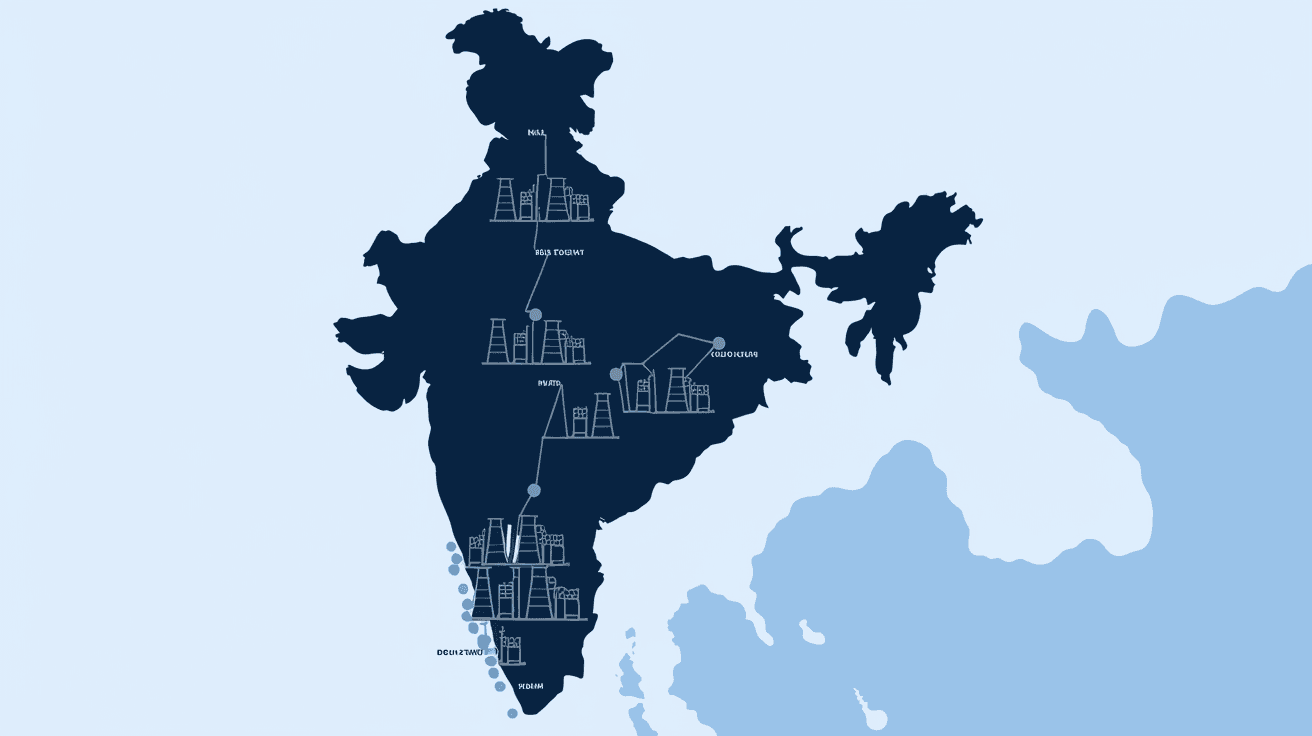
Thermal power plants are spread across India, with some states having more plants due to resource availability.
This distribution helps meet regional electricity demands efficiently.
While renewables are growing fast, thermal power will remain important for years.
You can expect thermal power plants to evolve with technology and policy changes, balancing growth and sustainability.
Now you know that India has around 200 thermal power plants, mostly coal-based, producing about 210,000 MW of electricity. These plants are vital for meeting the country’s energy demands and supporting economic growth.
Despite challenges like pollution and competition from renewables, thermal power remains a key part of India’s energy mix. With ongoing modernization and cleaner technologies, thermal power plants will continue to play a significant role in India’s energy future.
India has about 200 thermal power plants, including coal, gas, and oil-based plants, with coal plants being the majority.
Thermal power contributes nearly 70% of India’s total electricity generation.
Jharkhand, Odisha, and Chhattisgarh have the highest number of coal-based thermal power plants.
Yes, India is adopting supercritical technology and emission control systems to reduce pollution from thermal plants.
Thermal power will remain important for reliable electricity, but cleaner technologies and renewables will shape its future.