

How Many Textile Industries in India
F
Discover verified facts, data, and insights about India’s states, culture, economy, education, and more — all in one place at FactBharat.
Search for a command to run...
Discover verified facts, data, and insights about India’s states, culture, economy, education, and more — all in one place at FactBharat.
No comments yet. Be the first to comment.
Moving to the USA from India is a dream for many. Whether you want to study, work, or live with family, the process can seem complex. But with the right information, you can plan your move confidently. I’ll guide you through the key steps and options...
Opening a college in India is a dream for many educators and entrepreneurs who want to contribute to the country’s education sector. If you are one of those who want to start a college, you need to understand the process clearly. It involves several ...
Opening a hospital in India is a significant and rewarding venture. If you’ve ever wondered how to start one, you’re in the right place. Whether you’re a healthcare professional, entrepreneur, or investor, understanding the process is crucial. You’ll...
Opening a medical store in India can be a rewarding business opportunity. You get to serve your community by providing essential medicines and healthcare products. If you are thinking about starting a medical store, you might wonder where to begin an...
Opening a restaurant in India can be an exciting and rewarding venture. Whether you dream of serving traditional Indian dishes or international cuisine, the process involves careful planning and understanding of local regulations. If you’re ready to ...
FactBharat | Insights About India
2558 posts
Discover verified facts, data, and insights about India’s states, culture, economy, education, and more — all in one place at FactBharat.
India's textile industry is one of the largest and oldest in the world. If you've ever wondered how many textile industries are in India, you're not alone. The sector is vast, ranging from small-scale handloom units to large modern factories. Together, they form a backbone of India's economy and employment.
In this article, I will walk you through the number of textile industries in India, their types, and their significance. You'll also learn about the industry's growth, challenges, and future outlook. Let's dive into the fabric of India's textile world.
India's textile industry is a massive sector that includes various types of production units. It covers everything from traditional handlooms and handicrafts to modern spinning mills and garment factories. The industry contributes significantly to India's GDP and employment.
The textile industry in India is divided into two broad categories:
Together, these sectors form a complex and diverse industry that caters to both domestic and international markets.
Estimating the exact number of textile industries in India can be challenging due to the sector's diversity. However, recent government and industry reports provide some clear insights.
The textile industry is spread across various states, with some regions more prominent than others.
These states contribute significantly to the overall number of textile industries in India.
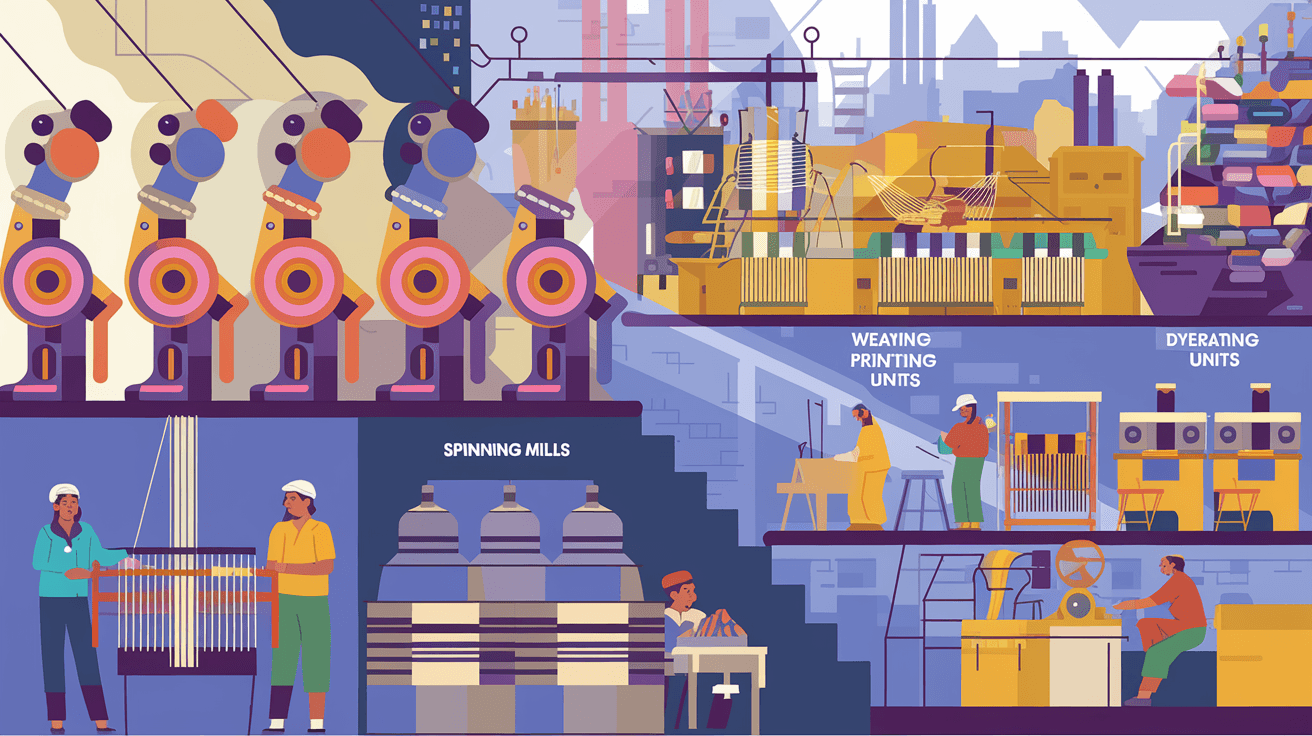
India's textile sector is diverse, with different types of industries catering to various needs. Here’s a breakdown:
Spinning mills convert raw cotton or synthetic fibers into yarn. India has around 1,200 spinning mills, making it one of the largest producers of yarn globally.
Weaving units produce fabric from yarn. These include:
These units handle dyeing, printing, and finishing of fabrics. India has thousands of processing units spread across textile hubs.
Garment factories stitch fabrics into finished clothing. India has over 50,000 garment manufacturing units, employing millions.
A growing segment, technical textiles include materials used in automotive, medical, and industrial applications. India is rapidly expanding in this area.
The textile industry is a major contributor to India’s economy. Here’s how:
The government supports the industry through schemes like the Technology Upgradation Fund Scheme (TUFS) and Production Linked Incentive (PLI) scheme for textiles.
Despite its size, the textile industry faces several challenges:
Addressing these challenges is crucial for the industry's sustainable growth.
The future looks promising for India’s textile sector due to several factors:
Experts predict that India’s textile exports could reach $100 billion in the next decade, doubling current figures.
You now have a clearer picture of how many textile industries are in India and why this sector is so important. With over 2.3 lakh units ranging from small handlooms to large mills, the textile industry is a vital part of India’s economy and culture.
While challenges remain, government support and market trends point to a bright future. Whether you’re interested in the economic impact or the diversity of textile production, India’s textile industry offers a fascinating story of tradition and innovation woven together.
India has around 2.3 lakh textile units, including large mills, small-scale units, and handloom clusters.
Maharashtra, Gujarat, Tamil Nadu, and West Bengal are among the top states with the highest concentration of textile industries.
The textile sector contributes about 2% to India’s GDP and around 15% of industrial production.
Over 60 million people are employed in the textile and apparel sector in India.
Key challenges include competition from other countries, infrastructure issues, environmental concerns, skilled labor shortages, and raw material price volatility.